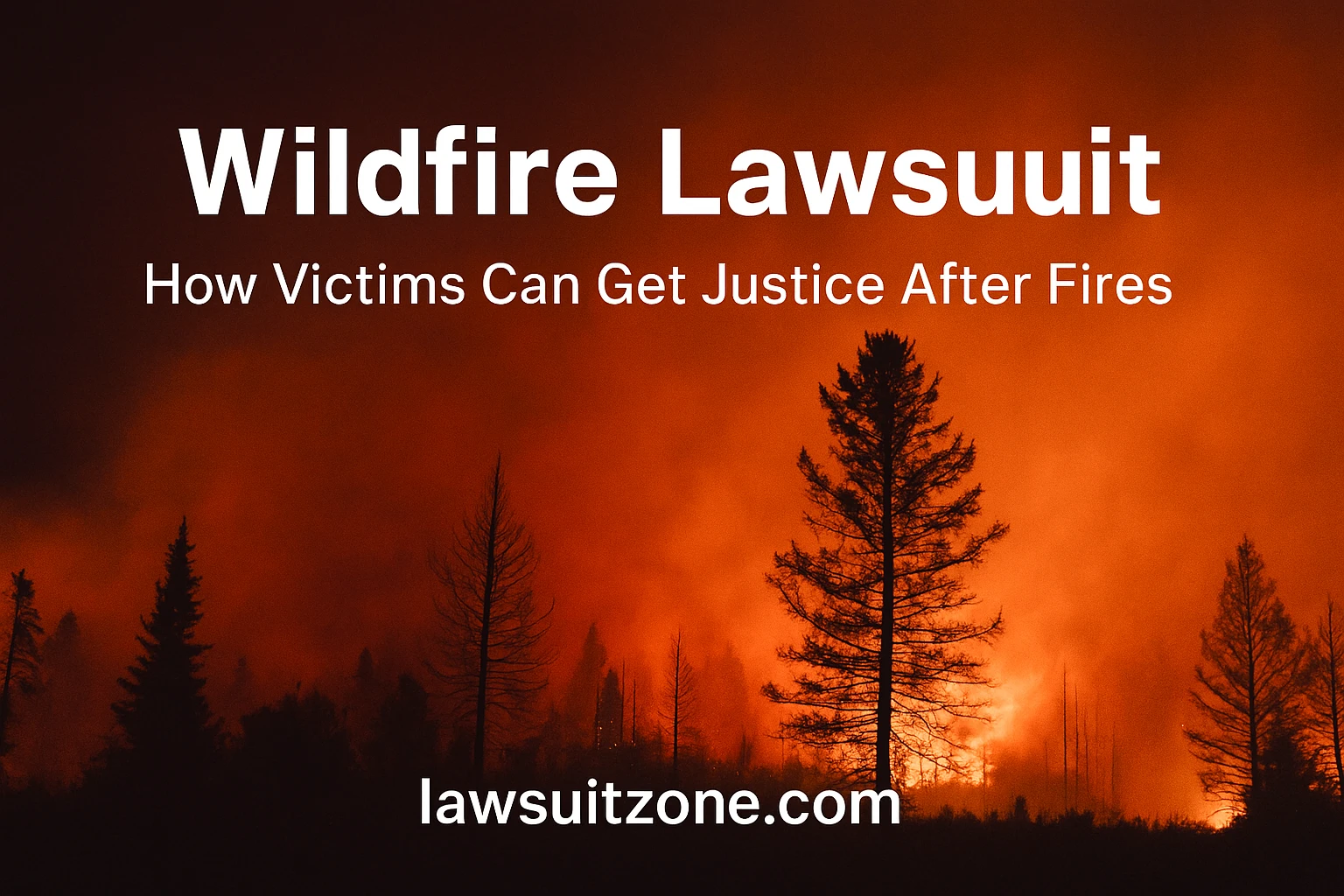
Wildfire Lawsuit: How Victims Can Get Justice After Fires
Introduction
A wildfire lawsuit has become a very crucial legal option for those whose homes, health, and livelihoods were destroyed by these catastrophic fires. Though being conventionally regarded as a natural disaster, many of the major modern fires have elements involving human mistake, neglected infrastructures, or warnings of safety that were ignored. That makes all the difference to victims.
A wildfire lawsuit allows affected people to demand accountability on the part of those whose negligence contributed to the fire. This guide will explain what a wildfire lawsuit is in clear, human language, from causes and legal responsibility to compensation for what victims need to do next. Have you checked our detailed guide on Chowchilla lawsuit.
Why Wildfires Are No Longer “Unpreventable”
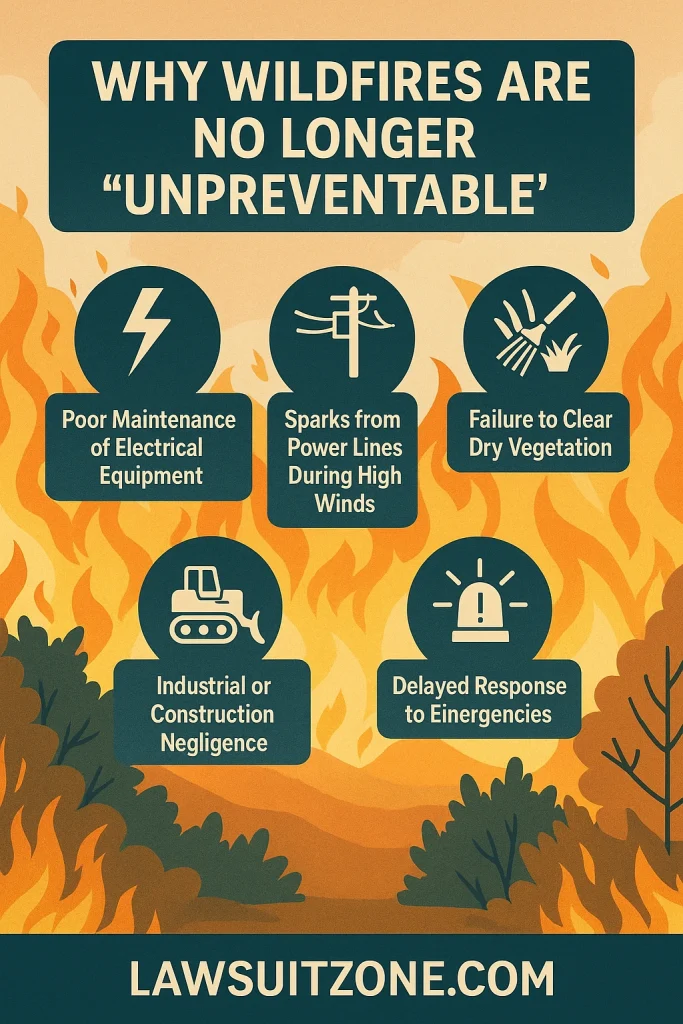
Wildfires of today are larger, faster, and more destructive compared to earlier ones. Weather certainly is a factor, but all too often investigations show causes that could have been prevented, from outdated power systems to not taking care of land conditions that could easily burst into flames.
Common Preventable Factors
- Poor maintenance of electrical equipment
- Sparks from power lines during high winds
- Failure to clear dry vegetation
- Industrial or construction negligence
- Delayed response to emergencies
Victims may have grounds for a wildfire lawsuit when these failures exist.
What Is a Wildfire Lawsuit?
A wildfire lawsuit is a civil claim filed by individuals, families, and businesses that have suffered losses from a wildfire either initiated or enhanced through negligence. These claims are different from insurance claims, where the focus is on legal fault rather than policy coverage.
Objectives of a Wildfire Lawsuit
- Recovery of damages for loss
- Hold responsible parties legally liable
Who Can Be Held Responsible in Case of Wildfires?
Liability in wildfire lawsuits is often multilateral. Responsible parties may include, depending on the facts:
Utility Companies
Power companies are often sued in wildfire cases for neglecting to maintain equipment or ignoring conditions of extreme fire risk.
Private Contractors
If it can be determined that construction crews, a maintenance company, or even an industrial operator caused or fueled the fire in any way, they may also be found responsible.
Government Agencies
Public entities may also be held liable for failure in land management or carrying out safety standards on some occasions.
Property Owners
Landowners can be held responsible when unsafe conditions on their property create conditions that result in the spread of fire.
Who Qualifies to File a Wildfire Lawsuit?
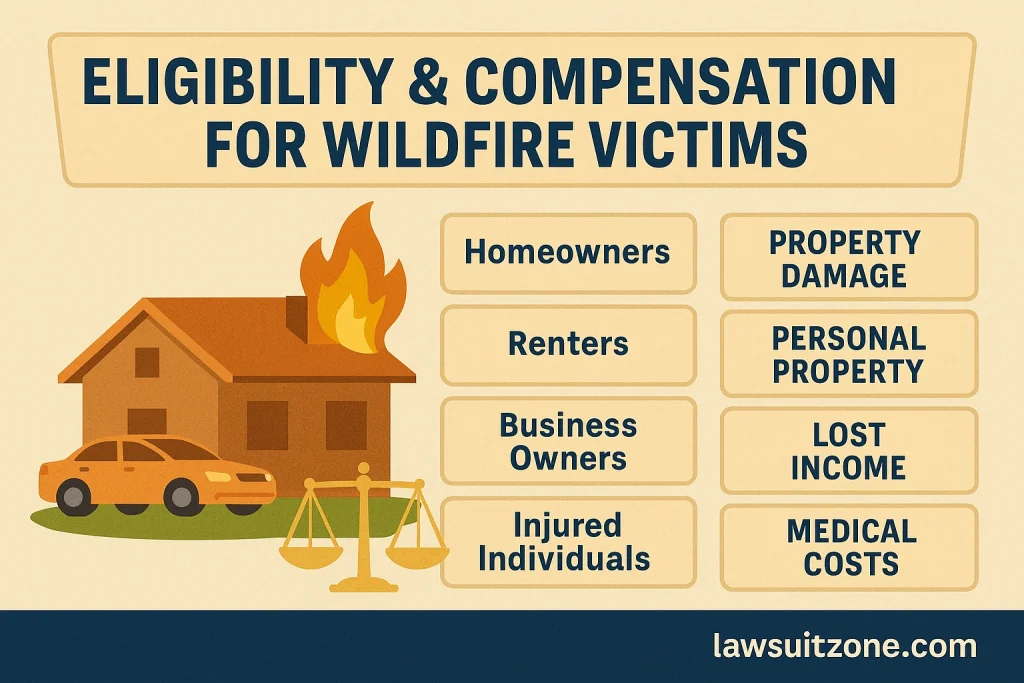
A wildfire lawsuit may be filed by:
- Homeowners whose homes were damaged or destroyed
- Renters who lost personal property
- Business owners forced to close or relocate
- Workers injured while attempting to evacuate or clean up
- Families of those who lost their lives
- Farmers and landowners with losses in crops or livestock
Such instances may involve even temporary displacement and smoke-related injuries.
Types of Losses Recoverable in Wildfire Lawsuits
Wildfires impact much more than buildings. A wildfire lawsuit can recover on a wide range of damages.
Property and Structural Damage
- Homes
- Outbuildings
- Vehicles
- Fences and landscaping
Claims of Health and Injury
- Burns
- Inhalation of smoke
- Respiratory diseases
- Long-term lung damage
Financial Damage
- Lost wages
- Business interruption
- Temporary housing costs
- Evacuation costs
Emotional and Psychological Trauma
- Anxiety and depression
- Community loss
- Emotional distress
Wildfire Insurance Claims Versus Lawsuits
Insurance is many times the first point of contact for victims, but it often is not enough.
Insurance Claims Issues
- Policy limits may be too low
- Insurers may contest the coverage
- Delays in payments
- Some losses may be excluded
Why Victims File Wildfire Lawsuits
- Recovery of damages in excess of insurance limits
- Addressing losses not covered
- Holding negligent parties liable
The wildfire lawsuit works along with the insurance claim rather than replacing it.
Establishing Liability in a Wildfire Lawsuit
In a wildfire lawsuit, victims usually need to prove negligence in court. Evidence may come in the form of:
- Fire investigation reports
- Utility maintenance records
- Weather and wind data
- Expert testimony
- Witness statements
- Surveillance or satellite imagery
Public entities like CAL FIRE perform fire origin and cause investigations, the results of which are often used in litigation.
Class Actions and Mass Tort Wildfire Cases
Because wildfires typically involve whole communities, lawsuits can be filed in forms such as:
Individual Claims
- Tailored to personal losses
- Better control over the case
- Better potential compensation
Class Actions or Mass Torts
- Large groups affected by the same fire
- Shared evidence and expert analysis
- Efficient handling of widespread damage
The approach depends on the size of the fire and the number of victims.
Deadlines for Filing a Wildfire Lawsuit
Each state has different time limits for filing a wildfire lawsuit. Factors that may affect deadlines include:
- Type of defendant (private vs government)
- Nature of the claim
- Date damage was discovered
Failure to meet a deadline can permanently eliminate the right to recover damages.
Long-Term Effects on the Environment and Health
Wildfires often leave long-lasting damages that may appear later, including:
- Toxic ash exposure
- Water contamination
- Chronic respiratory disease
- Soil and land degradation
Some wildfire lawsuits seek compensation for ongoing environmental and health monitoring costs.
Government Responsibility and Failures in Fire Prevention
In some instances, governmental agencies may contribute to liability if they failed to:
- Enforce fire safety codes
- Maintain public land
- Respond to known hazards
- Warn residents appropriately
Claims against governmental entities often require special notice.
Steps Victims Should Take After a Wildfire
If you believe you may have a wildfire lawsuit:
- Prioritize safety and medical treatment
- Photograph and document all damage
- Maintain records of expenses and losses
- Secure official fire reports
- Avoid quick settlements
- Consult a wildfire litigation lawyer
Early action can significantly strengthen a claim.
Emotional Trauma from Wildfires on Survivors
Beyond physical damage, wildfire survivors often face:
- Displacement and housing insecurity
- Loss of community identity
- Emotional trauma and stress
- Financial uncertainty
A wildfire lawsuit recognizes these hardships and seeks meaningful recovery.
Why Wildfire Lawsuits Matter
Wildfire lawsuits serve an important public purpose by:
- Encouraging safer utility practices
- Improving land management policies
- Promoting accountability
- Protecting future communities
They shift the financial burden away from victims and onto responsible parties.
Frequently Asked Questions
Conclusion
A wildfire lawsuit offers a legal pathway for victims seeking accountability, compensation, and the opportunity to rebuild after devastating fires. These cases are not about blaming nature but about addressing preventable failures that placed communities in danger. While the fire may be gone, legal options may still exist. Understanding your rights is the first step toward recovery and long-term security.