Truck Accident Lawsuits Guide 2025: Full Rights, Claims & Recovery Roadmap
Introduction
Catastrophic truck accident Lawsuits upend the lives of thousands of families each year. The aftermath is seldom simply about how to fix a damaged vehicle. Victims usually face injuries that may persist for a lifetime, deep emotional trauma, financial pressure, and questions about fault and responsibility—and justice. With commercial trucking on the rise across the United States, understanding trucking accident lawsuits has become crucial for anyone affected by these devastating crashes.
Unlike the typical auto accident, truck crashes involve enormous vehicles, multiple parties, federal regulations, complex insurance policies, and evidence that disappears quickly. Many victims describe feeling lost and overwhelmed—not just because of their injuries, but because the system feels confusing, slow, and intimidating.
This guide breaks everything down in clear human terms. Whether learning out of caution, supporting a loved one, or recovering from a traumatic collision yourself, this vast resource will help you understand the world of truck accident claims, your rights, and the steps victims often take toward compensation and closure. Have you checked our detailed guide on CPAP Lawsuit.
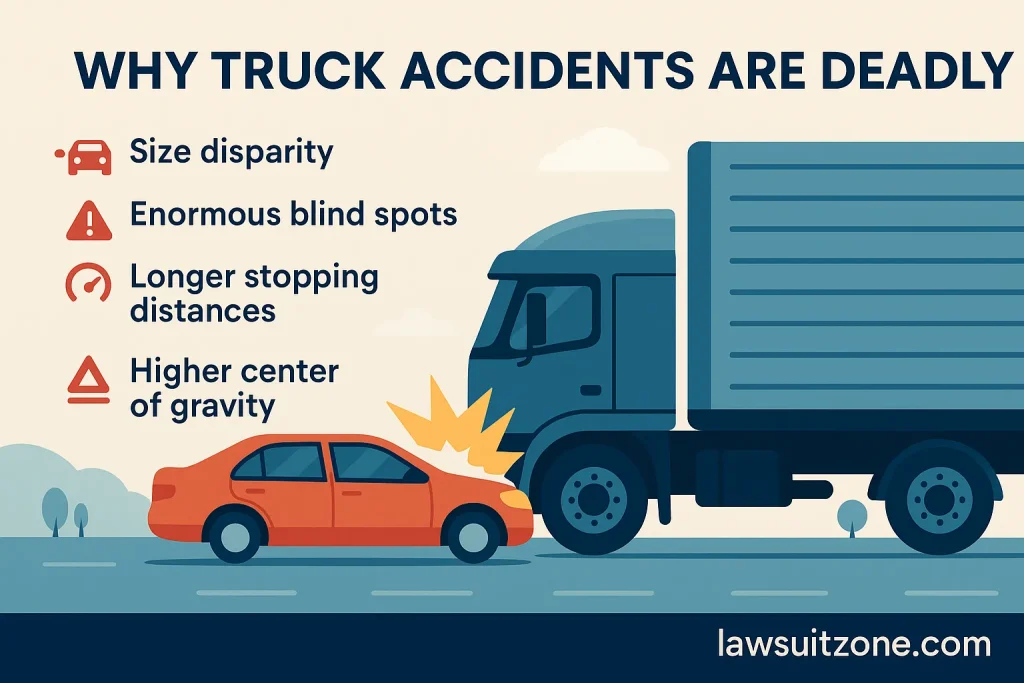
Why Truck Accidents Are So Deadly
Truck accidents aren’t “bigger car accidents.” They are much more destructive.
1. The Size Disparity
A fully loaded semi-truck can weigh up to 80,000 pounds, while the average car weighs approximately 3,000 pounds. The laws of physics mean:
- Cars are crushed
- Occupants absorb massive impact
- Fatalities are more common
2. Enormous Blind Spots
Commercial trucks have blind zones on all sides—a driver might not see a car even if it’s right beside them.
3. Longer Stopping Distances
A truck traveling at highway speed may require over 500 feet to stop.
4. Higher Center of Gravity
This can make rollovers and jackknife crashes more common.
5. Stricter Regulation
Truck drivers are supposed to abide by federal safety rules. A violation of these rules often becomes a key point in truck accidents lawsuits.
Common Causes of Truck Accidents
No two crashes are alike, but certain causes appear frequently in legal claims.
1. Driver Fatigue
Perhaps the most notorious factor.
Drivers often push through:
- Overnight routes
- Tighter delivery deadlines
- Pressures from dispatchers
- Unrealistic schedules
Fatigue reduces reaction time, leads to microsleep episodes, and is a major contributor to fatal crashes.
2. Distracted Driving
Distractions include:
- Checking GPS
- Using dispatch devices
- Texting
- Eating
- Changing dashboard screens
A single second of distraction at highway speed equates to a football field travelled blindly.
3. Speeding & Reckless Driving
Speeding greatly increases:
- Braking distance
- Impact force
- Rollover risk
Some companies even encourage faster deliveries, indirectly encouraging unsafe behavior.
4. Mechanical Failures
Truck owners should maintain their vehicles strictly. Lawsuits commonly arise due to:
- Brake system failures
- Tire blowouts
- Steering malfunctions
- Faulty trailers
- Worn-out parts
Poor maintenance is a major source of liability.
5. Improperly Loaded Cargo
Cargo shifting can cause:
- Rollover accidents
- Trailer instability
- Jackknife crashes
- Loss of control
Loading companies may be held liable when cargo contributes to a collision.
6. Impaired Driving
Alcohol, stimulants, sedatives, or certain drugs may impair judgment.
7. Weather Conditions
Ice, rain, fog, and high winds make trucks harder to maneuver. Drivers may be required to adjust speed and behavior when conditions worsen.
Who Can Be Sued in a Truck Accident Case?
Unlike typical car accident claims, truck accidents lawsuits may involve multiple defendants.
1. The Truck Driver
The driver may be negligent, such as being fatigued, distracted, intoxicated, or in violation of traffic laws.
2. The Trucking Company
The company might be liable for:
- Unsafe schedules
- Poor training
- Hiring unqualified drivers
- Failure to enforce safety rules
- Skipping maintenance
3. Cargo Companies
If improper loading caused the crash.
4. Truck Manufacturers
If mechanical defects played a role.
5. Maintenance Providers
In case of incomplete or negligent repair.
6. Freight Brokers
Depending on their role in hiring or supervising carriers.
Shared liability often increases compensation potential since multiple insurance policies may apply.
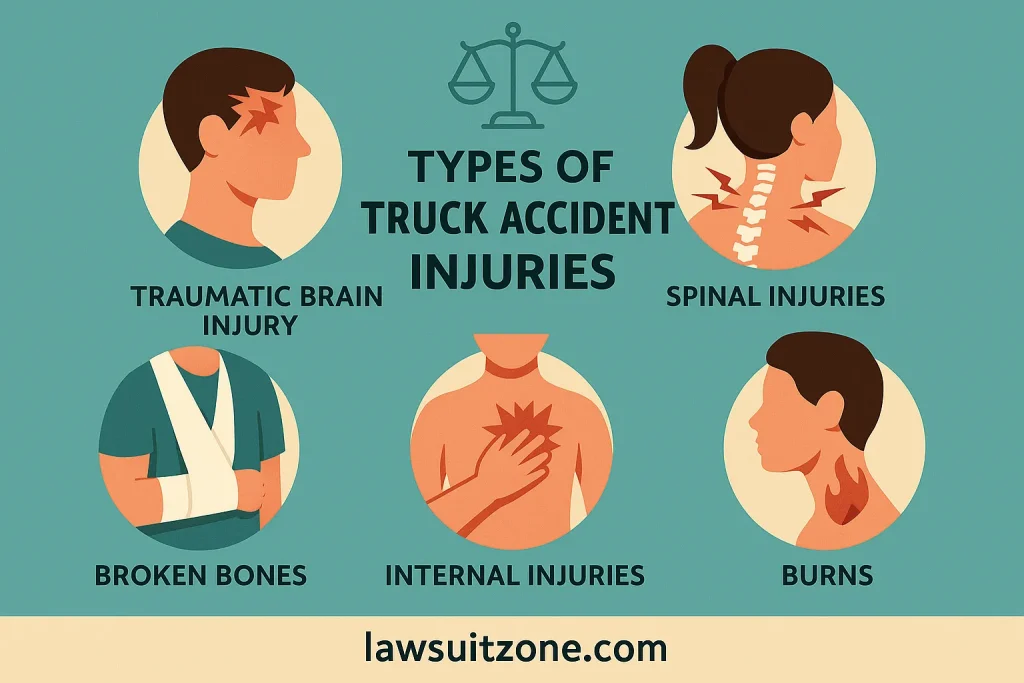
Types of Injuries Common in Truck Accidents
Physical trauma among victims can be severe, including:
1. Traumatic Brain Injuries (TBI)
From concussions to permanent brain damage affecting memory, speech, or personality.
2. Spinal Cord & Back Injuries
Possible results include:
- Herniated discs
- Nerve damage
- Partial or complete paralysis
3. Broken Bones
Truck collisions can fracture the legs, arms, ribs, pelvis, or hips.
4. Internal Damage
Such as internal bleeding, organ punctures, or collapsed lungs.
5. Burns
Burns resulting from fuel spills and fires require long-term treatment.
6. Emotional Trauma
Many survivors struggle with:
- PTSD
- Nightmares
- Anxiety
- Depression
- Driving phobia
These emotional injuries often come with significantly increased compensation.
Key Evidence Needed in a Truck Accident Lawsuit
Truck accident cases rely significantly on fast evidence gathering. Critical evidence includes:
- Police reports
- Dashcam footage
- Photos of the accident scene
- Witness statements
- Truck “black box” (ECM) data
- Hours-of-service logs
- GPS data
- Maintenance records
- Toll and fuel receipts
- Company safety records
- Cell phone logs
- Drug/alcohol test results
- Medical records
The more evidence preserved, the stronger the case.
Federal Rules Impacting Lawsuits Involving Truck Accidents
Truck drivers are subject to federal regulations.
The most important authority is the Federal Motor Carrier Safety Administration, in charge of hours-of-service rules, safety inspections, driver qualifications, and crash data.
Many victims look to FMCSA guidance to learn more about trucking safety standards and accepted industry practices.
Violations of FMCSA regulations significantly enhance lawsuits.
How Fault Is Determined
Fault is determined using:
- Driver behaviour
- Mechanical condition of truck
- Weather and road conditions
- Compliance with federal regulations
- Witness accounts
- Expert reconstruction
- Black box data
Because trucks are commercial vehicles, courts take violations very seriously.
Compensation Available in Truck Accident Lawsuits
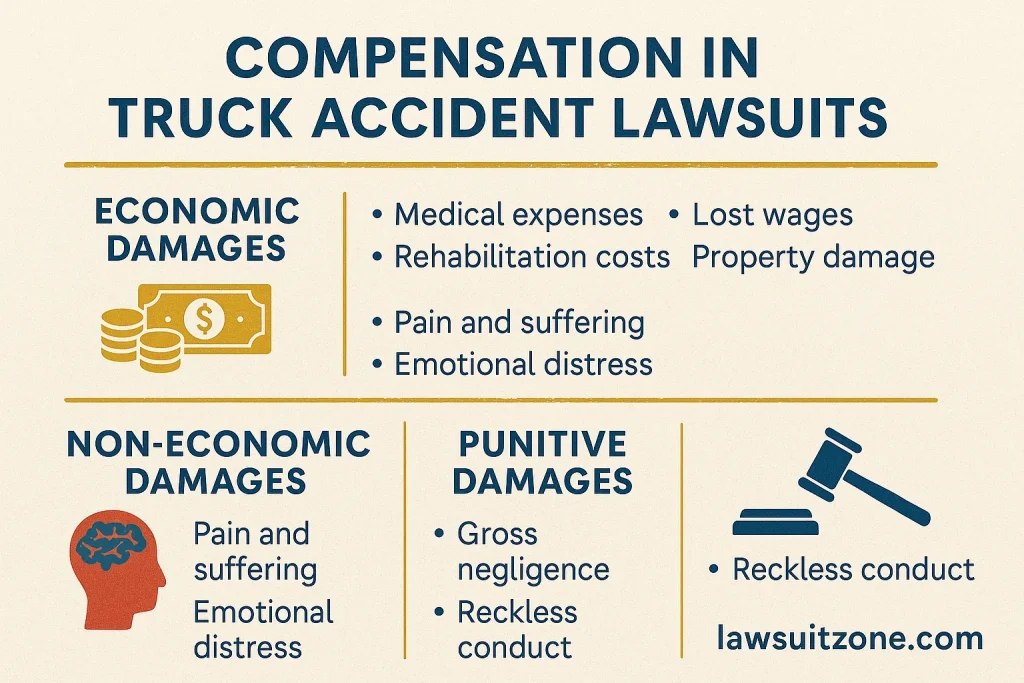
The damages can be considerable because the injuries are usually serious.
1. Economic Damages
- Medical bills
- Inpatient stays
- Rehabilitation therapy
- Surgery
- Medications
- Lost wages
- Future earning losses
- Vehicle replacement
- Medical travel
2. Non-Economic Damages
- Pain and suffering
- Psychological distress
- PTSD
- Loss of enjoyment of life
- Anxiety or fear of driving
- Long-term disability impacts
3. Punitive Damages
Awarded when a trucking company shows gross negligence—for example:
- Forcing drivers to break rest laws
- Falsifying safety records
- Ignoring maintenance warnings
Punitive damages punish wrongdoers and deter unsafe practices.
Wrongful Death Truck Accident Lawsuits
Claims involving a fatality may include compensation for:
- Funeral expenses
- Loss of companionship
- Loss of financial support
- Emotional trauma
- Final medical bills
These cases are very emotional and often lengthy.
Truck Accident Lawsuit Process: Step-by-Step
Step 1: Initial Assessment
Accident detail review, including injuries, costs, and potential liability.
Step 2: Investigation
Collecting evidence before it disappears.
Step 3: Filing the Lawsuit
Filing a formal complaint against responsible parties.
Step 4: Discovery
Both sides exchange records, logs, and expert reports.
Step 5: Negotiation
Most trucking accident claims settle before trial.
Step 6: Trial
If no settlement occurs, the case may go to court.
Step 7: Settlement or Verdict
Compensation is awarded based on laws, evidence, and damages.
Statute of Limitations
Every state has different deadlines:
- Typically 1–3 years after the crash
- Some exceptions for minors or hidden injuries
- Government vehicle claims may have shorter deadlines
Missing a deadline usually ends the right to file.
What to Do After a Truck Accident
Victims often:
- Seek immediate medical attention
- Photograph vehicle damage & the accident scene
- Collect contact info from witnesses
- Save damaged belongings
- Track symptoms daily
- Request medical and police reports
- Track all expenses
- Avoid online discussion about the accident
These steps often make a major difference.
Frequently Asked Questions
Final Thoughts
Large truck accidents can change a person’s life in seconds. The physical injuries, mental trauma, financial strain, and uncertainty can feel overwhelming. Understanding the world of truck accident lawsuits—from causes and liability to compensation and the legal process—helps victims regain control during a painful time.
This guide aims to walk you through major points—not to give legal advice, but to offer clarity, confidence, and direction as you navigate recovery, evidence, and next steps.