Motorcycle Accident Lawsuit: Full Legal & Compensation Guide
Introduction
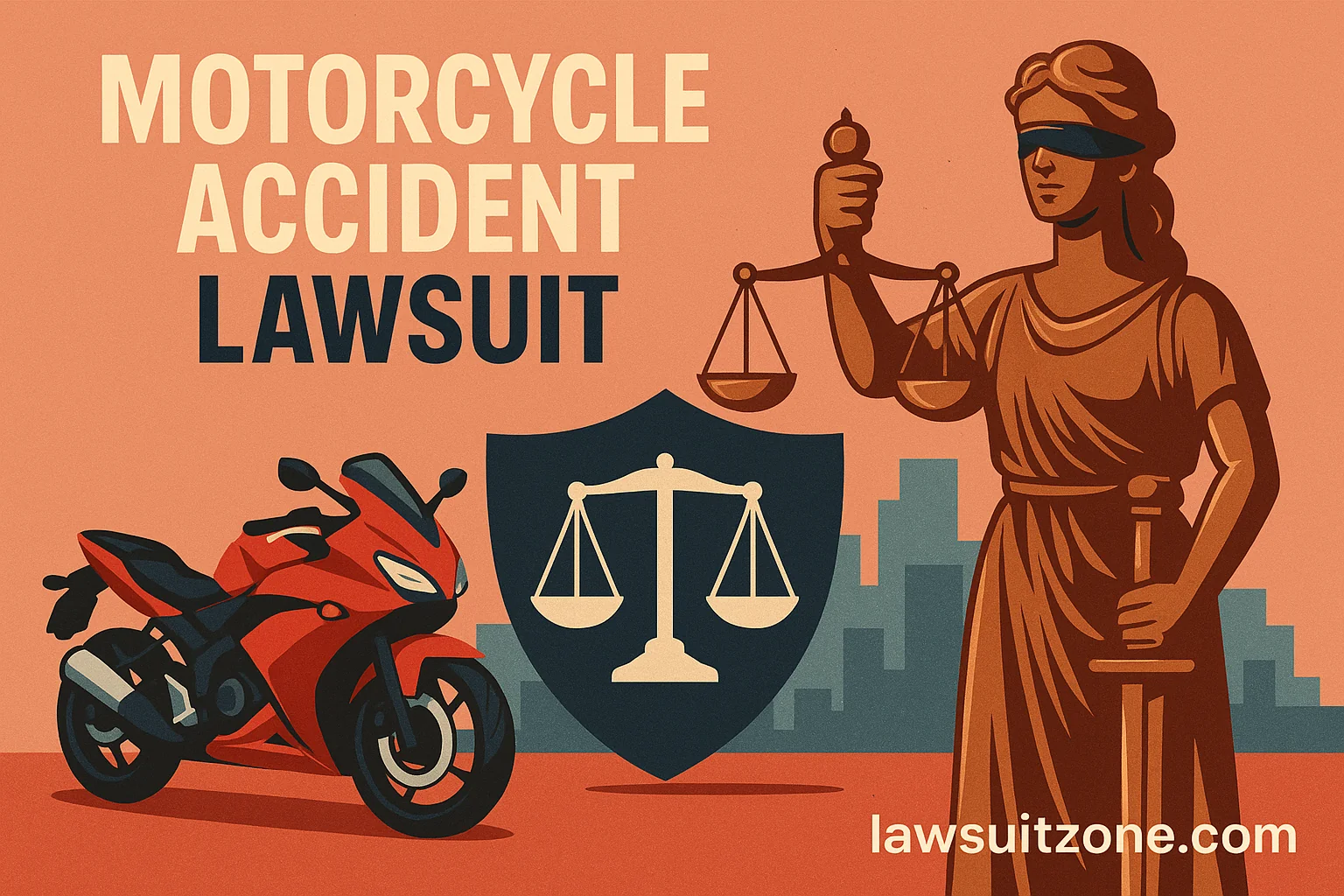
Riding a motorcycle gives the rider freedom, thrill, and open-road adventure, but when accidents strike, that freedom can quickly turn into a legal and financial nightmare. A motorcycle accident lawsuit becomes the road to recovery for riders who suffer injuries because of another person’s negligence.
Every year, thousands of bikers are seriously injured because of distracted drivers, hazardous road conditions, or defective parts. In those moments, understanding how the legal process works—from proving fault to claiming compensation—is your best protection.
This comprehensive guide will explain all that you need to know about lawsuits resulting from motorcycle accidents, your rights, and how to confidently seek justice. Have you checked our detailed guide on Dog Bite Lawsuit.
What Is a Motorcycle Accident Lawsuit?
A motorcycle accident lawsuit is a civil action taken by an injured motorcyclist or their family to recover financial compensation against the person or entity responsible for the crash.
This lawsuit can cover medical expenses, lost wages, emotional distress, and even long-term rehabilitation costs. It may also involve claims against government agencies for unsafe roads or manufacturers for defective motorcycle parts.
The legitimate purpose of such a suit simply involves holding negligent parties liable and assuring that victimized people get reasonable compensation to reconstruct their lives.
Why These Lawsuits Are Increasing
Motorcycles make up a small percentage of vehicles on the road, yet riders are 28 times more likely to die in an accident than car drivers, according to federal statistics. These risks lead to a rising number of lawsuits aimed at protecting the rights of motorcyclists.
Common Causes of Motorcycle Accident Lawsuits
- Drivers cutting off or failing to yield to riders
- Distracted driving or texting behind the wheel
- Speeding or reckless behavior
- Unsafe lane changes
- Impaired or drunk driving
- Hazardous road conditions: potholes, debris, faded lines
- Faulty motorcycle brakes, tires, and mechanical failures
Any of these could be the basis for a negligence claim in a motorcycle accident case.
Common Injuries That Cause a Motorcycle Accident Lawsuit
Without a vehicle’s metal frame for protection, motorcyclists are far more vulnerable to devastating injuries. These medical complications often determine the value of your claim.
Typical Injuries Include
- Traumatic brain injuries, even with helmets
- Spinal cord injuries resulting in paralysis
- Compound fractures and crushed bones
- Deep road rash which may result in infection or scarring
- Internal bleeding or organ damage
- Severe PTSD or emotional trauma
Such injuries don’t just affect health; they destroy livelihoods. Because of this, a motorcycle accident lawsuit often involves both medical and emotional damages.
Determining Liability in a Motorcycle Accident
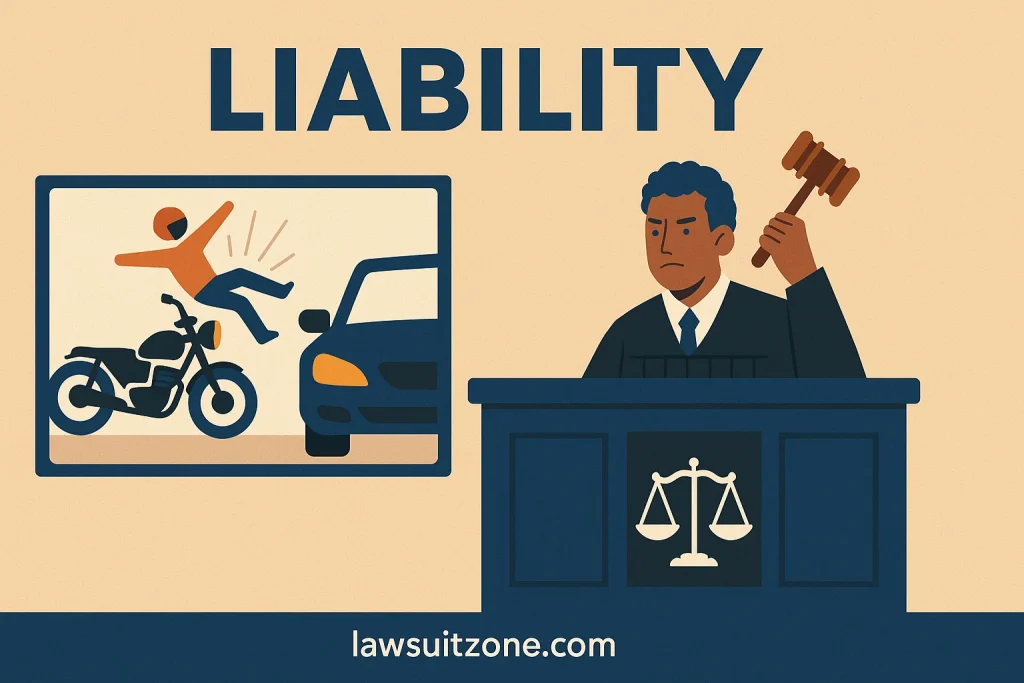
The determination of fault is necessary for any motorcycle accident lawsuit to prevail. Establishing liability determines whose fault the crash is—and therefore, who will pay the damages.
1. Negligent Drivers
It is mainly the fault of motorists, particularly those who drive without checking their blind spots, drive under the influence, or violate traffic laws.
2. Motorcycle Manufacturers
A product liability claim can be filed against the manufacturer if there is a crash due to defective parts, such as brakes, tires, or fuel systems.
3. Government Agencies
Poorly maintained roads or lack of warning signs can result in liability of state or local authorities.
4. Employers or Contractors
If the accident occurred during work, such as driving as a courier or delivering, the employer might be vicariously liable.
A skilled attorney examines all possible angles before filing a motorcycle accident lawsuit to ensure no liable party escapes accountability.
What to Do After a Motorcycle Accident
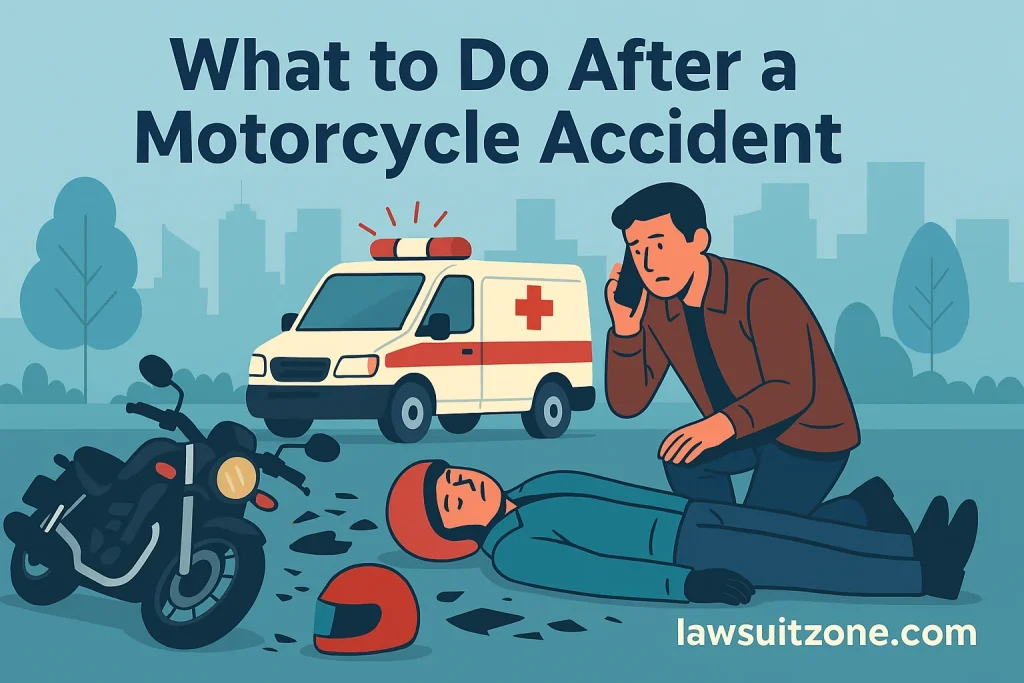
What you do immediately following a crash can make or break your future lawsuit. Quick action protects not only your health but also your claim.
Step-by-Step Actions
- Call for immediate medical help: Even minor cuts may become infected or damage nerves. A hospital record will be crucial as legal evidence.
- Call the police: File an official report documenting the scene and any involved parties.
- Collect evidence: Photograph your injuries, vehicle damage, skid marks, and the road. Get contact information for any witnesses.
- Stay away from insurers: Adjusters typically attempt to minimize payouts—politely refer them to your lawyer.
- Consult a motorcycle accident attorney: They will handle negotiations, assess your case, and protect you from insurance tactics.
Following these steps helps your motorcycle accident lawsuit get off on the right foot.
Establishing Negligence in Court
A successful lawsuit requires proof that someone was careless and that such carelessness resulted directly in your injury. Legally, this involves four key elements:
- Duty of Care: The defendant had a legal duty to drive carefully or to maintain their vehicle properly.
- Breach of Duty: The defendant breached that duty by acting negligently, being reckless, or violating traffic laws.
- Causation: Their actions directly caused the motorcycle crash and your injuries.
- Damages: You incurred quantifiable losses—financial, emotional, or physical—as a result of their negligence.
Once these four points are established with concrete evidence, your motorcycle accident lawsuit is on solid legal footing.
Evidence That Strengthens Your Motorcycle Accident Lawsuit
Strong evidence turns claims into credible cases. Here’s what your lawyer will help you collect:
- Photos and videos of the scene of the crash
- Helmet camera or dashcam footage
- Eyewitness accounts
- Police and accident reports
- Medical bills and doctor’s notes
- Employment records showing lost wages
- Expert analysis from professionals in accident reconstruction
The more solid your documentation, the harder it is for an insurance company or a defendant to deny your motorcycle accident suit.
Types of Compensation in a Motorcycle Accident Lawsuit
1. Economic Damages
These cover measurable financial losses, including:
- Hospitalization and surgery costs
- Medication, rehabilitation, and therapy
- Lost income or future earning capability
- Motorcycle repair or replacement
- Ongoing medical attention
2. Non-Economic Damages
These focus on emotional and mental suffering and include:
- Pain and suffering
- Permanent disfigurement
- Anxiety, PTSD, or depression
- Loss of companionship or enjoyment of life
3. Punitive Damages
Punitive damages are awarded in cases of reckless defendants, such as drunk driving, to punish and deter such actions.
Dealing With Insurance Companies
Insurance companies often act quickly after a crash but not always in your best interest. They may offer early settlements that are far below what you truly deserve.
Common Tactics Include
- Questioning your injury severity
- Blaming partial fault on the rider
- Delaying claim approvals
- Asking for too much documentation
Never sign anything or accept payment without legal advice. According to the Insurance Information Institute, riders who hire attorneys tend to receive significantly higher compensation than those handling claims alone.
Legal Process Involved in a Motorcycle Accident Lawsuit
A typical lawsuit unfolds in several structured stages:
- Investigation: Your attorney will review evidence, interview witnesses, and analyze accident reconstruction reports.
- Filing the Complaint: A formal lawsuit is filed against the at-fault party and their insurer, detailing the damages sought.
- Discovery: Both sides share information and take sworn depositions of witnesses and experts.
- Settlement Negotiations: Most motorcycle accident lawsuits settle out of court once evidence favors the injured rider.
- Trial: If settlement fails, the case goes before a judge or jury who decides on fault and compensation.
- Appeal: Either party may appeal after a verdict if a party feels the law has been misapplied or the award is unfair.
This legal framework ensures that each motorcycle accident case is dealt with in a fair and transparent way.
Timeline: How Long Does It Take?
The length of time a motorcycle accident lawsuit lasts depends on the complexity of the case.
- Minor injury claims may be settled in 6–8 months.
- Serious injury or disputed liability cases can take 1–3 years.
While quick settlements may sound attractive, patience often reaps a far better payout.
Average Settlement Amounts
No two motorcycle accident lawsuits are identical, but the average settlement ranges from $50,000 to $500,000, and catastrophic cases can reach millions.
Factors Affecting Compensation
- Medical expenses and future treatment requirements
- Lost wages and reduced earning capacity
- Permanent disability or scarring
- Psychological trauma
- Comparative fault percentages
The stronger your evidence and legal representation are, the higher your settlement potential.
Preventing Motorcycle Accidents and Legal Claims
While you can’t control the other drivers, you can lessen risks through awareness and safe practices.
- Always wear a DOT-approved helmet and protective gear.
- Follow traffic rules and speed limits.
- Avoid blind spots and maintain safe distance.
- Keep your headlights on during the day for visibility.
- Regularly maintain brakes, tires, and lights.
- Take advanced riding courses that improve reflexes.
Safety doesn’t just prevent accidents but shows responsibility, which comes in handy if a motorcycle accident lawsuit is filed against you.
Frequently Asked Questions (FAQs)
The Bigger Legal Picture
Motorcycle accident lawsuits have shaped modern personal-injury law, forcing both insurers and lawmakers to start treating riders more fairly.
Now, courts award damages not only for physical pain and suffering but also for emotional pain, PTSD, and lifelong disabilities.
These changes mark steps toward safety and justice: promoting more accountability by reckless drivers and neglectful manufacturers.
For more information on how motorcycle injury claims and insurance are handled under different state laws, refer to trusted resources from the Insurance Information Institute an authoritative source for U.S. accident statistics and coverage standards.
Final Thoughts
A motorcycle accident lawsuit is not just a litigation process but one sure way of regaining health, dignity, and financial stability after tragedy. Whether you are the victim, a family member, or a careful motorcyclist, knowing your rights empowers you to take control when life takes a dangerous turn.
If you have been in an accident, first get medical attention, collect evidence, and contact a personal injury lawyer immediately. Legal support helps to even the playing field against powerful insurers and ensures you receive the compensation you deserve.
Motorcycle riding carries freedom—but also responsibility. And when that freedom is shattered by negligence, the law stands as your best shield.
Disclaimer
Information contained in this article is not considered legal advice. A licensed attorney should always be consulted in specific circumstances.