What a Federal Target Letter Means in New York
Federal criminal enforcement continues to be prevalent throughout the United States. 61,678 criminal cases were resentenced in 2024, according to the US Sentencing Commission during its 2025 report submission. The report shows that federal criminal cases classified in the category of immigration, drug trafficking, firearms, fraud, theft, and embezzlement accounted for over 4/5 of all federal criminal cases.
Receiving a letter about a federal target could be unsettling, particularly in cases when one is not sure what the content means and the ensuing steps to follow. A target letter coming from the U.S. Department of Justice is a legal document directed at individuals to inform them of their status in a certain federal criminal investigation and the consequences, which might include prosecution.
According to a NYC federal criminal defense lawyer, a person accused of a crime at the federal level will likely face significant challenges. In case there are mitigating circumstances for an offender found guilty, he or she may still face the most severe penalties for twenty or thirty years.
If you are in New York and have suddenly received a target letter that is connected with a federal investigation, your next steps should involve getting legal help. If you choose to disregard the letter subject and fail to act, you may lose your case since the prosecutor will have the advantage.
Knowing the letter’s substance, how it applies to you, and its potential effects are preliminary steps to help protect your rights.
What a Federal Target Letter Actually Says
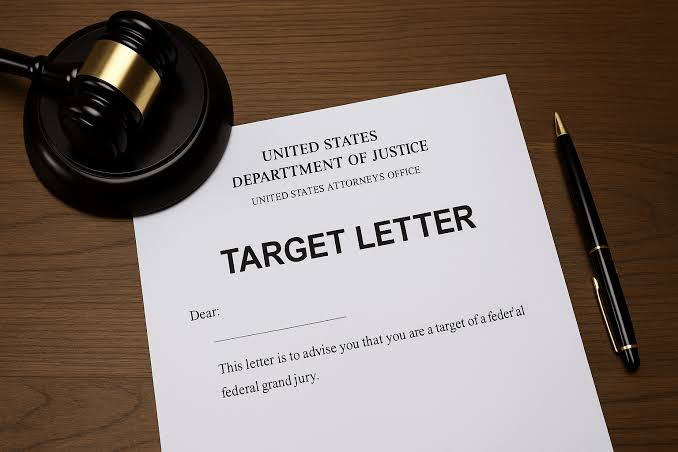
The letter received from the US Attorney’s office, which notifies a person that he or she is a target of a grand jury proceeding at the federal level, is called a federal target letter. A target, as per the Department of Justice, is someone for whom there is substantial proof that he or she committed a crime and may be a defendant in court proceedings.
This letter outlines the topic that is being investigated, cites the federal laws that are relevant to the investigation, informs you of your Fifth Amendment right not to incriminate yourself, and requests your appearance before the grand jury.
That “invitation” is anything but a calm and neutral invitation. Going to a grand jury hearing oneself, without a lawyer, is probably one of the most serious mistakes one can ever make.
Target, Subject, or Witness: The Distinction That Shapes Your Response
Federal investigations assign one of three labels to people, and the difference between them decides your legal risk and also your strategic options in practice.
Target
Prosecutors have substantial evidence tying you to a crime. An indictment is being actively considered. This is the highest risk designation, and it requires immediate legal representation.
Subject
Your conduct seems to fall within the investigation scope, yet prosecutors have not concluded that you are a putative defendant. Subject status can quickly shift to target status so one should treat this as seriously as they can.
Witness
You have information relevant to the investigation, but you are not suspected of wrongdoing. A federal target letter is issued to targets, by definition, not witnesses. If you received one, then the witness designation does not fit you.
Why New York’s Federal Districts Are a Specific Concern
There are four federal judicial districts in New York: the Southern District, the Eastern District, the Northern District, and also the Western District. The Southern District of New York, which is most often abbreviated as SDNY, has the jurisdictions of Manhattan and the Bronx. This area is reputed as having one of the toughest federal prosecutors in the country.
The way that it selects its case is highly selective, and its number of convictions always remains high. If the SDNY decides to indict someone, they will be convicted at trial. In 2022, fewer than 1% of federal defendants nationwide walked away acquitted. Around 90% of criminal cases in the federal system eventually resolve through guilty pleas before trials begin.
Ranging from Brooklyn and Queens to Staten Island and even Long Island, the Eastern District of New York is known for addressing serious organized crime and financial fraud. This district also tackles public corruption.
A target letter delineates which federal prosecutor’s office is in charge of the investigation and the federal judicial district where the probable prosecution of the case is to take place.
What Federal Target Letters Are Commonly Issued For
In New York, federal investigations can span a lot of different behavior. Target letters are tied to conduct, like
• Wire fraud and mail fraud under 18 U. S. C. § 1341 and § 1343
• Securities fraud and insider dealing
• Healthcare fraud and False Claims Act cases
• Tax evasion and structuring violations under 26 U. S. C. § 7201
• Money laundering under 18 U. S. C. § 1956
• Drug trafficking and conspiracy exposure
• Public corruption schemes and bribery
Federal prosecutors in New York have also issued target letters connected to pandemic relief fraud, mostly with PPP and EIDL loan applications that were flagged via data analytics. The DOJ’s Fraud Section has said the present enforcement stage is a second wave of prosecutions aimed at less obvious issues, including companies that inflated employee totals or misrepresented how the money was spent.
The Pre-Indictment Window and Why It Matters
The moment the federal grand jury brings an indictment against an individual, the government secures its stance. This aspect of a federal target letter is often overlooked.
During the pre-indictment stage, a seasoned federal criminal defense lawyer may contact the U.S. Attorney’s Office to discuss the case before any charges are filed. Depending on how the matter is being investigated, a written agreement between the prosecutor and the person subject to the criminal investigation allows the sharing of information between the two parties. Keep in mind that this agreement comes with limited immunity protection.
The lawyer can contest whether the evidence actually supports the “target” label or argue that another person carries more significant blame.
Steps to Take After Receiving a Federal Target Letter
The first few days of receiving a target letter can significantly impact the outcome of the case. Some actions are plain and others not too obvious, but all of them are important.
- Retain a federal criminal defense attorney before responding to anything.
- Do not speak with federal agents, prosecutors, or investigators without your counsel being present. Any statement made outside the presence of an attorney is frequently treated as evidence, including “small talk” remarks.
- Do not destroy, change, or remove any documents, messages, or records. Any conduct that is similar to tampering is enough to get you into trouble with the law under 18 U.S.C. § 1519. The penalty for this offense can sometimes be harsher than the act itself.
- Refrain from discussing the case with any colleagues, friends, or business associates. Such conversations may be requested later and could lead to more witnesses, even if no one is expected to raise them.
- The alleged behavior, including the financial documents, electronic mail, and contracts, should be documented and secured for further study.
The U.S. Department of Justice abides by the Federal Rules of Criminal Procedure, which means that almost every aspect of federal criminal cases is governed by those rules. One is expected to be familiar with these rules for a justifiable reason.
Frequently Asked Questions
Does receiving a federal target letter mean I will be indicted?
Not always. Whenever a target letter is issued by the prosecutor, they believe that there is enough information for bringing up charges even though an indictment is not definite. At times, prior to charges being pressed in court, defense counsel can also seek to hold a proffer session with the prosecution, negotiate cooperation possibilities, or attempt to weaken the available evidence against the accused. These activities may help address certain issues early on or affect the direction of the investigation.
Do I have to appear before the grand jury if I am asked?
If you get a grand jury subpoena along with the target letter, there are legally recognized choices that people talk about in the real world. You can appear and say nothing, meaning you invoke your Fifth Amendment right to remain silent when specific questions come up. You can also, through counsel, negotiate the scope of your questions or challenge the subpoena on legal grounds.
What is the difference between a target letter and a grand jury subpoena?
A target letter is a notice that you are the target in an investigation. A grand jury subpoena is a command and compels you to produce records or to testify under oath. These two items can show up together but sometimes, they can appear independent of each other. Ignoring a subpoena can lead to contempt of court and related consequences.
Should I contact the prosecutor’s office directly after receiving a target letter?
No. Any contact with the U.S. The attorney’s office should go through your attorney. Engaging with prosecutors while under investigation can often be a faulty process, as they may include any matters you raise in the record, exposing you to unnecessary disadvantages.
How long does a federal investigation take after a target letter is issued?
There is no set, universal timeline. In some matters, an indictment can follow within weeks. On other occasions, the offending party cannot yet be brought to trial since not all parties have been heard from and the evidence is still incomplete. The pace of all these proceedings is determined by the nature of the alleged act, the number of people involved, and how prosecutors are pursuing it.
What the Letter Does Not Decide
A federal target letter is a serious legal development. Federal criminal investigations develop over time, and the pre-indictment stage often offers more tactical avenues than defendants realize.
Prosecutors send target letters with caution, and the evidence supporting them is usually strong. A target letter is not a conviction, and the choices made in the weeks right after someone receives it have a measurable impact on whether charges are filed, which allegations appear, and how the case eventually resolves.
For more guidance on federal criminal procedure, the Federal Defender Program of the Eastern District of New York and the U.S. Sentencing Commission are useful resources.