The Different Types of Divorce
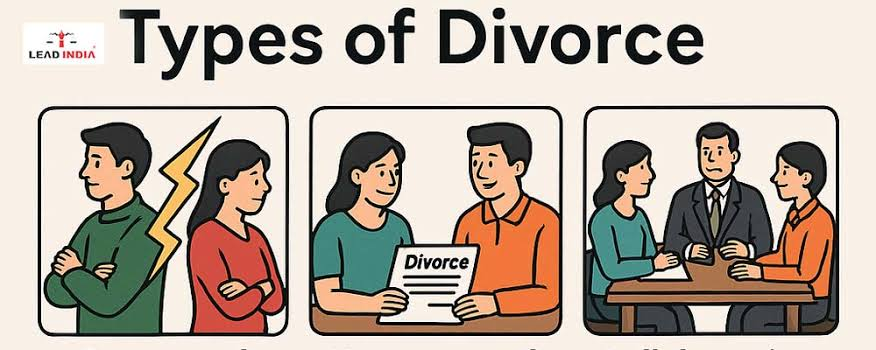
Various methods of getting divorced exist under Texas law, and each path entails its unique set of frustrations and psychological challenges. Knowing there are options when it comes to ending a relationship can make the experience a little less unpleasant.
“The best way depends on what your objectives are, your financial state, and whether or not you have children. That’s where we can help in figuring out the right one for you,” explains Matt Towson, a Texas-based family law attorney at the Towson Law Firm, PLLC.
This guide provides information on some of the basic types of divorce in Texas.
Contested vs. Uncontested Divorce
Divorce in Texas is categorized into contested and uncontested. If all the parties are on the same page regarding the division of property, child custody, and alimony, the divorce will be called uncontested. This type is fast and cheap, and it does not require airing dirty linen in front of everybody. Ideal for couples who can actually communicate about their differences.
On the other hand, once one person disagrees, you automatically enter the contested domain. Now there are court sessions, lawyers collecting evidence, and even a trial. It will take you longer, cost you more, and only get messier if there is a lack of trust or if assets are hidden.
Simply put, it all boils down to the level of agreement and complexity of the case itself.
Fault vs. No-Fault Divorce
Texas residents can file for either a fault or a no-fault divorce. The majority of people opt for a no-fault divorce, which is based on “insupportability.” The term means that your marriage has failed due to constant conflicts and the inability to reconcile. The advantage of taking this path is the possibility of avoiding proving your spouse guilty of any misconduct, which makes this option both easier and cheaper than a fault divorce.
In a fault divorce, you are trying to prove that your spouse is responsible for the problems between you two. Thus, you might claim that your spouse cheated on you or was cruel to you, abandoned you, or committed a felony while married to you. In this type of divorce, fault will play an important role in dividing marital assets and in awarding alimony. Although a fault-based divorce may seem like justice, it is much more complicated and costly.
Mediation and Collaborative Divorce
Mediation and collaborative divorce are not different kinds of divorce proceedings; rather, they are techniques for resolving disputes without resorting to trial.
Mediation involves both parties meeting with a neutral third party, called a mediator, who helps them reach an agreement to settle the matter without going to trial. It is a commonly used technique among couples who either have completely opposing views or are largely in agreement on how to divide their property.
In a collaborative divorce, each party retains their own lawyer, and all parties agree to cooperate to resolve differences rather than proceed with a court battle.
Annulment
Annulment does not refer to divorce but is instead described as an option, which means the marriage itself was never legal from the beginning. Annulments in the state of Texas cannot be obtained at will; there must always be legitimate grounds as required by law, including fraud, coercion, that one party was a minor, or that the party lacked sound mental capacity.
Evidence proving that the marriage is null and void is essential if the individual wishes to proceed. Such situations are rare to say the least, but a victory in the case will leave one free of any negative consequences.
The Importance of Working with a Divorce Lawyer
Divorce in Texas is a minefield of deadlines, paperwork, and nitpicky rules. Trying to handle all that alone can lead to disaster. You need a lawyer in your corner and not just any lawyer. Get someone who actually knows family law inside out.
You also want somebody who actually listens to you and talks in a way you can understand. The right attorney will keep you out of mistakes and make sure you do keep your sanity throughout the process.