Seeking Justice: The Importance of Personal Injury Legal Representation

An unexpected injury can quickly disrupt your life, leaving you with mounting medical bills, lost income, and emotional distress. When facing such challenges, understanding your legal rights and having strong legal representation is crucial. It’s not just about winning a case; it’s about securing your future and ensuring you receive the compensation you deserve.
Navigating the complex world of personal injury law, especially in New York, requires expert guidance. We understand the physical, emotional, and financial toll an accident can take. Throughout your claim, from initial investigation to complex negotiations, a personal injury attorney provides dedicated client advocacy, helping you navigate the legal system with confidence.
This comprehensive guide will walk you through the essentials of personal injury law. We will cover what defines a personal injury case, critical legal deadlines, how New York’s unique no-fault system works, and the vital role an attorney plays in protecting your interests. Join us as we explore how personal injury legal representation can be your most valuable asset on the path to justice.
At its core, a personal injury case falls under what is known as civil tort law. A “tort” is a civil wrong that causes a claimant to suffer loss or harm, resulting in legal liability for the person who commits the tortious act. Unlike criminal law, which seeks to punish offenders, tort law aims to provide a remedy (typically financial compensation) for the injured party.
For a personal injury claim to be valid, we must establish several key elements, collectively known as the “four elements of negligence.” These are:
- Legal Duty of Care: The defendant owed a legal duty to the plaintiff. For instance, drivers have a duty to operate their vehicles safely, and property owners have a duty to maintain safe premises.
- Breach of Duty: The defendant breached that legal duty. This means they failed to act as a reasonably prudent person would have acted under similar circumstances.
- Causation (Proximate Cause): The defendant’s breach of duty was the direct and proximate cause of the plaintiff’s injury. There must be a clear link between the defendant’s actions and the harm suffered. Without actual injury or harm, no legal tort exists, regardless of how careless an action might have been. For example, if a car runs a red light but a pedestrian manages to avoid being hit and is unharmed, there is no actionable tort. Conversely, if someone slips on a wet floor but walks away without injury, there is no legal case.
- Actual Damages: The plaintiff sustained actual damages, meaning they suffered physical, emotional, or financial harm as a result of the injury.
A common concern in personal injury cases involves pre-existing health conditions. A pre-existing condition does not automatically disqualify you from recovering damages. If the accident or incident aggravated a pre-existing condition, you may still be entitled to compensation for the worsening of that condition. This requires careful documentation and often the testimony of medical experts to demonstrate the link between the incident and the exacerbation of your health issues.
Identifying Types of Compensable Personal Injury Cases
The realm of personal injury law is broad, covering a wide array of incidents where one person’s negligence or wrongful act causes harm to another. As your legal representatives, we handle numerous types of personal injury cases, including:
- Motor Vehicle Collisions: These are among the most common personal injury claims, involving car accidents, truck accidents, motorcycle accidents, and pedestrian accidents. They often involve complex insurance laws and liability determinations.
- Premises Liability: This category covers injuries sustained due to unsafe conditions on someone else’s property, such as slip and fall incidents, inadequate security, or dog bites. Property owners have a duty to maintain safe environments for visitors.
- Medical Malpractice: When healthcare professionals deviate from the accepted standard of care, causing injury or worsening a patient’s condition, it can lead to a medical malpractice claim. These cases often require extensive expert medical testimony.
- Construction Site Accidents: New York has specific labor laws designed to protect construction workers. Injuries on construction sites can be severe and may involve claims against multiple parties, including general contractors, subcontractors, and property owners, often in conjunction with workers’ compensation claims.
- Product Liability: If you are injured by a defective or unreasonably dangerous product, you may have a product liability claim against the manufacturer, distributor, or retailer.
- Intentional Torts: While many personal injury cases involve negligence, intentional torts like assault and battery, false imprisonment, or infliction of emotional distress also fall under this umbrella. These involve deliberate actions that cause harm.
- Wrongful Death Actions: Tragically, some accidents result in fatalities. A wrongful death claim allows the surviving family members or the estate to seek compensation for their losses due to the untimely death caused by another’s negligence or wrongful act.
Understanding No-Fault Insurance and the Serious Injury Threshold
New York operates under a “no-fault” insurance system for motor vehicle accidents, which significantly impacts how claims are handled. Under this system, if you are involved in a car accident, your own insurance company generally pays for your medical expenses and lost wages, regardless of who was at fault. This is known as Personal Injury Protection (PIP) coverage.
New York’s no-fault insurance mandates coverage providing immediate medical and wage compensation up to $50,000. This coverage helps ensure that accident victims receive prompt medical attention without waiting for fault to be determined. However, this system also places limitations on your ability to sue the at-fault driver.
To step outside the no-fault system and pursue a personal injury lawsuit against the negligent party for non-economic damages (like pain and suffering), your injury must meet the serious injury threshold as defined by New York Insurance Law § 5102(d). This threshold includes categories such as:
- Death
- Dismemberment
- Significant disfigurement
- Fracture
- Loss of a fetus
- Permanent loss of use of a body organ, member, function, or system
- Permanent consequential limitation of use of a body organ or member
- Significant limitation of use of a body function or system
- A medically determined injury or impairment of a non-permanent nature which prevents the injured person from performing substantially all of the material acts which constitute such person’s usual and customary daily activities for not less than 90 days during the 180 days immediately following the occurrence of the injury or impairment.
If your injury does not meet one of these statutory definitions, your recovery for non-economic damages will be limited to your no-fault benefits. An experienced personal injury attorney can assess your injuries and medical records to determine if you meet this crucial threshold, unlocking your right to pursue a third-party lawsuit.
The Vital Role of Personal Injury Legal Representation Throughout Your Claim
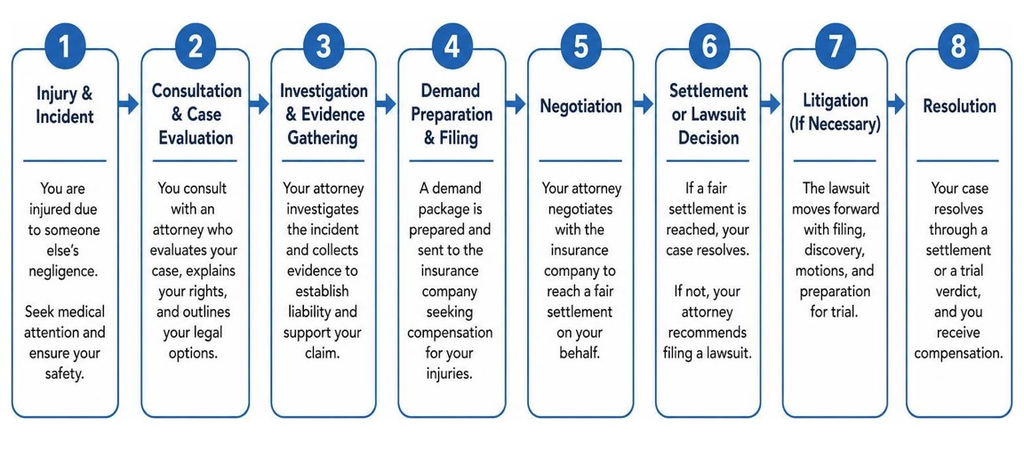
When you’ve been injured due to someone else’s negligence, the aftermath can be overwhelming. This is where personal injury legal representation becomes indispensable. We act as your advocate, navigating the complexities of the legal system while you focus on your recovery.
One of our primary roles is liability investigation. We meticulously gather and preserve evidence, interview witnesses, obtain police reports, and consult with experts like accident reconstructionists to establish fault. This proactive approach is critical, as evidence can quickly disappear or be compromised. We also understand the tactics insurance adjusters employ, which often involve trying to minimize payouts. We handle all communications with insurance companies, protecting you from making statements that could inadvertently harm your claim.
Our team conducts a comprehensive case valuation, assessing not just your immediate medical bills and lost wages, but also future medical needs, rehabilitation costs, loss of earning capacity, and non-economic damages like pain and suffering. We work with expert medical witnesses and economists to accurately project the long-term financial impact of your injuries. Furthermore, we assist with medical lien negotiation, working to reduce the amounts owed to healthcare providers or insurers from your settlement, maximizing your net recovery.
We prepare every case as though it will go to trial, even if we anticipate a settlement. This trial readiness demonstrates to the opposing side that we are serious about securing fair compensation, often leading to more favorable settlement offers. We also operate on a contingency fee model, meaning you pay no upfront legal costs, and our fees are only collected if we successfully recover compensation for you. This allows access to justice for everyone, regardless of their financial situation. Our commitment to dedicated client advocacy ensures that your best interests remain at the forefront of every decision and action we take.
When to Seek Personal Injury Legal Representation After an Accident
The timing of contacting a personal injury lawyer is crucial. Ideally, you should reach out as soon as possible after ensuring your immediate safety and seeking medical attention. Here’s why:
- Immediate Post-Injury Timeline: The moments and days following an accident are critical for evidence collection. Memories fade, physical evidence can be removed or destroyed, and witnesses may become harder to locate.
- 72-Hour Medical Evaluation Window: Insurance companies often view any delay beyond 72 hours in seeking medical care after an accident as an unreasonable delay. This can be used to argue that your injuries were not severe or were not caused by the accident. Seeking prompt medical attention not only protects your health but also strengthens your legal claim by creating an immediate medical record.
- Evidence Spoliation Risks: In cases involving commercial vehicles or complex incidents, crucial data (like black box data from trucks) can be lost or overwritten within days if legal preservation notices are not served immediately.
- Witness Memory Retention: The sooner witnesses are interviewed, the more accurate and detailed their recollections will be.
- Insurance Statement Pitfalls: Insurance adjusters, even those from your own company, are not on your side when it comes to maximizing your compensation. They may try to get you to make recorded statements or sign documents that could undermine your claim. It is always advisable to consult with an attorney before speaking with any insurance company representative beyond providing basic incident details.
Strategic Advantages of Personal Injury Legal Representation in Settlement vs. Trial
Most personal injury cases (over 95%) are resolved through out-of-court settlement negotiations rather than going to a full trial. However, having a legal team prepared for formal civil litigation provides significant strategic advantages:
- Countering Early Insurance Lowball Offers: Insurance companies often make quick, low settlement offers hoping you’ll accept before fully understanding the extent of your injuries and long-term costs. We know the true value of your claim and will advise you against accepting inadequate offers.
- Comprehensive Damages Assessment: We meticulously calculate both economic damages (quantifiable losses like medical bills, lost wages, property damage, and future care costs) and non-economic compensation (subjective losses like pain and suffering, emotional distress, loss of enjoyment of life, and loss of companionship). Valuing pain and suffering is complex, often relying on expert testimony and comparisons to similar historical awards.
- Leverage in Negotiations: When insurance companies know your legal team is fully prepared to take the case to a jury trial verdict, they are more likely to negotiate seriously and offer a fairer settlement. This readiness acts as a powerful deterrent against undervalued offers.
- Trial Expertise: Should a fair settlement not be reached, our experienced trial attorneys are ready to present your case compellingly in court, utilizing expert witnesses and persuasive arguments to secure the maximum possible compensation.
Procedural Rules, Filing Deadlines, and Statutory Doctrines
Successfully navigating a personal injury claim involves more than just proving negligence; it requires a deep understanding of complex procedural rules and statutory doctrines. As your expert legal representation, we ensure all legal requirements are met, protecting your right to compensation.
One critical aspect in New York is the rule of pure comparative negligence. This doctrine means that even if you are partly at fault for the accident, you can still recover damages. Your financial award will simply be reduced by your allocated percentage of fault. For example, if you are found 20% at fault for an accident and your total damages are assessed at $100,000, you would still be able to recover $80,000. This contrasts with other states that might bar recovery if you exceed a certain fault percentage.
We also advise clients on the potential impact of social media discovery risks. Defense attorneys frequently scour social media profiles for posts, photos, or comments that could undermine your injury claims or suggest your injuries are less severe than reported. We guide you on how to manage your online presence during litigation to prevent unintentional harm to your case. This includes being mindful of what you post, share, or are tagged in, as any digital footprint can become part of the evidence exposure in your lawsuit.
Statutory Filing Deadlines and Municipal Notice Requirements
Strict deadlines govern personal injury claims, and missing them can permanently bar your right to recovery. These are known as statutes of limitations:
- General Personal Injury Lawsuit: In New York, the general statute of limitations for a personal injury lawsuit is three years from the date the injury occurred.
- Wrongful Death Claim: A wrongful death claim must be filed within two years of the date of death.
- Medical Malpractice Claim: Medical malpractice claims in New York generally must be filed within two years and six months of the medical error, or from the end of continuous treatment for the same condition, with some exceptions for foreign objects or minors.
A particularly stringent requirement applies to claims against government entities. If your injury involves a city, municipality, or other public corporation, you must file a Notice of Claim within a mere 90 days of the incident under New York General Municipal Law § 50-e. This is a much shorter window than the standard statute of limitations and is a prerequisite for filing a lawsuit against a governmental body. Failure to file this notice on time, or to file it correctly, can result in the complete forfeiture of your right to sue, regardless of the merits of your case.
Modern Legal Standards: The Speaking Agents Act and Sovereign Immunity
New York’s legal landscape is continually evolving. A significant development relevant to personal injury lawsuits is the Speaking Agents Act (S.7093/A.8040), which became law in 2021. As of August 2026, this act has been in effect for several years and profoundly influences how evidence is handled. It allows statements made by an employee or agent regarding matters within the scope of their employment to be admitted as evidence against their employer. This can be a powerful tool for plaintiffs, as it broadens the scope of admissible evidence and can strengthen cases by holding employers accountable for the statements of their representatives, impacting employer vicarious liability.
Another crucial doctrine is sovereign immunity. This legal principle protects government entities from being sued unless they consent to it. While New York has waived some aspects of sovereign immunity, claims against government bodies are still subject to unique rules and procedures, such as the 90-day Notice of Claim mentioned above. These public entity claims often involve complex administrative filing conditions that differ significantly from claims against private individuals or corporations. In the tragic event of a wrongful death claim against a government entity, a court-appointed personal representative must be officially designated by the court before the action can proceed. Navigating these specialized rules requires the expertise of a seasoned personal injury attorney.
Frequently Asked Questions About Civil Injury Claims
What is the standard cost of hiring a lawyer for an injury claim?
Most personal injury attorneys, including our firm, operate on a contingency fee structure. This means you pay zero upfront legal expenses. Our legal fee is a percentage-based amount, typically around 33.33% (one-third) of the total recovery if the case settles before a lawsuit is filed, and potentially higher if the case goes to trial. We only get paid if we successfully secure compensation for you. We also offer a complimentary consultation to discuss your case and explain our fee structure in detail.
How does pure comparative negligence affect compensation if I am partially at fault?
New York adheres to the rule of pure comparative fault. This is a favorable system for injured parties. It means that even if you are found to be partly responsible for the accident, you are still eligible to recover damages. Your total financial award will be reduced proportionally by your fault percentage allocation. For example, if a jury determines your total damages are $100,000, but you were 30% at fault, your recovery would be $70,000. This ensures that you receive proportional recovery for the portion of the damages for which you were not responsible.
What documentation should I bring to an initial legal consultation?
To make your initial consultation as productive as possible, we recommend bringing any documents related to your injury and the incident. This may include:
- Police accident reports or incident reports.
- All medical bills and records related to your injuries, including ambulance reports, hospital records, and doctor’s notes.
- Scene crash photographs or any other photos or videos taken at the accident site.
- Contact details for any witnesses to the incident.
- All insurance carrier correspondence, including policy numbers and claim numbers.
- Any documents proving lost income, such as pay stubs, employment records, or tax returns.
Even if you don’t have all these documents, don’t hesitate to schedule a consultation. We can help you gather the necessary information.
Conclusion
An unexpected personal injury can turn your life upside down, but you don’t have to face the legal challenges alone. Understanding your rights and having skilled legal representation is paramount to navigating the complexities of the civil justice system. From proving negligence and adhering to strict filing deadlines to negotiating with insurance companies and preparing for trial, a personal injury attorney is your strongest ally.
We are committed to helping you preserve your legal rights and secure the compensation you need for your medical care, lost income, and pain and suffering. By providing an informed legal strategy, we aim to achieve long-term financial security for you and your family. Don’t let the intricacies of the law deter you from seeking justice. Contact an experienced personal injury attorney today to discuss your case and take the first step toward recovery.