Rev Up Your Legal Defense: Choosing an Attorney for Motorcycle Accidents

Post Preview
Understanding the Legal Complexities of Motorcycle Collisions
When you or a loved one face the aftermath of a motorcycle accident, the path to recovery can feel overwhelming. Beyond the physical and emotional trauma, navigating complex insurance claims and legal challenges adds immense stress. Motorcyclists, by their nature, are more vulnerable on the road. They are 28 times more likely to die in a crash per vehicle mile traveled compared to passenger car occupants.
These incidents often lead to catastrophic injuries. Traumatic brain injuries, spinal cord damage, and multiple fractures are common. Such injuries require lengthy and expensive recoveries. Insurance companies, unfortunately, frequently offer initial settlements far below a claim’s true value. This disparity, coupled with potential biases against motorcyclists, highlights the critical need for specialized legal representation.
We understand that knowing your rights and having a dedicated advocate can make all the difference. This comprehensive guide will explore the vital role of an attorney for motorcycle accidents. We will delve into everything from navigating the claims process and maximizing compensation to overcoming common challenges. We will also discuss what to look for when choosing a lawyer, how they manage your case, and the essential steps you should take to protect your future.
Motorcycle accidents present a unique set of challenges compared to collisions involving only passenger vehicles. Riders are considered vulnerable road users, lacking the protective enclosure of a car, which dramatically increases the risk of severe injury or fatality. This inherent vulnerability shapes the legal landscape of motorcycle accident claims, making specialized legal expertise crucial.
Let’s consider some key differences:
Feature Passenger Vehicle Collision Motorcycle Collision Crash Risks Lower fatality rate per mile traveled 28x higher fatality rate per mile traveled Typical Injuries Whiplash, minor cuts, bruising Catastrophic (TBI, SCI, fractures) Recovery Timelines Shorter, less complex Lengthy, expensive, often lifelong Vulnerability Enclosed, structural protection Exposed, minimal physical protection Public Perception Generally neutral Often subject to negative stereotypes Motorcyclists frequently encounter dangerous situations on the road, such as left-turn collisions where another vehicle turns in front of a motorcycle, or incidents caused by drivers failing to check blind spots. Road hazards that might be minor nuisances for cars, like potholes or gravel, can be extremely dangerous for motorcycles. Injuries like “road rash,” traumatic brain injuries (TBI), spinal cord injuries (SCI), and multiple fractures are tragically common and lead to extensive, costly recoveries. Even with a helmet, which is crucial for safety and often legally mandated, the forces involved in a collision can cause devastating harm.
Primary Causes and Common Crash Injuries
A significant portion of motorcycle accidents stems from other drivers’ failure to see or acknowledge motorcyclists. Left-turn crashes are a prime example, accounting for a high percentage of collisions and frequently resulting in severe injuries for riders. Drivers often misjudge a motorcycle’s speed or distance, or simply don’t see them at all. Beyond driver negligence, common causes can include:
- Distracted driving: Drivers focusing on phones or other in-car activities.
- Impaired driving: Alcohol or drug use affecting judgment.
- Speeding: Reducing reaction time for all parties.
- Road hazards: Potholes, debris, uneven surfaces, or poor road maintenance.
- Defective parts: Malfunctions in the motorcycle itself or other vehicles involved.
The types of injuries sustained by motorcyclists are often severe due to the direct impact with the road or other vehicles. These can include:
- Traumatic Brain Injuries (TBI): Ranging from concussions to severe brain damage, often with long-term cognitive and physical effects.
- Spinal Cord Injuries (SCI): Leading to paralysis, loss of sensation, and other debilitating conditions.
- Multiple Fractures: Broken bones in limbs, ribs, and pelvis, requiring extensive surgery and rehabilitation.
- Road Rash: Severe abrasions caused by sliding across pavement, which can lead to infection, nerve damage, and scarring.
- Internal Injuries: Damage to organs, often not immediately apparent after an accident.
These injuries not only cause immense physical pain but also lead to substantial medical bills, lost income, and a diminished quality of life, underscoring the need for comprehensive legal support.
Overcoming Unfair Biases in Rider Injury Claims
One of the most significant challenges motorcyclists face in accident claims is overcoming pervasive biases. There’s an unfortunate stereotype that motorcyclists are inherently reckless or thrill-seekers, which can influence how insurance adjusters, police, and even potential jurors perceive a case. This “juror bias” or “insurer stereotype” can lead to assumptions of fault on the part of the motorcyclist, even when evidence clearly points to another party’s negligence.
Insurance companies, in particular, may try to exploit these biases to offer significantly lower settlements or even deny claims outright. They might argue that the motorcyclist was speeding, weaving through traffic, or engaging in other “reckless driving” behaviors without concrete evidence.
An experienced attorney for motorcycle accidents understands these biases and works diligently to counteract them. They focus on presenting objective evidence, such as accident reconstruction reports, traffic camera footage, and eyewitness testimonies, to establish the facts of the case. They educate adjusters and, if necessary, jurors about motorcycle safety, common causes of accidents, and the realities of riding. Furthermore, they can clarify the nuances of helmet laws and how they relate to liability and injury claims, ensuring that the motorcyclist’s rights are protected and their case is judged fairly based on evidence, not prejudice.
Why You Need a Dedicated Attorney for Motorcycle Accidents
The period following a motorcycle crash can be chaotic and overwhelming. Beyond dealing with physical recovery and emotional trauma, victims are often thrust into a complex legal and financial battle with insurance companies. This is precisely why hiring a dedicated attorney for motorcycle accidents is not just beneficial, but often essential. An attorney acts as your advocate, handling the intricate details of your claim so you can focus on healing.
A specialized attorney brings a wealth of resources and expertise to your case. They can deploy investigative teams to gather crucial evidence, work with accident reconstruction experts to determine fault, and accurately assess the full value of your claim. Their primary goal is to maximize your compensation, ensuring you receive fair restitution for both economic damages (like medical bills and lost wages) and non-economic damages (such as pain and suffering). They also navigate complex issues like medical liens, ensuring that your medical providers are appropriately compensated without jeopardizing your financial recovery.
Immediate Steps and Evidence Preservation After a Crash
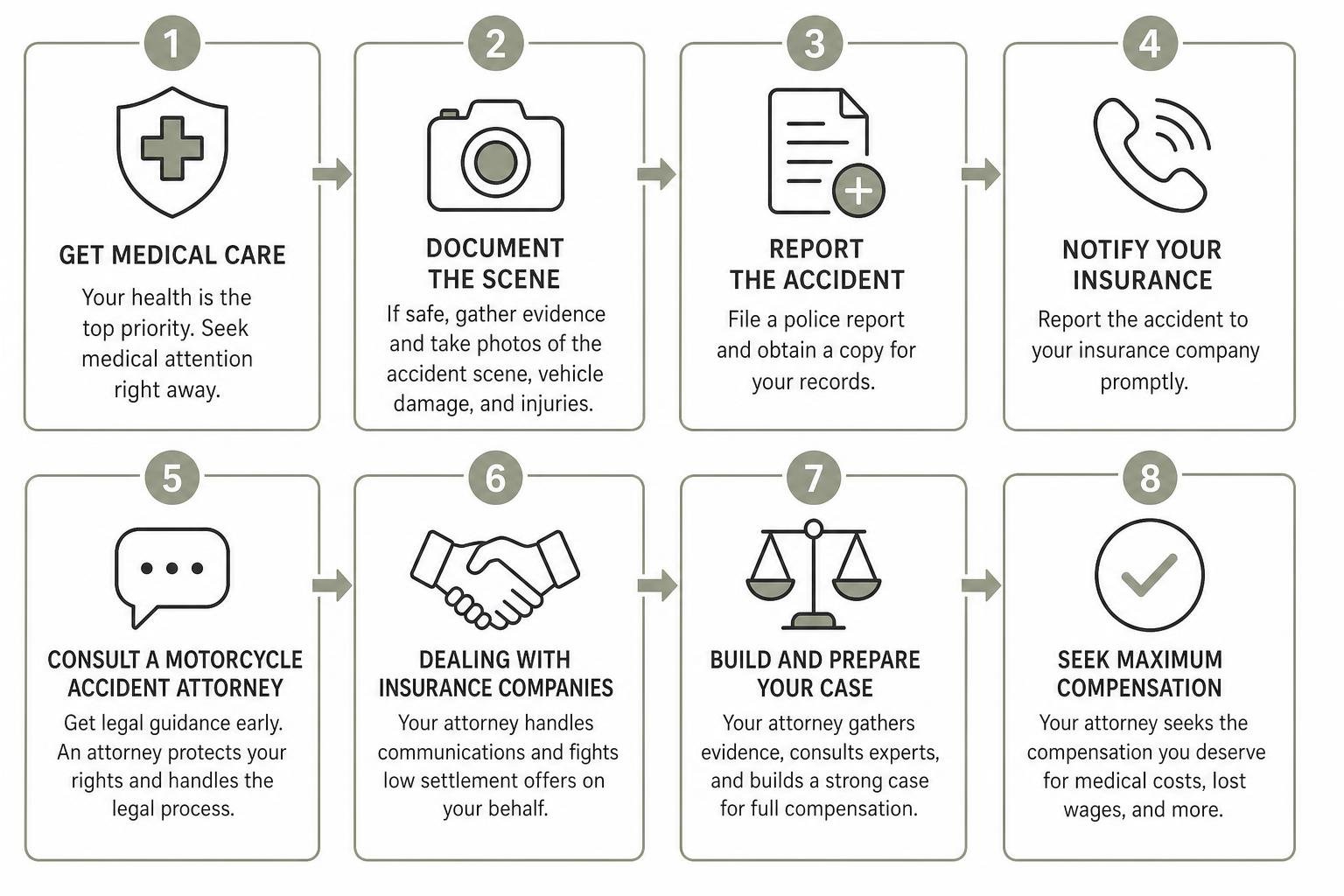
What you do immediately after a motorcycle accident can significantly impact the strength of your future claim. Taking the right steps helps preserve crucial evidence and protects your rights.
- Ensure Safety: Move yourself and your motorcycle to a safe location if possible, away from traffic.
- Call 911: Report the accident to the police and request medical assistance if you or anyone else is injured. Even if injuries seem minor, get checked by paramedics.
- Do Not Admit Fault: Avoid making statements that could be interpreted as admitting fault, even if you’re unsure what happened. Stick to the facts.
- Exchange Information: Collect contact and insurance information from all parties involved, including drivers and passengers.
- Document the Scene: This is critical. Take numerous photos and videos of:
- The accident scene from multiple angles.
- Damage to all vehicles involved.
- Road conditions (debris, potholes, skid marks).
- Traffic signals or signs.
- Any visible injuries you or others sustained.
- Your helmet, especially if it shows damage.
- Identify Witnesses: Ask for contact information from anyone who saw the accident. Their testimony can be invaluable.
- Seek Medical Attention: Even if you feel fine, see a doctor as soon as possible. Some serious injuries, like internal bleeding or concussions, may not manifest immediately.
- Keep a Journal: Document your injuries, pain levels, medical treatments, and how the accident impacts your daily life.
- Do Not Speak to Insurance Companies (Beyond Initial Notification): While you must notify your own insurance company, avoid giving recorded statements or discussing fault with any insurance adjuster until you’ve consulted with an attorney.

Collecting essential evidence items at the scene, such as scene photography, police reports, and witness contacts, provides a concrete foundation for your claim. Even inspecting your helmet for damage is important, as it can indicate the force of impact. The more information you gather at the scene, the stronger your attorney’s position will be when negotiating with insurance companies.
Navigating Severe Losses and Maximizing Claim Valuation
Motorcycle accidents frequently result in severe injuries requiring extensive and expensive recovery. Maximizing your compensation means accounting for every aspect of your losses, both current and future. An attorney for motorcycle accidents is skilled at identifying and quantifying these damages, which can include:
- Medical Expenses: Covering emergency care, hospital stays, surgeries, medications, physical therapy, rehabilitation, and future medical costs. Catastrophic injuries like traumatic brain injuries and spinal cord injuries often entail lifelong care, which must be factored into the claim.
- Lost Wages: Compensation for income lost due to time off work for recovery, as well as projected future lost earnings if your injuries prevent you from returning to your previous job or working at all.
- Vocational Retraining: If your injuries necessitate a career change, the costs associated with vocational training to acquire new skills can be included.
- Pain and Suffering: Non-economic damages that compensate for the physical pain, emotional distress, mental anguish, and discomfort caused by the accident and injuries.
- Loss of Consortium: Compensation for the negative impact the injuries have had on your relationship with your spouse or partner.
- Property Damage: Covering the cost to repair or replace your motorcycle, gear, and any other personal property damaged in the crash.
Insurance companies frequently offer initial settlements that are significantly lower than the actual value of a motorcycle accident claim. Without an attorney, victims may unknowingly accept an inadequate offer that doesn’t cover their long-term needs. An experienced attorney understands how to accurately calculate these damages, often working with economists and medical experts to project future costs, ensuring that the settlement or verdict truly reflects the full extent of your losses. Hiring an experienced motorcycle accident attorney can result in higher compensation for victims, including coverage for medical expenses, lost wages, and pain and suffering.
WestLoop Law Motorcycle Accident Representation Strategies
When facing the aftermath of a motorcycle accident, having a legal team that understands the unique challenges and complexities of these cases is paramount. A firm like WestLoop Law motorcycle accident attorneys employs comprehensive strategies to ensure their clients receive the justice and compensation they deserve. Their approach often involves a blend of thorough investigation, skilled negotiation, and, when necessary, aggressive litigation.
A dedicated legal team focuses on every aspect of your claim, from initial consultations to potential courtroom trials. This includes conducting in-depth liability assessment, gathering expert testimony from accident reconstructionists and medical professionals, and engaging in robust settlement negotiations with insurance companies. Their goal is to build an unassailable case that clearly demonstrates fault and the full extent of your damages.
How a WestLoop Law Motorcycle Accident Legal Team Proves Fault
Proving fault in a motorcycle accident case is often more challenging due to the biases motorcyclists face. A skilled legal team meticulously gathers and presents evidence to establish liability. This process involves:
- Accident Reconstruction: Experts analyze physical evidence, vehicle damage, and other data points to recreate the accident sequence and determine what truly happened.
- Police Reports: Thorough review of official reports, which often contain initial observations, witness statements, and sometimes preliminary fault assessments.
- Traffic Surveillance and Black Box Data: Obtaining footage from traffic cameras, nearby businesses, or event data recorders (EDRs, or “black boxes”) from vehicles involved can provide objective evidence of vehicle speeds, braking, and other critical actions leading up to the crash.
- Eyewitness Testimony: Interviewing and securing statements from individuals who witnessed the accident can corroborate the rider’s account and provide independent perspectives.
- Photographic and Video Evidence: Analyzing photos and videos taken at the scene by the rider, witnesses, or emergency services.
- Comparative Negligence Analysis: Even if a motorcyclist is found to be partially at fault, a skilled attorney can argue for a reduced percentage of fault, ensuring the client still recovers significant damages under comparative negligence laws.
By compiling and presenting this array of evidence, a legal team can effectively counter assumptions of rider fault and clearly establish the negligence of the other party.
Overcoming Denials and Undervaluations with a WestLoop Law Motorcycle Accident Attorney
Insurance companies are businesses, and their primary objective is to minimize payouts. This often translates into offering lowball settlements or outright denying legitimate claims. This is where a dedicated attorney becomes indispensable.
When an insurance company offers an inadequate settlement, an attorney will meticulously review the offer against the true value of your damages, as calculated by their experts. They will then present a counter-demand, backed by compelling evidence and legal arguments, to negotiate for a fair amount. If negotiations fail, they are prepared to pursue the claim through litigation.
In cases where an insurance company denies a claim, an attorney can help you appeal the denial. They investigate the reasons for the denial, challenge any unsubstantiated claims made by the insurer, and if necessary, initiate a lawsuit. This process involves:
- Thorough Documentation: Presenting comprehensive medical records, lost wage statements, and expert reports to substantiate the claim.
- Legal Arguments: Citing relevant laws and precedents to demonstrate the insurer’s obligation to pay.
- Trial Preparation: If the case proceeds to court, the legal team will handle all aspects of trial preparation, including discovery, depositions, motion practice, and presenting your case to a judge or jury.
An attorney’s readiness to take a case to trial often provides the leverage needed to secure a fair settlement, as insurance companies are aware of the potential costs and risks associated with courtroom litigation. This proactive approach ensures that your rights are protected and that you are not pressured into accepting less than you deserve.
Critical Factors When Selecting Rider Legal Representation
Choosing the right attorney for your motorcycle accident case is a pivotal decision that can significantly impact your recovery and financial future. Not all personal injury attorneys have the specific experience needed to handle the unique complexities and biases associated with motorcycle claims. When evaluating potential legal representation, several critical factors should guide your choice.
Look for a firm with a strong court track record in motorcycle accident cases, indicating their willingness and ability to litigate successfully if a fair settlement cannot be reached. Effective communication standards are also vital; you should feel informed and understood throughout the entire process. Client testimonials can offer valuable insights into a firm’s approach and client satisfaction. The goal is to find an attorney who prioritizes your case resolution and understands the nuances of rider legal representation.
Contingency Fee Structures and Healthcare Access
One of the most common concerns for accident victims is the cost of legal representation, especially when facing mounting medical bills and lost income. Fortunately, most motorcycle accident attorneys work on a contingency fee basis. This means clients pay no upfront fees and only pay if the attorney wins the case, either through a settlement or a court verdict. The attorney’s fee is then a pre-agreed percentage of the compensation recovered. This structure makes legal representation accessible to everyone, regardless of their current financial situation.
Beyond legal fees, access to medical care can be a major hurdle, particularly for those without health insurance. Motorcycle accident victims without health insurance can often still access medical treatment through arrangements made by their attorney. Experienced motorcycle accident lawyers often have networks of medical experts, investigators, and other specialists. They can help arrange for medical care on a medical lien basis, where healthcare providers agree to defer payment until the accident claim is resolved. This ensures you receive necessary treatment without upfront costs, allowing you to focus on your recovery.
Defective Equipment, Hazardous Roads, and Rider Experience
Motorcycle accidents are not always solely the result of driver negligence. Sometimes, defective equipment or unsafe road conditions play a significant role. An experienced motorcycle accident attorney will investigate these possibilities:
- Product Liability: If a motorcycle part (e.g., brakes, tires, engine components) or a part on another vehicle involved in the crash was defective and contributed to the accident, the manufacturer could be held liable. This falls under product liability law, which requires specialized legal knowledge.
- Municipal Negligence: Poorly maintained roads, unmarked hazards, inadequate signage, or dangerous road design can contribute to accidents. In such cases, a government entity responsible for road maintenance might be held accountable for municipal negligence.
Furthermore, the benefits of hiring an attorney who is also a motorcyclist cannot be overstated. A lawyer with personal riding experience often possesses a deeper understanding of the unique challenges motorcyclists face on the road, the dynamics of motorcycle operation, and the specific types of injuries common in these accidents. This “rider perspective” allows them to empathize with clients, anticipate defense arguments, and effectively communicate the realities of riding to adjusters and juries, ensuring a more nuanced and powerful representation. They understand how factors like brake failures or roadway defects specifically impact a rider.
Frequently Asked Questions About Motorcycle Collision Claims
Navigating the legal aftermath of a motorcycle accident can raise many questions. Here, we address some of the most common inquiries victims have about their collision claims.
What is the statute of limitations for filing a motorcycle crash lawsuit?
The statute of limitations is a crucial legal deadline that dictates the maximum time period within which a lawsuit can be filed after an accident. This period varies significantly by state and type of claim. For instance, in New Mexico, the statute of limitations for filing a motorcycle crash claim is three years. However, this can differ for claims against government entities or for specific types of injuries.
It’s critical to act quickly. Missing this deadline almost always means forfeiting your right to pursue compensation, regardless of the merits of your case. An attorney can help you understand the specific filing deadlines applicable to your situation. Timely action is also important because evidence decay occurs over time; witness memories fade, physical evidence can be lost or altered, and surveillance footage may be erased. Consulting an attorney promptly ensures that all necessary steps are taken within the legal timeframe.
When is the ideal time to consult an attorney after a motorcycle accident?
The ideal time to consult an attorney after a motorcycle accident is as soon as possible, ideally within days of the incident. While your immediate priority should be seeking medical attention, contacting a lawyer quickly can protect your rights and strengthen your claim.
Here’s why immediate consultation is beneficial:
- Statement Precautions: An attorney can advise you on what to say (and what not to say) to insurance adjusters, preventing you from inadvertently harming your claim.
- Insurer Communication: Your lawyer can handle all communications with insurance companies on your behalf, shielding you from their tactics and allowing you to focus on recovery.
- Evidence Preservation: The sooner an attorney is involved, the quicker they can begin investigating, collecting evidence, and interviewing witnesses while memories are fresh and physical evidence is still available.
- Claim Timeline: Understanding the full claim timeline and necessary steps from the outset helps manage expectations and ensures no critical deadlines are missed.
Waiting too long can complicate your case, make evidence harder to obtain, and give insurance companies an advantage.
How are damages calculated if both parties share fault in the collision?
In many motorcycle accidents, there might be an argument that both parties share some degree of fault. How damages are calculated in such scenarios depends on the comparative negligence laws of the state where the accident occurred. There are generally two main types:
- Modified Comparative Fault: Most states follow this rule. It means you can recover damages as long as you are not more than 50% or 51% at fault (the exact percentage varies by state). If you are found to be 50% or less at fault, your recoverable damages will be reduced by your percentage of fault. For example, if you are awarded $100,000 but found 20% at fault, you would receive $80,000. If you are found 51% or more at fault, you recover nothing.
- Pure Comparative Fault: A few states use this system. Under pure comparative fault, you can recover damages even if you are mostly at fault, but your recovery will be reduced by your percentage of fault. For instance, if you are 90% at fault and awarded $100,000, you would still receive $10,000.
An attorney for motorcycle accidents will work to minimize your proportional reduction of fault, ensuring you receive the maximum possible financial recovery. They will gather evidence to demonstrate the primary fault of the other party, even if some minor contribution from your side is acknowledged.
Conclusion
The road to recovery after a motorcycle accident is often fraught with physical, emotional, and financial challenges. Given the severe injuries common in these incidents, the inherent biases against riders, and the complex legal landscape, securing expert legal representation is not merely an option but a necessity. A dedicated attorney for motorcycle accidents serves as your unwavering advocate, protecting your rights and ensuring you receive the fair settlement you deserve.
You may also like: How to Make a DIY Will That Stands Up to a Legal Challenge
From meticulously gathering evidence and navigating intricate insurance claims to fighting against lowball offers and overcoming unfair biases, an attorney handles the complexities so you can focus on healing. Their expertise in maximizing compensation for medical bills, lost wages, pain and suffering, and property damage is invaluable. By choosing the right legal partner, you empower yourself to achieve full financial recovery and secure your future. Don’t face the aftermath alone; let a skilled motorcycle accident attorney champion your cause.