After a Dearborn, Michigan Crash: A Roadmap for Evidence, Insurance, and Recovery
Post Preview
Key Takeaways
- Put safety and medical care ahead of claim paperwork.
- Save photos, witness details, bills, reports, and written communications from the insurer.
- Review the specific PIP medical coverage chosen on the applicable policy.
- Do not rush into a settlement or sign a release before understanding its effect.
- Consider legal guidance when injuries are substantial, fault is disputed, or benefits are delayed.
A collision on Ford Road, Michigan Avenue, or a neighborhood street in Dearborn can turn an ordinary day into a series of urgent decisions. The best first step is usually a calm one: protect everyone’s safety, seek appropriate medical attention, and begin preserving the information that may matter later. When injuries, coverage questions, or payment delays complicate the process, speaking with a relentless personal injury advocate may help a person understand the available options. Taking a few careful steps in the first hours and days can also reduce confusion later, particularly when several people, vehicles, medical providers, or insurance companies become involved.
This guide is designed for Dearborn drivers, passengers, pedestrians, and families who need a practical post-crash checklist. Michigan insurance rules can involve separate questions about medical benefits, vehicle damage, and a possible claim against another driver, so organized records and careful communication can make the situation easier to manage. Because each crash has different facts, this information is a general starting point rather than a substitute for advice tailored to a specific policy, injury, or dispute.
Start With Safety at the Crash Scene
Call 911 when someone is injured, a vehicle creates a roadway hazard, or police assistance is needed. If it is safe and the vehicle can be moved, get out of traffic and away from additional danger. On busy Dearborn corridors, avoid standing between vehicles or in an active lane while exchanging information. Turn on hazard lights when appropriate, remain alert for approaching traffic, and wait for emergency responders in a safer location if a vehicle cannot be moved.
Information to collect
- The other driver’s name, contact information, insurer, policy details, license plate, and vehicle description.
- Names and contact information for witnesses.
- Photos showing vehicle positions, damage, traffic signals, road conditions, debris, and visible injuries.
- The responding agency and report number, if an officer prepares a report.
Keep the discussion brief and factual. Do not argue about fault, apologize in a way that could be misunderstood, or speculate about injuries that have not yet been evaluated. If another driver appears upset, impaired, or threatening, prioritize distance and safety rather than continuing the conversation. A photo of insurance information and vehicle damage may be more reliable than trying to remember details after a stressful event.
Get Medical Care Even When Pain Seems Minor
Some crash-related symptoms are not immediately obvious. Neck pain, headaches, dizziness, soreness, and concentration problems may develop after the initial adrenaline wears off. Seek prompt care when symptoms arise, describe the crash accurately to the provider, and follow recommendations for testing, treatment, and follow-up visits. Tell the provider about all affected areas, even if one symptom seems less serious, and ask questions if discharge instructions or activity restrictions are unclear.
For example, a driver rear-ended near a Dearborn shopping area may initially feel only stiff. Several hours later, worsening neck pain can make turning the head, sleeping, or working difficult. A timely medical evaluation both supports recovery and creates a record of the symptoms reported after the collision.
Build a Simple Crash Evidence File
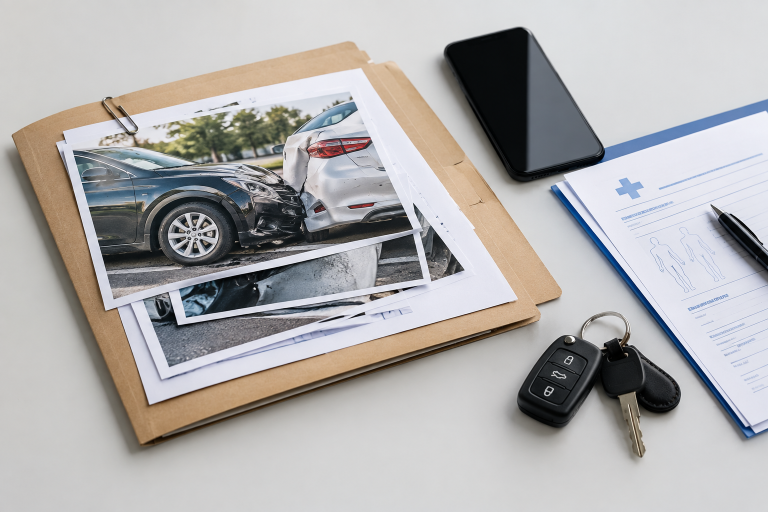
Create one paper folder or a secure digital folder for each document related to the crash. A clear file helps when an insurer, medical provider, repair shop, or attorney needs information months later. Back up digital photos and videos in more than one location, and keep originals whenever possible rather than relying only on edited or cropped copies.
- Keep photographs, video, witness information, the police report number, and insurance correspondence.
- Save medical bills, visit summaries, prescriptions, therapy records, pharmacy receipts, tow charges, and repair estimates.
- Record missed work, mileage to appointments, household tasks you could not complete, sleep disruptions, and daily pain levels.
- Use dates on every note. A short daily entry is often more useful than trying to reconstruct events later.
If a repair facility, medical office, or insurer provides information by telephone, follow up with a short written note to yourself that identifies the date, the person you spoke with, and the main point of the conversation. This does not need to be complicated. Consistent, contemporaneous notes can make it easier to locate documents and explain the sequence of events if questions arise later.
Understand How Michigan No-Fault Benefits May Apply
Michigan auto insurance includes Personal Injury Protection, commonly called PIP. The medical portion of PIP is tied to the coverage level selected on the policy, while other benefits may also be available depending on the policy and circumstances. The state explains that drivers can choose among several PIP medical coverage options. Reviewing the declarations page, policy booklet, and any health-coverage coordination documents can help identify the coverage that applied on the date of the crash.
Do not assume that every payment issue belongs in a single claim. Medical benefits, collision coverage, property damage, and a claim involving another driver can follow different paths. Which insurer is responsible for PIP can also depend on facts such as the injured person’s household coverage, employment-related vehicle use, or the type of vehicle involved. Michigan law sets out an order of priority for personal protection insurance benefits, but individual circumstances can be complicated.
Keep in mind that coverage choices and exclusions may affect household members as well as the named insured. A passenger, pedestrian, motorcyclist, or person using a work vehicle may have questions that differ from those of the vehicle owner. When reviewing a policy, confirm the effective dates, listed vehicles, named insureds, deductibles, and any endorsements instead of relying on a verbal summary of coverage.
Watch for Common Insurance Problems
An adjuster may request a recorded statement, medical authorization, or settlement discussion early in the process. It is reasonable to ask what information is needed, request documents in writing, and review the scope of any authorization before signing. Broad record requests may include information unrelated to the crash, while an early settlement may be reached before future treatment needs are known.
Keep copies of every submission and note the claim number, the adjuster’s name, the date, and what was discussed. If an insurer questions whether a service is necessary or says coverage does not apply, ask for a written explanation and preserve it with the rest of the file. Michigan’s insurance regulators also provide consumer information about claim handling and complaint options through the Michigan auto insurance consumer-rights page.
Be accurate and cooperative, but do not guess when answering a question. If you do not know an answer, it is generally better to say so and verify the information than to provide an estimate that later proves incorrect. Before sending records electronically, confirm the correct claim contact and retain proof that the materials were sent.
Track Deadlines and Written Communications
Use a calendar for appointments, insurer requests, bills, repair milestones, and response dates. Do not assume one deadline controls every issue. Insurance notice requirements, benefit disputes, and potential injury claims may involve different rules and time limits. Prompt attention is especially important when an insurer requests proof of loss or additional documentation.
Open mail and secure electronic messages promptly, including notices from health insurers, employers, and repair facilities. Set reminders several days before a requested response date, and save confirmations when documents are uploaded, mailed, faxed, or emailed. If an unavoidable delay occurs, communicate in writing and keep a copy of the request for additional time.
Know When a Legal Consultation May Help
A consultation may be worthwhile if injuries are serious, lasting, or disputed; the other driver denies responsibility; several vehicles or insurers are involved; or the injured person cannot work. Legal advice can also be valuable before signing a release, particularly when treatment is ongoing or the long-term impact of an injury is uncertain.
A person may also benefit from guidance when medical bills are being sent to the wrong insurer, a claim involves a commercial vehicle, or family members disagree about the available coverage. Preparing a short timeline and bringing the crash file to an initial consultation can help make that conversation more productive.
Compare Lawyers and Fee Agreements Carefully
Advertising alone does not show whether a lawyer is a good fit. Ask practical questions before hiring anyone:
- Does the lawyer regularly handle Michigan motor vehicle injury claims?
- Who will provide day-to-day updates and answer questions?
- Is the fee contingent on recovery, and how are case costs handled?
- Will filing fees, medical-record charges, expert expenses, or court costs be deducted separately?
- How will the lawyer evaluate medical evidence, lost income, and possible future care?
Ask for enough detail to understand how communication will work after the case begins. A written fee agreement should be read carefully, and it is appropriate to request clarification of any unclear terms before signing.
Prepare for Settlement Talks or Litigation
Organized records make a claim easier to evaluate. A settlement discussion should account for documented current losses and, when supported by medical information, reasonably expected future needs. A lawsuit is not the same as a trial. Many cases are resolved through negotiation, but disputed facts, incomplete records, or disagreement about injuries can make the process longer.
Continue preserving records while a claim is pending. New treatment, changes in work restrictions, additional repair invoices, or updated medical opinions may affect how the matter is evaluated. Avoid posting detailed comments, photographs, or assumptions about the crash on social media, because public statements can be misunderstood or taken out of context.
Frequently Asked Questions
Should I speak with the other driver’s insurer?
You may provide basic identifying information, but be cautious about recorded statements or detailed injury discussions before you understand your medical condition and coverage. If you do communicate, keep the conversation limited to facts you know and make a note of the date, time, and representative involved.
What if pain begins days after the crash?
Arrange medical evaluation as soon as practical, explain when the symptoms began, and keep records of care, restrictions, and related expenses. Follow the provider’s recommendations and report any new or worsening symptoms rather than assuming they will resolve on their own.
What records should I keep?
Keep crash photos, witness details, report information, bills, receipts, treatment records, repair paperwork, work-loss information, and insurer communications. Also, keep a copy of the relevant insurance policy documents and a timeline of important calls, appointments, and submissions.
What happens when benefits are delayed or denied?
Request a written explanation, preserve all supporting documents, respond to legitimate information requests, and consider qualified assistance if the issue is not resolved. Review the explanation closely to determine whether the dispute concerns missing documents, coverage, medical necessity, billing, or another issue.
Conclusion
Visit this website: Navigating Complex Family Law and Custody Disputes
Recovery after a Dearborn crash is easier to navigate when health needs come first, and records are kept from the beginning. Careful documentation, a close review of insurance coverage, and timely professional advice can help injured people make informed decisions while they focus on healing. Even a straightforward crash can create practical challenges, but a methodical approach can help protect important information and reduce avoidable stress.