OtterSec Lawsuit Explained: Allegations, Timeline & Impact in 2025
Introduction
The OtterSec lawsuit has been among the most discussed legal matters in the blockchain and cybersecurity world. Once known for its trusted audits and deep involvement in blockchain safety, OtterSec now finds itself amid a legal battle that shook confidence in the decentralized security industry.
At its core, this is not a case about contracts and ownership but about what happens when innovation, trust, and internal governance come into conflict. In this full guide, you will learn how the lawsuit came about, what the key allegations are, and how it affects the technology community, with the essential lessons it holds for startups and blockchain firms everywhere. Have you checked our detailed guide on Innovasis Lawsuit.
What is the OtterSec Lawsuit?
The OtterSec lawsuit refers to a legal dispute over the internal management, ownership, and operations of a blockchain security firm that had become a respected player in Web3 auditing. In fact, the lawsuit emerged after internal disagreements between founders and stakeholders in the company escalated to formal legal action.
This case is related to mismanagement, illegal dissolution, and the misuse of the OtterSec brand name, domain, and client resources. While a final judgment has not been issued as of this date, it illustrates the vulnerabilities that exist when technology firms scale rapidly without corresponding legal and governance protections.
Background of OtterSec

OtterSec was founded as a blockchain auditing company that specialized in finding vulnerabilities in smart contracts and decentralized finance (DeFi) protocols. The rise of cryptocurrency platforms catapulted it to a recognizable name in digital security. Its premise was simple: to help developers build safer blockchain ecosystems through extensive code reviews and penetration tests.
As the business grew rapidly, internal dynamics started to change. Leadership transitions, increasing market demands, and diverging visions for the company’s future soon developed into internal tension. When one of the original leadership members reportedly died, unresolved questions about ownership, governance, and succession began to emerge—forming the foundation of the OtterSec lawsuit.
How the OtterSec Lawsuit Began
The litigation started after reports of sharp divisions among OtterSec’s leadership. Following the death of one of its key members, disputes emerged over the company’s direction, brand ownership, and who should manage client relationships.
According to court filings, some company actions were allegedly performed without the consent of all stakeholders—such as restructuring, rebranding, and control over the company’s online identity. Opposing parties alleged that these moves violated existing agreements and the rights of the founder’s estate.
This series of internal decisions, disagreements, and alleged breaches eventually culminated in the OtterSec lawsuit, drawing significant attention from the blockchain community for what it reveals about startup governance and integrity.
The Central Allegations
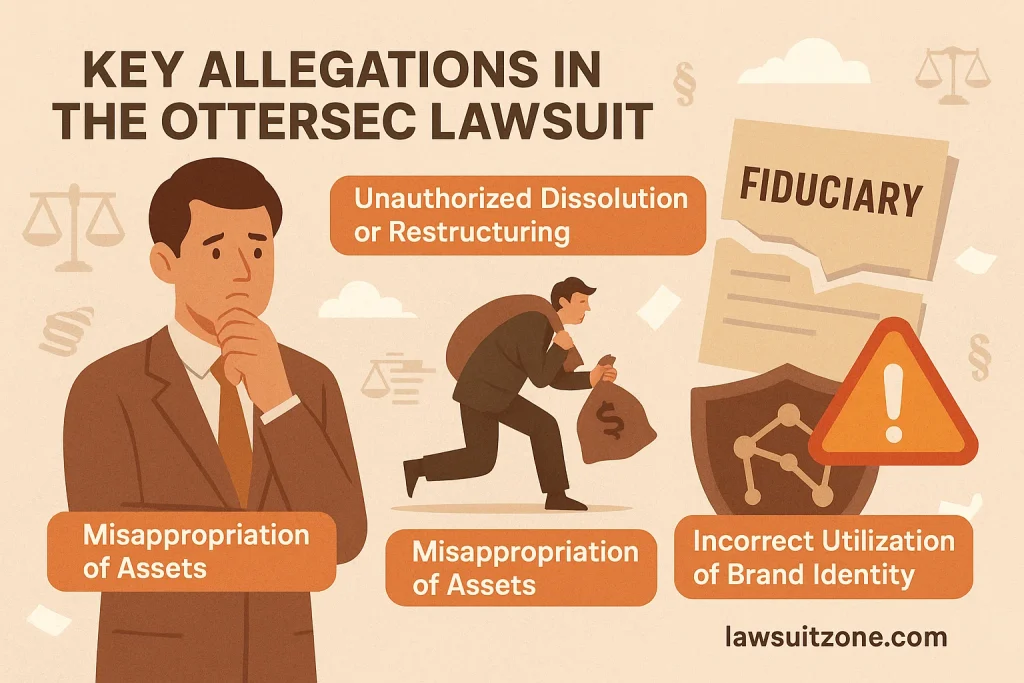
The key issues in the OtterSec case deal with corporate control, mismanagement, and intellectual property. These alleged issues include the following:
1. Unauthorized Dissolution or Restructuring
It was claimed that the company was dissolved or restructured without proper consent from all its partners or stakeholders, violating internal procedures.
2. Misappropriation of Assets
The lawsuit further alleges that valuable assets—including trademarks, client lists, and technical resources—were transferred to new entities without authorization or fair compensation to all members.
3. Breach of Fiduciary Duty
Plaintiffs claim that leadership acted against the interests of the company’s members by withholding critical information and using internal assets for personal or external gain.
4. Incorrect Utilization of Brand Identity
It was alleged that the OtterSec name, reputation, and goodwill were used by third-party entities in a way that could mislead clients and damage the integrity of the original company.
5. Lack of Transparency and Governance
The lawsuit also raises concerns about poor internal communication, weak record-keeping, and inadequate disclosure of key decisions affecting company operations.
Taken together, these accusations reveal how internal conflicts can erupt when startups lack clear corporate structures and enforceable operating agreements.
Timeline of Events
While most details remain under judicial review, here’s a summary of how the OtterSec lawsuit unfolded:
- 2019–2021: OtterSec evolves into a reputable blockchain auditing firm, forming partnerships with multiple DeFi projects.
- 2022: One of the company’s founders passes away, raising questions about succession and ownership.
- 2023: Disputes begin over control of the company’s brand, domain, and assets.
- Late 2023: Claims of unauthorized restructuring and brand misuse lead to the filing of the lawsuit.
- 2024–2025: Court and arbitration proceedings continue, with rulings on asset ownership and governance pending.
This timeline demonstrates how business growth, personal tragedy, and unclear documentation can combine to create long-lasting disputes in fast-moving industries like blockchain.
Legal Issues in Focus
Aside from specific individual claims, the OtterSec lawsuit sheds light on major legal themes relevant to tech startups.
1. Ownership Rights and Operating Agreements
LLCs are governed by operating agreements that dictate decision-making authority. This lawsuit questions what happens when those agreements are incomplete or ignored during company transitions.
2. Fiduciary Duties in Startups
Corporate leaders are legally bound to act in the best interests of all stakeholders. Breaching this duty through self-serving actions or secrecy can lead to litigation.
3. Trademark and Brand Protection
The OtterSec name and reputation were valuable assets. This dispute highlights how easily brand identity can become a battleground when ownership and control aren’t clearly defined.
4. Succession and Estate Rights
When a founder passes away, their ownership and intellectual property must be handled responsibly. This case emphasizes the importance of including succession clauses in startup documents.
5. Corporate Transparency and Recordkeeping
Poor documentation can cripple a company’s legal defense. In blockchain—a field built on transparency—this issue becomes even more critical.
Impact on the Blockchain Industry
The OtterSec lawsuit has caused ripples across the blockchain and cybersecurity sectors. For years, OtterSec was considered a trusted auditor, safeguarding millions in digital assets. The lawsuit, however, raised doubts about the internal stability and accountability of auditing firms.
As a result, many blockchain startups are now reinforcing governance frameworks, clearly defining ownership stakes, and improving compliance protocols. This lawsuit could reshape how companies handle transparency, partnership agreements, and intellectual property rights within Web3.
Key Lessons from the OtterSec Lawsuit

1. Document Everything
Startups must keep detailed records of all agreements and member decisions. Ambiguity creates vulnerability.
2. Governance Is Non-Negotiable
Even in small firms, governance is vital. Roles, responsibilities, and voting rights must be explicitly defined.
3. Protect Intellectual Property Early
Register trademarks, secure domains, and assign ownership of brand assets early — not after conflict arises.
4. Include Succession Plans
Unexpected events like death or resignation can destabilize a company. Succession plans ensure continuity and fairness.
5. Encourage Transparency and Communication
Open communication prevents misunderstandings. Major decisions should always involve key stakeholders.
These lessons go far beyond blockchain and apply to every modern business operating in fast-paced sectors.
Broader Ethical and Industry Implications
The OtterSec case is more than a corporate lawsuit — it’s a reflection of how technology, ethics, and law intersect. It shows how companies that audit others for transparency must uphold those same principles internally.
For the blockchain industry, built on trust and decentralization, this case is a wake-up call. True integrity means not only writing secure code but maintaining ethical, transparent corporate governance.
Expert View
Business leaders can gain valuable insights from the U.S. Department of Justice’s Corporate Compliance Program Guidelines (Do-follow link). These frameworks help organizations build internal controls, maintain integrity, and avoid governance failures like those seen in the OtterSec lawsuit.
Implementing such compliance programs can significantly reduce legal risk and preserve reputation in fintech and blockchain industries.
Frequently Asked Questions (FAQs)
Final Thoughts
The OtterSec lawsuit is more than a legal story it’s a lesson in leadership, accountability, and ethics. It reminds us that no amount of technology can replace trust, transparency, and proper governance.
For blockchain companies, investors, and entrepreneurs, it’s both a warning and an opportunity: build strong legal foundations, uphold ethics, and earn lasting trust in the community.
Disclaimer: This article is for informational purposes only and does not constitute legal advice. Always consult a qualified attorney for guidance on specific business or legal matters.