Mirena IUD Lawsuit: The Complete, Human-Friendly Guide (2025)
Introduction (Keyword in First Paragraph)
If you’re searching for a mirena iud lawsuit, you’re probably not doing it for fun you’re doing it because something felt “off” after insertion, removal, or long-term use, and you want answers. This guide explains what these lawsuits generally involve, what people commonly claim, what symptoms and complications are often discussed, what proof matters, and what steps you can take next clearly, respectfully, and without legal jargon overload.
Note: This article is informational only and does not replace medical or legal advice. Have you checked our detailed guide on tylenol autism lawsuit.
What Is Mirena and Why Do People File Lawsuits?
Mirena is a hormonal IUD used for birth control and for treating heavy menstrual bleeding in some patients. Many people use it without serious problems. But lawsuits typically appear when someone believes they experienced a complication that was not properly warned about, not properly handled, or caused unexpected long-term harm.
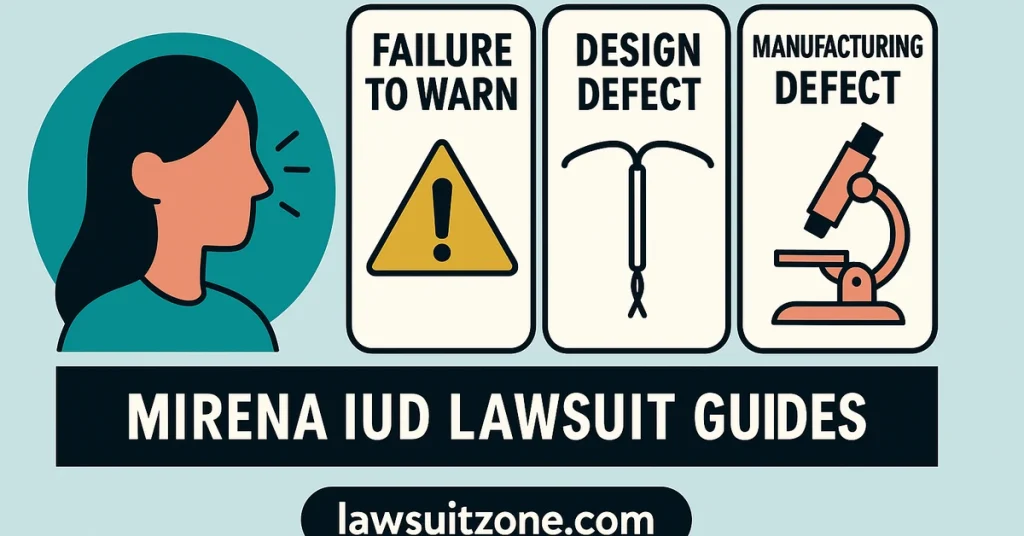
A mirena iud lawsuit generally claims one (or more) of these things:
- Failure to warn: The person alleges the risks were not clearly explained or were minimized.
- Design defect: The claim suggests the product’s design made certain injuries more likely.
- Manufacturing defect: The device may be alleged to have deviated from intended specs.
- Marketing issues: Some claims argue messaging focused on convenience while glossing over serious risks.
Not every bad outcome means there is a strong legal case. But when complications are documented and life-altering, people often explore legal options to recover medical costs and losses.
Common Injuries Linked to Mirena IUD Lawsuit Claims
Every case is unique, but many claims fall into a few repeated categories. Below are the most commonly discussed themes.
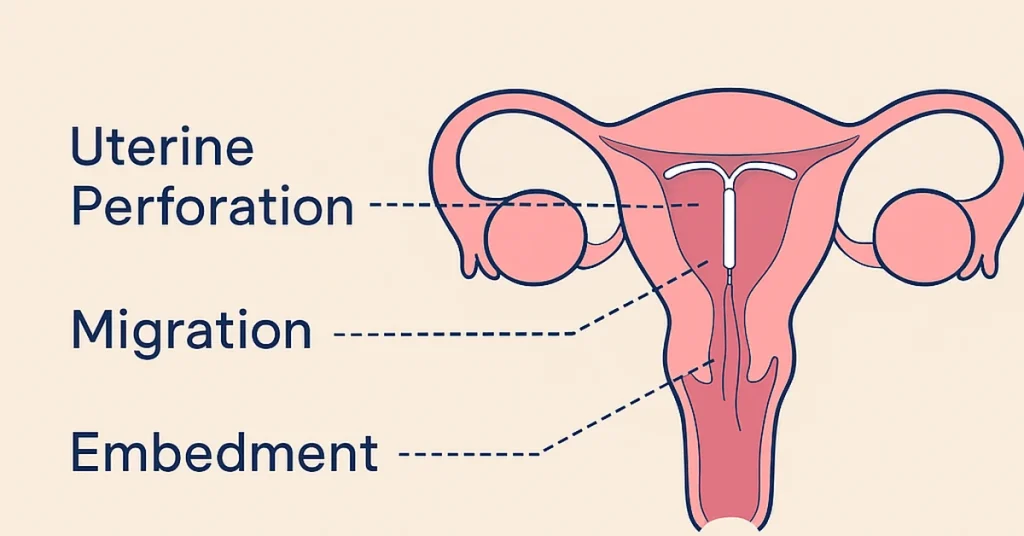
1) Uterine Perforation (A Tear or Puncture)
One of the most serious concerns raised in many device-related discussions is uterine perforation—when the IUD damages the uterine wall. This can happen during insertion or later, and it may lead to pain, bleeding, infection risk, or other complications.
Possible signs people report:
- Sudden sharp pelvic pain
- Severe cramping that doesn’t improve
- Heavy bleeding
- Fever or feeling unwell
- Pain during intercourse
2) Migration (Device Moves Out of Place)
Sometimes the concern isn’t a puncture but a movement—when the device is no longer positioned as intended. People often learn about migration after symptoms show up or strings can’t be felt.
Common situations:
- Strings feel missing or suddenly different length
- Imaging shows the IUD is not where it should be
- Removal becomes difficult or requires surgery
3) Embedment (Device Gets Stuck in Tissue)
Embedment means the IUD becomes partially stuck in the uterus. Removal may be painful, complicated, or require a procedure.
Why it matters in claims:
- Additional medical procedures
- Recovery time and emotional stress
- Ongoing pelvic pain or bleeding issues
4) Difficult or Surgical Removal
Some people report that removal wasn’t simple—especially in cases involving embedment, broken strings, suspected migration, or perforation. When surgery is needed, the impact becomes bigger: hospital bills, time off work, and prolonged recovery.
5) Intracranial Hypertension / Pseudotumor Cerebri (IIH/PTC) Allegations
Another category that appears in lawsuit discussions involves claims of a potential relationship between hormonal exposure and intracranial hypertension—a condition involving increased pressure around the brain.
Symptoms often described:
- Strong, ongoing headaches
- Vision changes (blurred vision, double vision)
- “Whooshing” noise in the ears
- Nausea or dizziness
This is a complex medical area. Not every headache equals IIH, and IIH itself can have multiple risk factors. When it’s discussed legally, it typically involves medical workups, documented diagnosis, and expert analysis.
Who Might Qualify for a Mirena IUD Lawsuit?
People usually explore a mirena iud lawsuit if they can show three key things:
1) Clear Proof of Mirena Use
- Insertion record
- Clinic notes
- Insurance claim records
- Prescription documentation (if applicable)
2) A Diagnosed or Documented Injury
Examples:
- Imaging confirming migration/perforation
- Surgical records for removal
- Specialist notes supporting conditions like IIH
3) Real-Life Damages
Courts care about measurable impact:
- Medical bills and future care needs
- Lost income/time off work
- Pain, suffering, reduced quality of life
- Long-term complications
Key Evidence to Collect (This Can Make or Break a Case)
If you’re seriously considering legal action, documentation matters more than opinions. Here’s what typically helps most:
Medical Records Checklist
- Insertion notes (date, provider, any complications)
- Follow-up appointment notes
- Ultrasound, CT, or MRI reports (and dates)
- Removal notes (especially if difficult)
- Surgical/operative reports if surgery happened
- ER visit summaries
- Prescriptions related to the injury
Personal Documentation Checklist
- Symptom diary with dates (simple bullet list works)
- Photos of prescriptions, receipts, travel costs
- Work records showing missed days or reduced ability
- Notes about daily limitations (sleep disruption, childcare issues, etc.)
Tip: Keep your notes factual. “Pain level 8/10, couldn’t stand straight, missed work” is stronger than emotional wording alone (though emotions are totally valid).
Deadlines: Why Acting Sooner Helps
Every region has a statute of limitations—a legal deadline. The time limit varies depending on:
- Where you live
- The type of claim
- When you first learned (or should have learned) the injury might be linked
Even if you’re unsure about pursuing anything, collecting records early is smart because clinics don’t always retain everything forever in the same format.
How the Legal Process Typically Works (No Jargon)
Here’s what most people experience when they contact a lawyer:
Step 1: Case Review
A lawyer or intake team usually asks:
- When was Mirena inserted and removed?
- What symptoms happened and when?
- What diagnoses or procedures occurred?
- What records do you have?
Step 2: Medical Record Collection
Many firms help request records, but you can also request them yourself.
Step 3: Filing the Claim
If the attorney believes it’s a viable case, they may file in:
- State court, or
- Federal court (depending on strategy and case structure)
Step 4: Evidence + Expert Review
Medical device cases often require experts. The key question is typically:
- Is there a medically plausible link?
- Were warnings adequate?
- Were risks properly communicated?
Step 5: Resolution Path
Outcomes may include:
- Settlement negotiations
- Dismissal (if proof is weak)
- Trial (less common, but possible)
What Compensation Might Cover
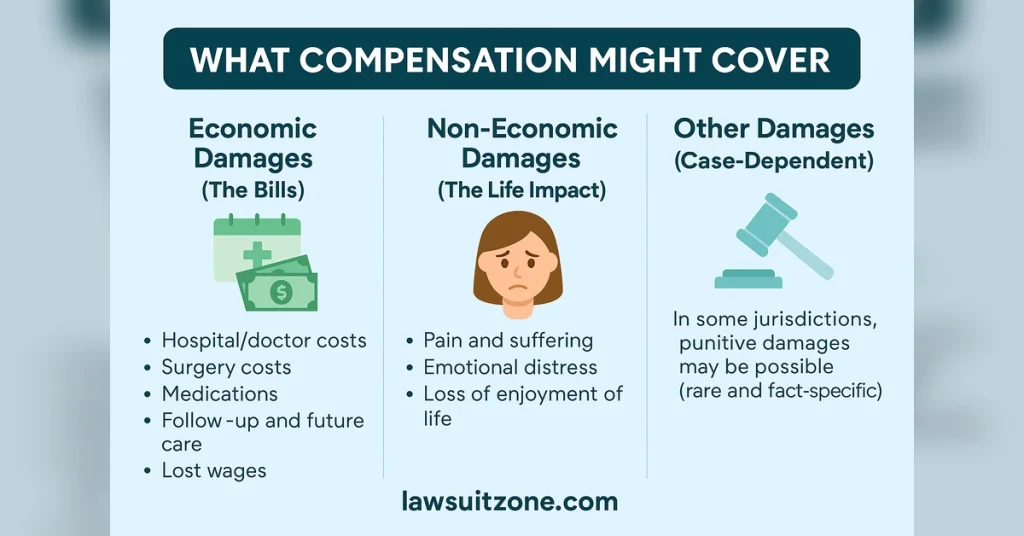
If a claim succeeds, compensation can include:
Economic Damages (The Bills)
- Hospital/doctor costs
- Surgery costs
- Medications
- Follow-up and future care
- Lost wages
Non-Economic Damages (The Life Impact)
- Pain and suffering
- Emotional distress
- Loss of enjoyment of life
Other Damages (Case-Dependent)
- In some jurisdictions, punitive damages may be possible (rare and fact-specific)
What to Do If You’re Experiencing Symptoms Right Now
Your health comes first. If you have severe pain, heavy bleeding, fever, fainting, or vision changes—get medical attention urgently.
Practical Steps You Can Take Today
- Book a medical evaluation (or urgent care/ER if severe)
- Ask for imaging if migration/perforation is suspected
- Request copies of records
- Write a simple timeline (inserted → symptoms → visits → diagnosis → removal)
- Speak to a qualified attorney for a case assessment
Important: Myths and Misunderstandings
- “If I have side effects, I automatically have a lawsuit.”
Not always. A lawsuit typically requires a provable injury and damages, not just discomfort or common side effects. - “If my doctor inserted it, the manufacturer can’t be responsible.”
Not necessarily. Product cases can involve manufacturer responsibility, medical negligence, or both—depending on facts. - “If the risk is listed somewhere, I can’t sue.”
Listing a risk doesn’t automatically end a case. The question can become whether the warning was clear, prominent, complete, and properly communicated.
FAQs About Mirena IUD Lawsuits
Final Thoughts
A mirena iud lawsuit isn’t just about paperwork it’s often about people trying to recover after a scary, painful, expensive experience. If you suspect harm, focus on what gives you power: medical care, documentation, and a clear timeline. Once you have those, you’ll be in a better position to understand whether legal action makes sense.