Knee Replacement Lawsuit: The Complete, Human-Friendly Guide
Introduction (Keyword in First Paragraph)
If you’re researching a knee replacement lawsuit, you’re probably doing it because your knee implant recovery didn’t match what you were promised pain that won’t go away, instability, swelling, infection, or the shock of being told you might need revision surgery. When a knee replacement fails early, people don’t just lose money they lose time, mobility, independence, and peace of mind.
This guide explains the most common reasons these lawsuits happen, what complications are often involved, what evidence matters, and what steps people usually take next without legal jargon. Have you checked our detailed guide on Nexium Lawsuit
What a Knee Replacement Lawsuit Actually Means
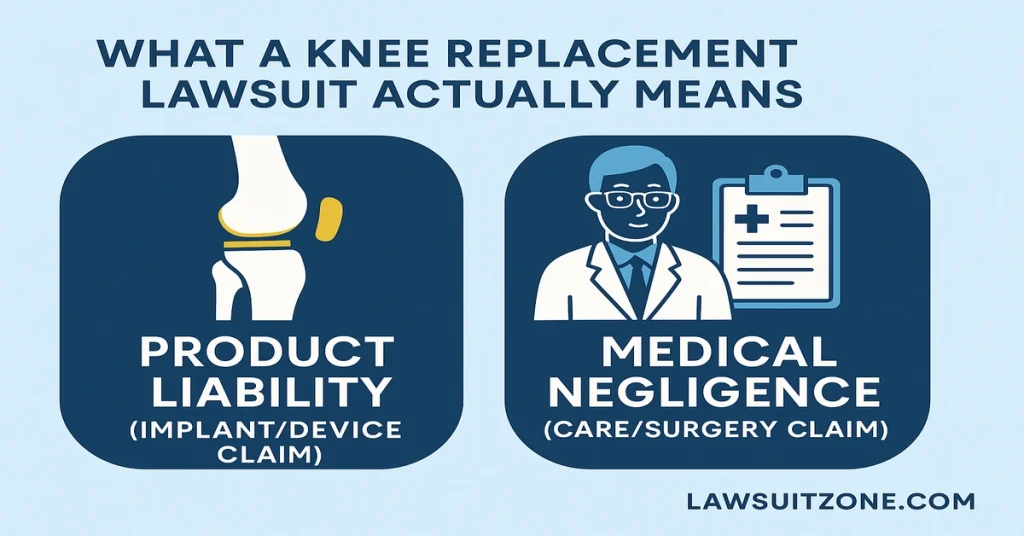
A knee replacement lawsuit is a legal claim connected to harm after a total or partial knee replacement. Most cases fall into one (or both) of these categories:
Product Liability (Implant/Device Claim)
These claims focus on whether the implant was defective, wore out too quickly, broke, loosened prematurely, or came with warnings that weren’t clear enough.
Medical Negligence Care/Surgery Claim
These claims focus on preventable medical errors—implant alignment problems, infection control mistakes, poor follow-up, or delayed treatment when symptoms became serious.
Some cases involve both. Real life is messy: a device issue can be made worse by poor monitoring, and a surgical error can look like a device failure until the records are reviewed.
Why Do Knee Replacement Lawsuits Arise?
Most people choose knee replacement because they’re tired of daily pain and want their life back. Lawsuits usually start when outcomes are far outside the expected recovery path—especially when a knee replacement fails unusually early.
Common triggers include:
- Loosening of the implant shortly after surgery
- Ongoing pain that doesn’t improve with rehab
- Instability (“my knee feels like it shifts”)
- Swelling and inflammation unexpectedly
- Infection resulting in hospital admission or reoperation
- Early revision surgery (removal/replacement of components)
- A recall or safety notice regarding the implant system
A knee replacement lawsuit is often about one big question: was this outcome preventable, and were the risks properly communicated?
Common Complications in Knee Replacement Lawsuit Claims
Not every difficult recovery leads to a lawsuit. But certain complications show up again and again because they create measurable harm and often require additional procedures.
1) Implant loosening and early failure
Loosening can feel like the knee is unstable, painful with weight-bearing, or simply never “settles” into a normal recovery.
Common complaints include:
- Pain that improves initially, then returns
- Difficulty walking longer distances
- Clicking, catching, or a “giving way” sensation
- Recurring swelling
Loosening can be linked to alignment, bone quality, infection, or wear problems—so imaging and surgical notes matter a lot.
2) Abnormal Wear and Debris Irritation
Some implants wear faster than expected. Wear can create debris that irritates tissue and contributes to loosening and inflammation.
People often describe:
- Persistent swelling
- Chronic stiffness
- Reduced range of motion
- Ongoing inflammation that does not fit usual healing periods
3) Infection-including superficial or deep joint infection
Infection is one of the most serious knee replacement complications. It can require long antibiotics, hospital stays, and sometimes removal of the implant.
Possible outcomes include:
- Surgical washouts
- PICC line antibiotics
- Implant removal
- Staged revision surgery: two major surgeries that are separated in time
When infection becomes part of a claim, records usually focus on timing, symptoms, response speed, and preventive protocols.
4) Malalignment, Poor Fit, or Instability
If the parts misalign or do not operate as usual together, patients can notice:
- Pain on motion
- Grinding/catching sensations
- Instability with stairs or turns
- Early wear with resultant early failure
These problems might be related to surgical technique or implant design, or both.
5) Nerve or Blood Vessel Injury-Less Common yet Serious
Less common, perhaps, but life-changing events when they do occur.
Possible symptoms:
- Numbness and tingling that persists
- Burning nerve pain
- Weakness or foot drop
- Circulation problems that need immediate attention
6) Stiffness and Arthrofibrosis (Excess Scar Tissue)
Some develop heavy scar tissue that limits bending and function.
This can bring about:
- Painful limited range of motion
- Manipulation under anesthesia (MUA)
- Additional procedures
- Longer rehab, with less function
Stiffness alone doesn’t always mean legal fault, but it can be part of a bigger failure pattern.
7) Revision Surgery-The “Turning Point”
Revision surgery is often what pushes people to explore a knee replacement lawsuit, because it’s a clear marker of failure and creates extensive medical documentation.
Why it matters:
- High cost and major recovery time
- Objective evidence of failure within operative notes
- Greater damages: lost work, rehab, pain, and disability impact
Who Might Qualify for a Knee Replacement Lawsuit?
Most law firms look for three core pillars:
1) Documentation of Knee Replacement and Implant Type
Useful documents include:
- Operative report from the first surgery
- Sticker implants/Device identifiers – model, lot, serial number
- Hospital Discharge Papers
- Orthopaedic follow-up notes
2) Documented Complication or Implant Failure
Strong evidence often includes:
- X-rays or imaging showing loosening, malalignment, or failure
- Infection diagnosis studies (labs/cultures)
- Revision surgery operative notes
- Orthopaedic notes documenting progressive pain and deterioration of function
3) Damages: Documentable Impact
Examples:
- Medical bills regarding procedures, rehabilitation, and medicines
- Lost wages or reduced ability to work
- Disability, loss of mobility, or use of adaptive equipment
- Pain and suffering with daily limitations
Evidence to Collect-What makes a case strong
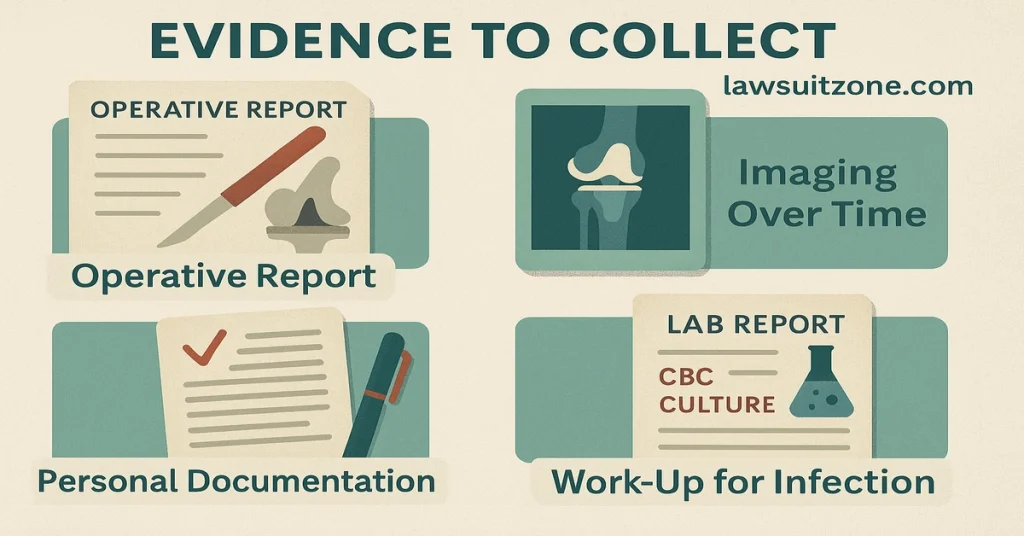
A lawsuit related to knee replacement normally relies on records, not opinions.
Medical records that matter most:
- Initial surgery operative note
- Implant ID stickers (often scanned into the chart)
- Imaging reports over time (X-ray, CT, bone scan if performed)
- Progress notes, a record of setbacks, range of motion data
- Work-up for infection (cultures, labs, antibiotics)
- Revision surgery operative report, if any
- Summaries of hospitalization/discharge
Personal documentation that helps
- Timeline: surgery date → symptoms → doctor visits → diagnoses → procedures
- Work absence records and wage loss
- out-of-pocket expenditures – travel, braces, mobility aids
- Daily limitation notes: stairs, driving, sleep, walking distance
Deadlines: Statute of Limitations – Why Timing Matters
Deadlines vary depending on location and claim type. The clock may begin to run:
- When the injury occurred, or
- When you discovered or should have discovered the connection to the implant or care
Even if you’re unsure about filing, collecting records early helps—because records can disappear or become harder to obtain over time.
What the Legal Process Typically Consists Of-In Plain Language
Here’s what many people experience:
Step 1: Case Overview
A lawyer would ask:
- When was your knee replacement done?
- Which implant system/brand?
- What were the symptoms that started, and when did they start?
- Was a revision necessary or required?
- What records do you have?
Step 2: Record Abstraction and Medical Review
The case usually depends on:
- Imaging and specialist findings
- Surgical notes and identification of implants
- Whether failure was unusually early
- Whether warnings of risks were effectively communicated
Step 3: Filing the Claim
Depending on the facts:
- Product liability claim (manufacturer)
- Medical negligence claim (surgeon/hospital)
- Or both
Step 4: Expert Opinions and Evidence Exchange
Many cases use experts to address causation and standards of care. This is also where negotiations often start.
Step 5: Settlement or Trial
Some cases resolve through settlement discussions. Others proceed further depending on evidence and strategy.
What Compensation May Include
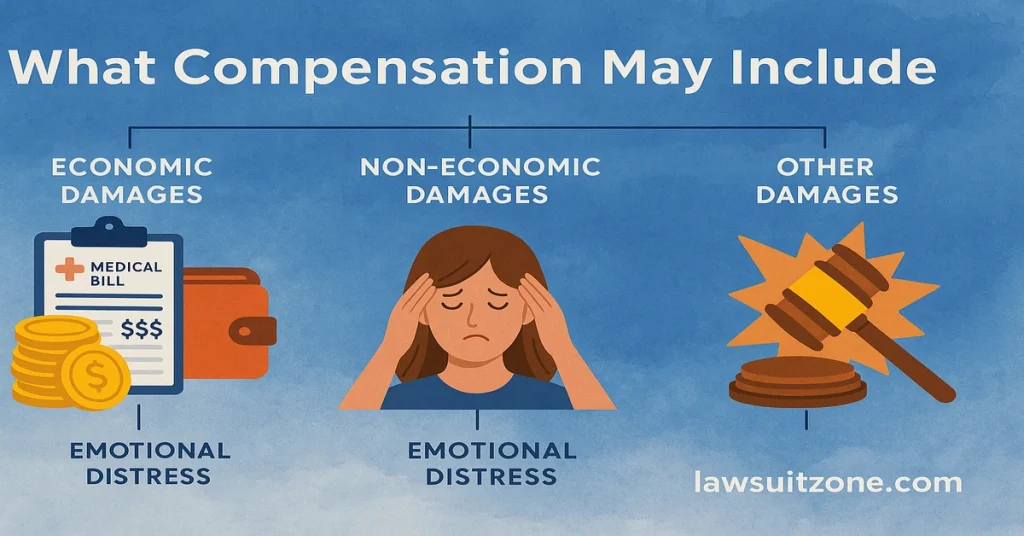
If a knee replacement lawsuit succeeds, compensation may include:
Economic damages:
- Revision surgery costs
- Hospital stays and follow-up visits
- Physical therapy and rehabilitation
- Medications, mobility aids, and ongoing care
- Lost wages and reduced future earning capacity
Non-economic damages:
- Pain and suffering
- Emotional distress
- Reduced quality of life
Other damages (case-dependent):
- Punitive damages in rare situations, depending on law and facts
What to Do If You Think Your Knee Implant Is Failing
Your health comes first—always.
Practical steps:
- Schedule an orthopedic evaluation if pain, swelling, or instability persists
- Ask about imaging if loosening or malalignment is suspected
- Seek urgent care if infection signs appear (fever, redness, wound drainage)
- Request your operative report and implant ID information
- Keep a simple timeline of symptoms and medical visits
- Consider legal consultation if a defect or preventable failure is suspected
A helpful non-legal resource many patients use to understand knee replacement basics and recovery expectations is the American Academy of Orthopaedic Surgeons’ patient guide on total knee replacement, which you can read here: Total Knee Replacement (AAOS OrthoInfo).
Common Myths About Knee Replacement Lawsuits
“Pain after surgery automatically means I can sue.”
Not always. Recovery can be slow. A lawsuit typically needs a documented failure or preventable harm plus damages.
“If my implant wasn’t recalled, there’s no case.”
Not true. Recalls can help, but they aren’t required for a claim.
“Revision surgery guarantees I’ll win.”
Revision adds documentation, but the case still depends on cause, evidence, and deadlines.
FAQs About Knee Replacement Lawsuits
Final Thoughts
A knee replacement lawsuit is often explored when an implant fails early or causes severe complications like loosening, infection, malalignment, abnormal wear, or revision surgery. The strongest cases usually combine clear implant proof, objective findings, and measurable damages. If you’re concerned, prioritize medical evaluation first, then gather records and explore legal options if you choose.
Disclaimer: This article is informational only and does not replace medical or legal advice.