Isotonix Lawsuit: The Ultimate Consumer & Industry Guide
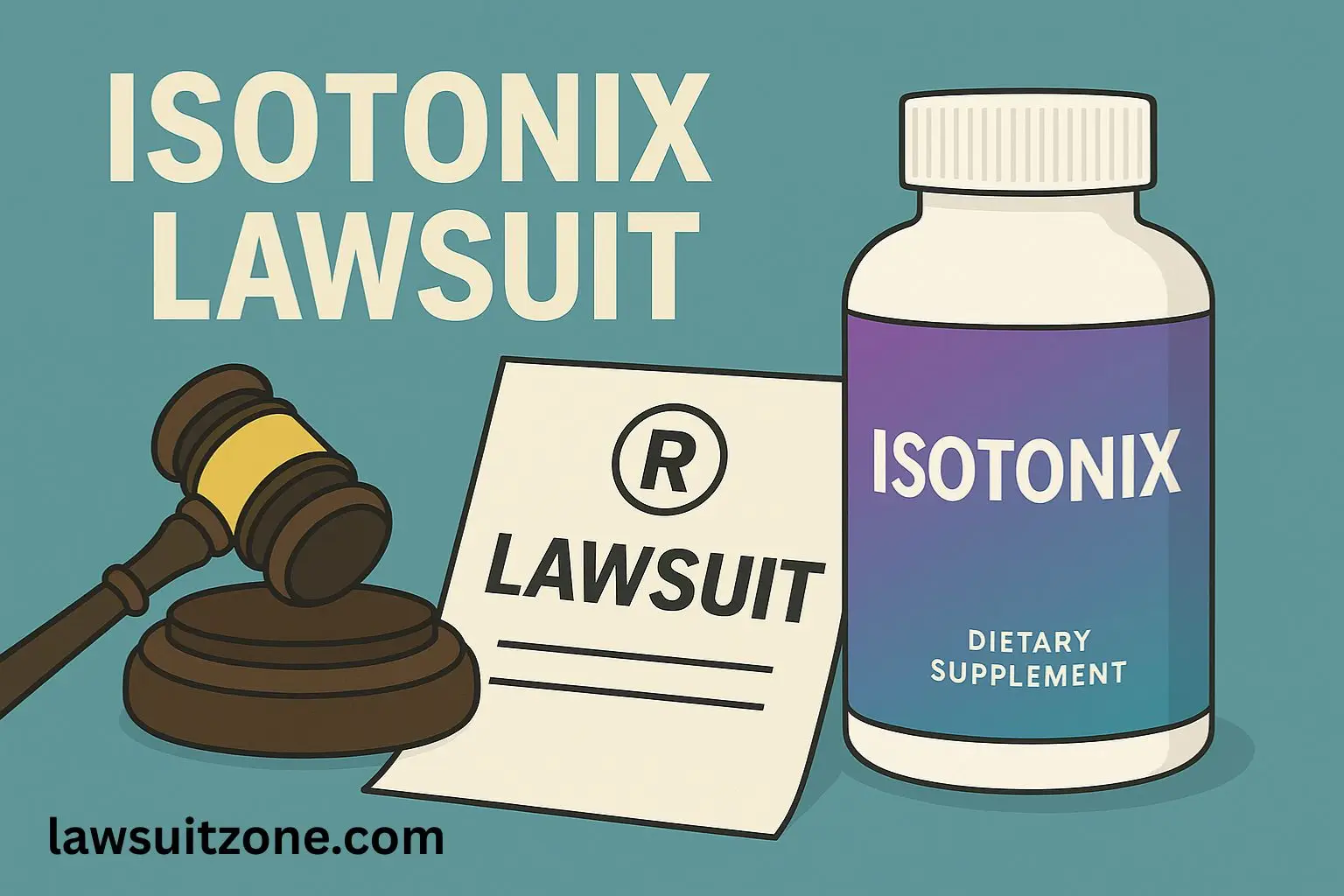
Introduction: Why the Isotonix Lawsuit Fanned Controversy
When most consumers purchase a dietary supplement, they believe the product is safe, effective, and truthfully marketed. But the Isotonix lawsuit destabilized that presumption, showing how supplement businesses can tread a thin line between creative marketing and deceptive claims.
Market America’s Isotonix became famous for its powdered supplements that allegedly absorbed better than pills. Its appeal was straightforward: mix with water, drink, and your body receives quicker, stronger results. Its distinctive selling point resonated for years in the highly competitive wellness sector.
But lawsuits started to challenge whether such claims were scientifically valid and whether Market America’s multi-level marketing (MLM) model entered pyramid scheme territory.
This e-book examines the Isotonix lawsuit in-depth: the history, the accusations, the defense, what courts ruled, and what it all is all about for both supplement consumers and business people. Have you checked our detailed guide on sierra mist trademark lawsuit.
What Exactly is Isotonix?
Isotonix is not a single product it’s a line of powdered vitamins that are meant to be dissolved in water. Rather than the usual capsules or tablets, Isotonix touts an isotonic delivery system: a formula that simulates the body’s own fluid pressure, allegedly for faster and more efficient absorption.
Popular Isotonix Products
- Isotonix OPC-3 – sold as a highly concentrated antioxidant blend.
- Isotonix Multivitamin – a day-to-day health necessity.
- Targeted Formulas – like joint health, digestive, and immune system supplements.
The marketing was brash: why accept the usual pills when Isotonix delivers nutrients quicker and more effectively? And it was precisely this bold marketing that would eventually unravel into the Isotonix lawsuit.
The Origins of the Isotonix Lawsuit
The Isotonix lawsuit evolved from a succession of consumer complaints, distributor complaints, and watchdog investigations. The underlying accusations were:
False Advertising & Exaggerated Claims
Advertising implied Isotonix absorbed better than pills, but plaintiffs countered that there wasn’t sufficient clinical evidence to back it up.
Misleading Consumers
Most customers thought they were purchasing a scientifically proven better supplement, when actually the claims rested on more marketing than medical agreement.
Pyramid Scheme Allegations
Critics suggested that Market America’s MLM business model was overly dependent on recruitment rather than actual sales and thus financially unsustainable for the vast majority of distributors.
Consumer Protection Violations
Plaintiffs alleged that the company broke state and federal consumer protection statutes by marketing products with exaggerated benefits and at high prices.
Major Legal Issues in the Case
1. The Science Question
Is the isotonic delivery system really superior? Market America cited physiological sense, but detractors claimed there were no independent peer-reviewed studies.
2. The Advertising Problem
Regulators and plaintiffs contended that wording such as “superior absorption” would lead ordinary consumers to believe Isotonix was clinically superior to regular vitamins.
3. The MLM Structure
Market America distributors typically spent lots of money for inventory and training, but lawsuits claimed only a small percentage actually made profits, with the majority of money being lost.
4. Regulatory Oversight Gaps
In contrast to prescription medications, supplements are not FDA-approved prior to release onto the market. This area of gray permitted Market America freedom to be aggressive with claims — but also left them vulnerable to FTC actions when claims crossed the line.
Timeline of the Isotonix Lawsuit
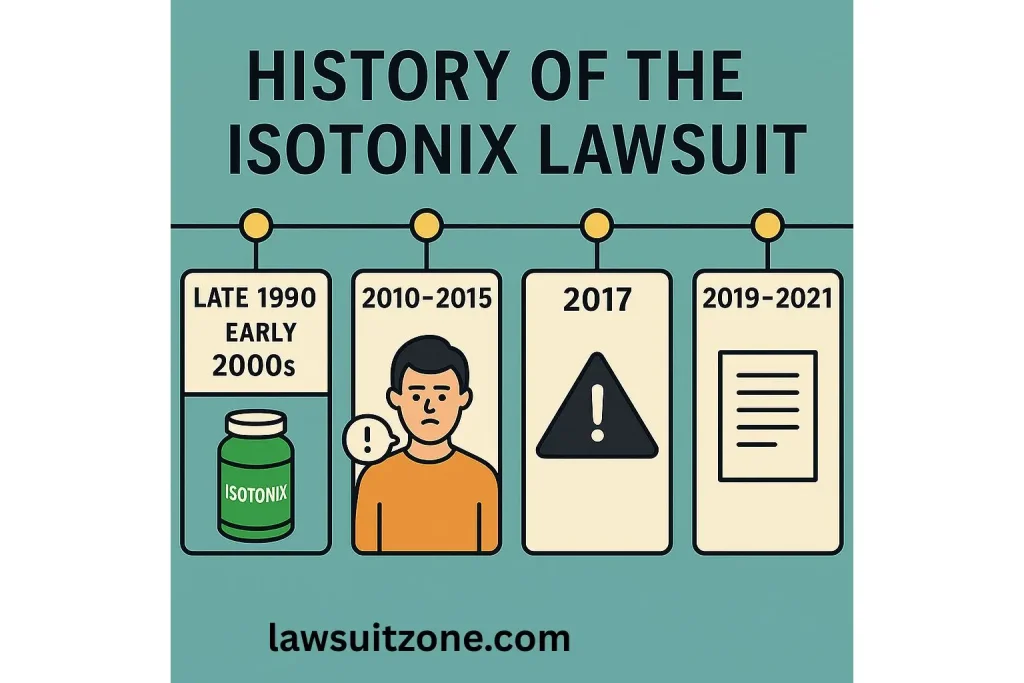
- Late 1990s – Early 2000s: Isotonix is launched, and it picks up speed within the expanding wellness market.
- 2010–2015: Consumer grievances regarding overpriced items and overstated claims rise.
- 2017: Market America is sued for pyramid scheme operations.
- 2019–2021: Spurious advertisement claims related to Isotonix emerge across various states.
- 2022–2023: Courts and settlements resolve portions of the Isotonix lawsuit, but criticism of MLM paradigms persists.
Inside the Courtroom: Both Sides of the Story
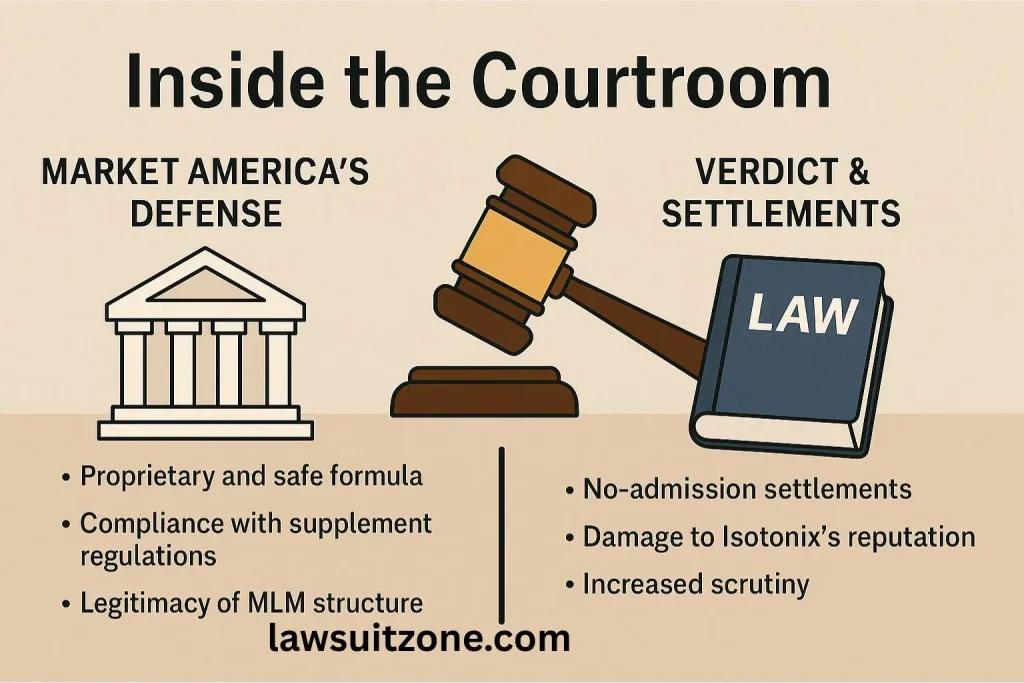
Market America’s Defense
- The firm claimed that Isotonix’s formula was proprietary and healthy.
- It stressed adherence to FDA regulations for supplements (which demand safety but not efficacy approval).
- Market America rejected pyramid scheme accusations, presenting its MLM system as a valid direct sales structure.
Claims of Plaintiffs
- Consumers protested that they overpaid for products not any more effective than regular vitamins.
- Distributors complained that they were coerced into purchasing inventory and bringing others into the business, making success almost impossible.
- Legal squads claimed that promotion blurred into deception through exaggeration of scientific support.
Court Results and Settlements
Although results differed by case, some trends existed:
- Guilt-Free Settlements: Market America settled in some cases while protesting innocence.
- Damage to Reputation: The lawsuits damaged Isotonix’s credibility, particularly among consumers who cared about health.
- Greater Oversight: The case attracted attention from consumer protection organizations and regulators.
How the Isotonix Lawsuit Affected the Industry
On Consumers
- Many became more cynical about supplement claims.
- There was increased interest in independent lab testing and third-party certifications.
On Market America
- The firm made its language in marketing materials more restrictive.
- Distributor training became more about compliance and prudence.
On the Supplement Market
- Other MLM supplement brands, such as Herbalife and Advocare, were also subject to such suits, indicating this was an industry-wide problem.
- Regulators such as the FTC repeated warnings to supplement firms about misleading advertising.
Lessons Learned from the Isotonix Lawsuit
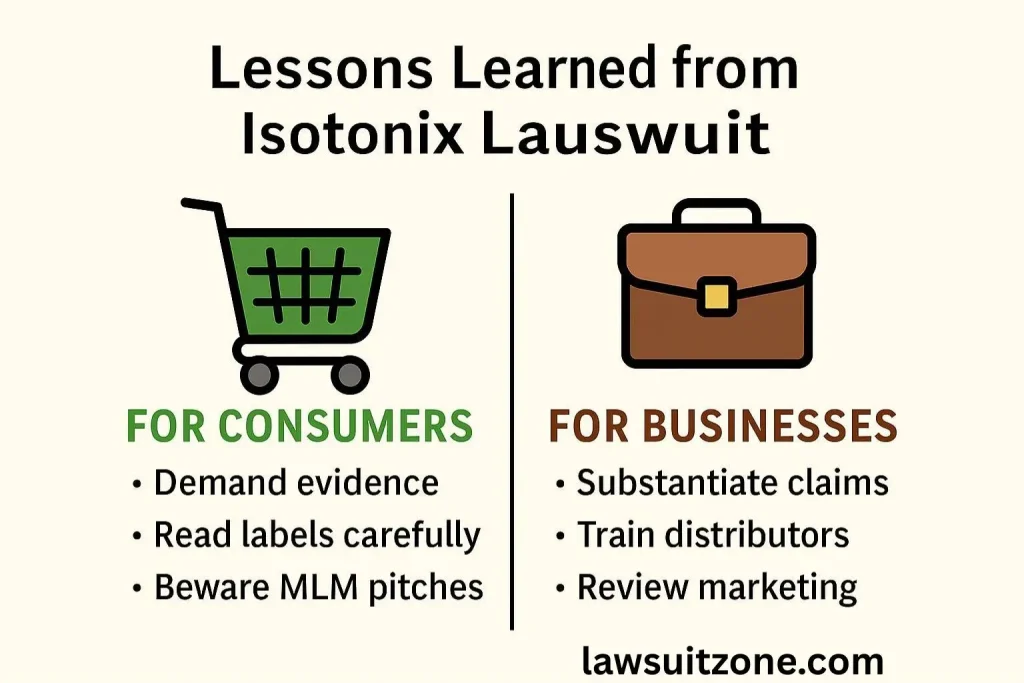
Science > Marketing
Good marketing won’t cut it. Companies that sell supplements need to substantiate claims with reliable evidence.
Transparency Builds Trust
Consumers demand clear labels, third-party testing, and truthful claims.
MLM Risks Are Real
Distributors need to think carefully about whether success requires selling a product or recruiting others.
Regulation Can Catch Up
No matter if supplements are pre-approved by the FDA or not, the FTC can move on misleading health claims.
Advice for Supplement Consumers
If you’re buying vitamins or health products, the Isotonix lawsuit can guide your purchases:
- Verify clinical trials backing product claims.
- Seek third-party certifications (such as NSF or USP).
- Price compare — are you paying extra for hype?
- Watch for MLM pitches with more emphasis on business opportunity than product.
- Discuss with healthcare professionals before investing in costly regimens.
Advice for Businesses
For business owners, the Isotonix lawsuit is an object lesson in what not to do:
- Steer clear of vague buzzwords such as “clinically proven” unless you have peer-reviewed evidence.
- Educate distributors on selling ethically, not simply recruiting.
- Periodically check commercials for compliance with FDA and FTC regulations.
- Remember: short-term hype can result in long-term legal headaches.
The Future of Isotonix
Even with the lawsuits, Isotonix products are still available for purchase today. Market America still markets them but with more reserved wording and stringent distributor rules.
The future of Isotonix will most likely rest on whether it can:
- Reestablish trust with consumers.
- Embrace scientific justification rather than marketing jargon.
- Demonstrate that its MLM model can survive without recruitment-driven strategies.
Frequently Asked Questions (FAQs)
Conclusion
The Isotonix lawsuit wasn’t about a single line of supplements it was about the broader conflict between marketing hype, scientific evidence, and consumer trust in the supplement industry.
For Market America, the lawsuits served as a wake-up call. For consumers, they highlighted the importance of buying smart and checking facts. And for the supplement market as a whole, they signaled that regulators are watching closely.
In the end, the Isotonix lawsuit shows one clear lesson: transparency, compliance, and credibility matter far more than flashy marketing claims.