Human Trafficking Lawsuit: Survivor’s Complete Legal Guide to Justice
Introduction
A human trafficking lawsuit gives survivors a critical legal avenue to hold responsible for exploitation, abuse, and forced labor traffickers, corporations, and institutions. Human trafficking is not a hidden or uncommon crime it happens in plain sight across industries like hospitality, agriculture, construction, domestic work, transportation, and online platforms.
Recovery through a lawsuit for survivors often means more than financial compensation: it is about acceptance of injury, restoration of dignity, and the possibility of preventing further exploitation. This in-depth guide explains how human trafficking lawsuits work, who can be sued, what compensation may be available to survivors, and how survivors can begin the legal process. Have you checked our detailed guide on LDS Church Lawsuit.
Understanding Human Trafficking Under the Law
Human trafficking is legally defined as forcing a person through means of force, fraud, or coercion into labor or commercial sex. Importantly, physical transportation is not required for trafficking to occur. Control, manipulation, threats, or abuse alone are enough to meet the legal standard.
Under U.S. law, any commercial sexual exploitation of a minor—even if the minor has consented to it—constitutes trafficking. Courts recognize trafficking as a grave civil rights violation; this provides survivors with the right to seek civil lawsuits even where delays or the absence of criminal prosecutions occur.
What Is a Human Trafficking Lawsuit?
A human trafficking lawsuit is a civil action that survivors file directly against perpetrators who commit the trafficking or knowingly profit from the trafficking. In contrast to criminal cases, which are controlled by prosecutors, a civil lawsuit is one in which survivors are directly in charge of the litigation.
These class actions centre around:
- Financial award
- Accountability for enabling entities
- Long-term recovery and rehabilitation support
Survivors may file claims even if the traffickers were never arrested or convicted.
Types of Human Trafficking Typically Involved in Lawsuits
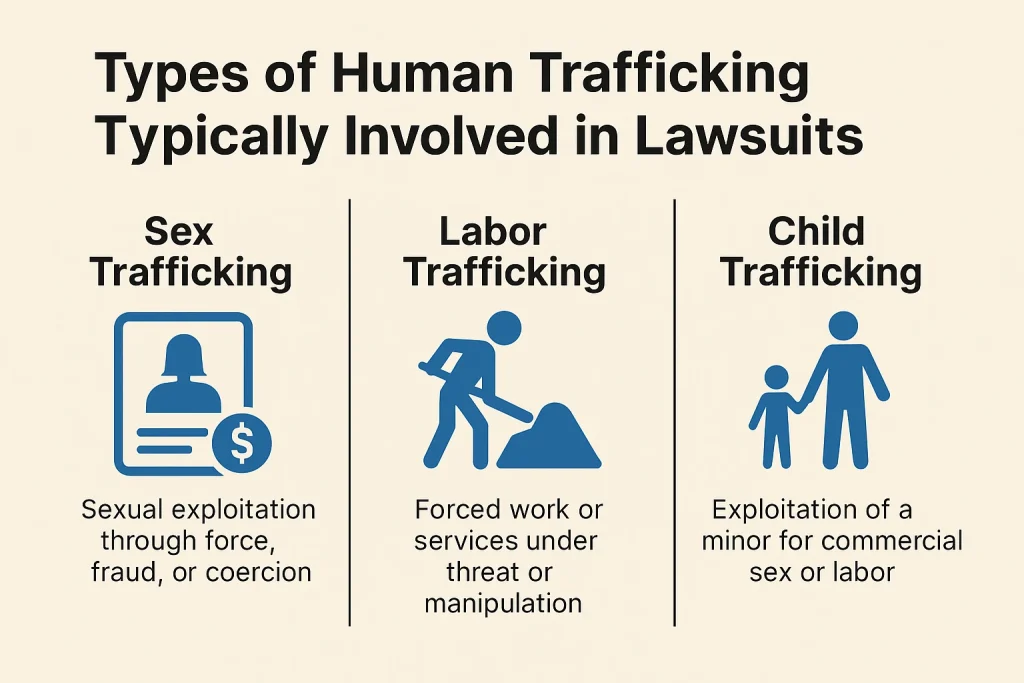
Sex Trafficking
Sex trafficking lawsuits usually involve victims of commercial sex who have been coerced through violence, manipulation, or threats. In many cases, the lawsuit may also be against a website, online platform, hotel, or property owner who has deliberately avoided obvious warning signs.
Labor Trafficking
Labor trafficking is a form of abuse that forces people to work against their will. Common tactics include withholding wages, document confiscation, threats of deportation, or physical harm.
Child Trafficking
Any form of commercial sexual exploitation of a minor is considered trafficking. Laws significantly favor child survivors, and longer windows for filing lawsuits are usually provided.
Common Allegations in Human Trafficking Lawsuits
Human trafficking cases often involve claims including, but not limited to:
- Both forced labor and sexual exploitation
- Physical violence and psychological abuse
- Debt bondage and wage theft
- Confiscation of the passport or identification card
- Threats against victims or their families
- Isolation, observation, and control
- Profiting from the trafficking operations
Many other lawsuits also complaint that businesses “repeatedly ignored red flags and failed to take action”.
Who Can Be Held Liable in a Human Trafficking Lawsuit?
Liability in a human trafficking lawsuit generally extends far beyond the trafficker. Common defendants include:
- Individual traffickers or trafficking networks
- Employers who utilized forced labor
- Hotels and motels where trafficking took place
- Owners of property and landlords
- Transportation companies
- Employment agencies or labor recruiters
- Corporations that benefited financially
Courts increasingly recognize that trafficking cannot only survive but thrive in a context where institutions do nothing to intervene.
Legal Basis to File a Human Trafficking Lawsuit
Trafficking Victims Protection Act (TVPA)
The Trafficking Victims Protection Act of 2000 allows survivors to sue anyone who knowingly benefited from trafficking, even if they did not directly commit the abuse.
Negligence
Businesses could be held responsible for not taking reasonable measures to prevent trafficking on their premises.
Forced Labour and Coercion
Claims arising from threats, intimidation, or abuse used to compel labor or services.
Civil Conspiracy
Applied when several persons collaborated or knowingly permitted the continuity of trafficking.
Advocacy and Survivor Support Organizations
Survivors are not alone in the process of seeking justice. National organizations play an important role in raising awareness, facilitating recovery, and making legal referrals. One respected authority is Polaris, a nonprofit organization operating the U.S. National Human Trafficking Hotline and supporting survivors across the country.
The source is highly cited and referred to in many trafficking cases, rendering it a trustworthy reference for legal purposes.
Who Qualifies to File a Human Trafficking Lawsuit?
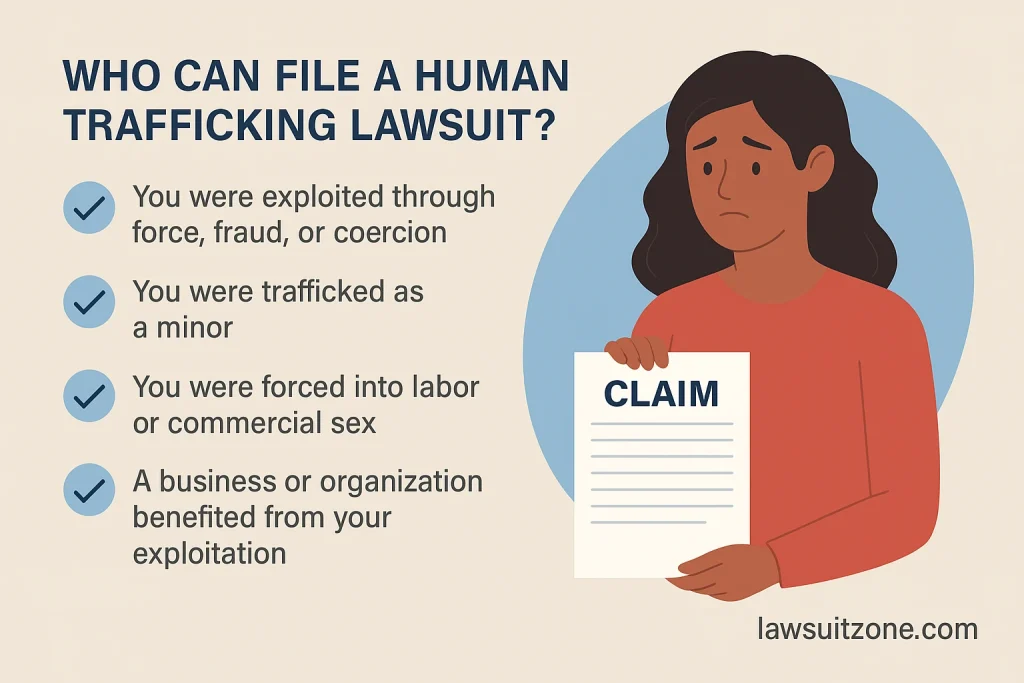
You might qualify to file a human trafficking lawsuit if:
- You were forced, deceived, or coerced into being exploited
- You were a victim of trafficking when you were a minor
- You were forced into labor or commercial sex
- A business or organization benefited from your exploitation
- You suffered physical, emotional, or financial injury
Valid legal claims can still be made even by survivors who escaped trafficking years ago.
Damages Available in Human Trafficking Lawsuits
Compensation for a human trafficking lawsuit aims at supporting recovery and rebuilding. Possible damages include:
- Medical treatment and rehabilitation
- Therapy and mental health care
- Lost wages and future earning capacity
- Pain and suffering
- Emotional unhappiness
- Punitive damages in extreme cases
Individual settlements can be very large when corporate defendants are involved.
Statute of Limitations for Human Trafficking Claims
Many states extend the filing deadline for trafficking survivors, who are often minors. Some jurisdictions allow claims decades after exploitation ends.
Since time limits differ between jurisdictions, the best course of action is to consult an experienced attorney as soon as possible.
Individual Lawsuits Versus Group or Mass Actions
Individual Lawsuits
- Claims centring on survivors
- Better compensation prospects
- Personalized legal strategy
Mass or Group Actions
- Several survivors share similar experiences
- Evidence and resources are shared
- Efficient handling of large-scale trafficking cases
An attorney can best advise on the most appropriate legal avenue.
Steps Survivors Can Take to Pursue Legal Action
If you think that you might have a human trafficking lawsuit:
- Ensure your safety at the moment
- Seek medical and emotional support
- Archive documents, messages, or records
- Writing down memories while they are still fresh can be very helpful
- Contact an attorney experienced in trafficking cases
You do not need criminal charges to file a civil lawsuit.
Why Human Trafficking Lawsuits Are So Important
Human trafficking lawsuits serve a critical role by:
- Holding corporations and institutions accountable
- Exposing trafficking networks
- Forcing policy and safety reforms
- Empowering survivors
- Preventing further exploitation
These cases transfer blame from victims to those who enabled abuse.
Frequently Asked Questions
Conclusion
A human trafficking lawsuit is a powerful legal tool for survivors to reclaim their rights, seek accountability, and pursue long-term healing. These lawsuits are not just about compensation but about justice, dignity, and systemic change. If you or a loved one experienced trafficking, legal options may still exist. Understanding your rights is the first step toward recovery and empowerment.