Gerber Lawsuit: The Complete Guide for Parents & Families
If you’re searching for a gerber lawsuit, you’re likely looking for answers after a stressful moment maybe your baby got sick, had an allergic reaction, you noticed a choking risk, or you’re worried about what a label promised versus what you believe you received. Because Gerber products are used by infants and toddlers, these situations feel personal and urgent.
This guide walks you through what a Gerber lawsuit can involve, the most common claim types, how to know if you might qualify, what evidence to collect, what deadlines can apply, and what the legal process typically looks like written in a parent-friendly, easy-to-follow way. Have you checked our detailed guide on knee replacement lawsuit.
What “Gerber Lawsuit” Can Mean: It’s not a single case.
A “Gerber lawsuit” is a broad term that can refer to different types of legal claims, depending on the product and the issue. Most claims fall into these categories:
Product Liability – Defect or Failure to Warn
This type of claim zeroes in on whether a product was unreasonably unsafe due to:
- Design defect (hazardous concept/design)
- Manufacturing defect (something went wrong in production)
- Failure to warn (missing or unclear warnings, instructions, or risk disclosures)
Consumer Protection – Labeling or Marketing Disputes
This focuses on whether packaging, labeling, or marketing could be considered misleading—especially when parents relied on health-related claims or safety impressions.
Negligence – Carelessness in Safety Practices
This argues the company failed to use reasonable care in quality control, safety testing, contamination prevention, labeling accuracy, or risk communication.
Wrongful Death-Discussed Rarely, Very Case-Specific
In severe outcomes, families may consider wrongful death claims (laws vary significantly).
Key point: A lawsuit usually requires more than suspicion. It typically needs documentation, a reasonable link to the product, and real damages.
Why do families consider filing a Gerber lawsuit?
Parents usually aren’t looking for drama—they’re looking for clarity and accountability when something goes wrong. Lawsuits tend to start when a family believes:
- A product was unsafe in a preventable way
- The label did not adequately explain risks
- Marketing created a false sense of safety.
- The harm required medical care, created costs, or caused lasting effects
Many families don’t decide to file immediately. They start by gathering facts: “What happened? What do the records say? What do we still have (packaging/lot number)?” That’s the practical approach.
Common Situations that Lead to Gerber Lawsuit Searches
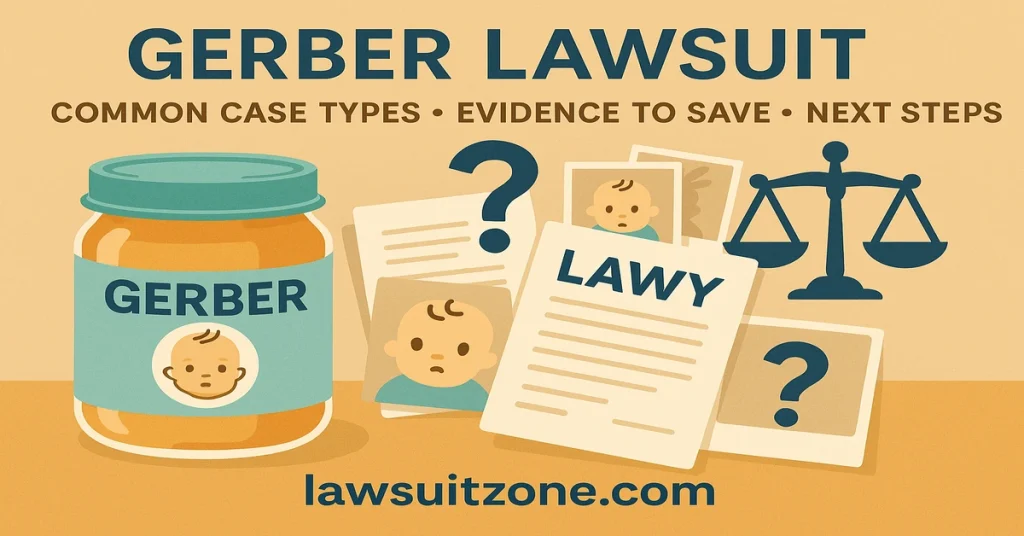
Because “Gerber” covers multiple product lines, lawsuits and claims can come from different scenarios. Below are common ones people search for.
1) Baby Food Contamination Concerns (Including Issues of Testing
Families often search after hearing concerns about baby foods and contaminants. Claims in this area typically involve:
- Whether products met expectations of safety
- Whether warnings were adequate
- Whether marketing implied a level of purity or safety that parents depended on
- What testing was done, and how the results were communicated
These cases often depend on product type, time period, batch/lot information, and the child’s medical documentation.
2. Illness Following Consumption of a Baby Food Product
Sometimes a baby develops vomiting, diarrhea, fever, or dehydration after consuming a product. Illness can have many causes (viral, bacterial, food-related), so evidence matters.
Legal claims are commonly made for:
- Medical documentation of illness
- Timing to Match Consumption
- Any laboratory test or diagnosis
- Preserved product packaging and lot information
3) Risk of Choking or Hazardous Texture/Shape Issue
Choking risk claims can come up with baby snacks and toddler foods. These cases may focus on:
- Product design/shape/texture and age-appropriateness
- Whether warnings were clear enough
- whether the product created an unreasonable risk for the intended age group.
If a choking event required ER treatment or intervention, documentation becomes critical.
4. Severe Allergic Reactions
Parents sometimes report hives, swelling, vomiting, wheezing, or more severe allergic symptoms.
Claims often focus on:
- Ingredient labeling accuracy
- Cross-contamination warnings
- Whether allergens were declared appropriately
- Medical documentation of allergic reaction and treatment
5) Foreign Objects, Spoilage, or Packaging Defects
Specific cases include:
- A broken seal, swelling pouch, or spoiled smell
- Visible foreign material
- Packaging failures which may affect safety
These claims are often strongest when the product and packaging are preserved and clearly photographed.
Who Might Be Entitled to a Gerber Lawsuit?
Eligibility depends on your location and the facts, but attorneys often look for three things:
1) Proof of Product Purchase and Identity
These are useful items to bear in mind:
- Receipt-store, online order, delivery invoice
- Photos of the product and packaging (front and back)
- Lot/batch number and expiration date
- UPC/Barcode, Product Name, and Size
2) Documented Harm or Injury
Examples
- Pediatrician’s notes and diagnosis
- ER or hospital records
- Medications prescribed and treatment notes
- Allergy test results, when applicable
- Labs for infection or dehydration, if done
3. Damages: Measurable Impact
Common damages include:
- Medical expenses
- Lost wages (caregiver time off work)
- Ongoing needs for care-follow-ups, therapies
- Emotional distress and pain/suffering (depending on jurisdiction and type of claim)
Evidence to Preserve (This Is Where Many Cases Are Won or Lost)
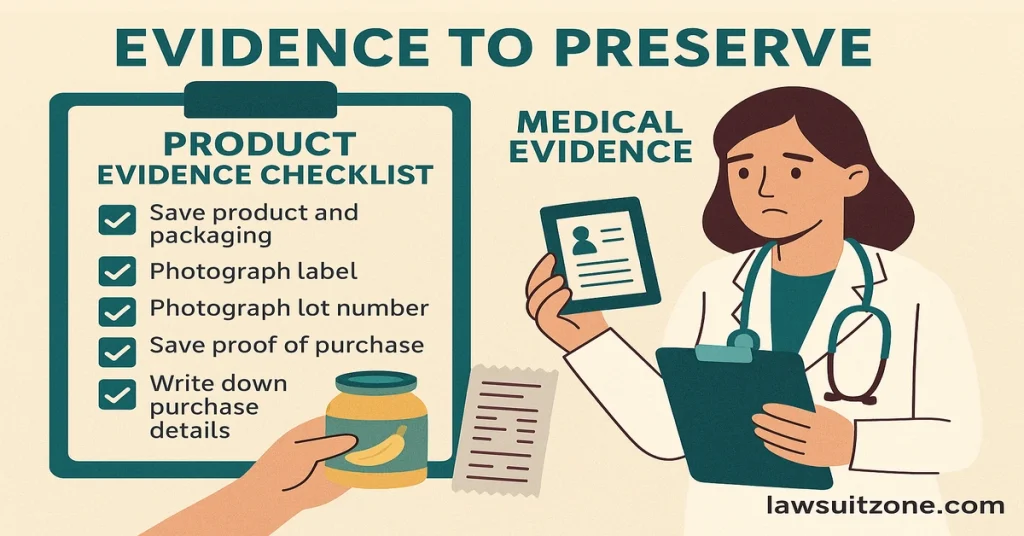
If you’re considering a gerber lawsuit, the most helpful thing you can do is preserve evidence early.
Product Evidence Checklist
- Save the product and packaging (if safe to do so)
- Clearly photograph the label: ingredients, warnings, age guidance
- Photograph the lot/batch number and expiration date
- Save proof of purchase (receipt, email order)
- Write down where and when it was bought.
Check list on Medical Evidence
- ER and pediatrician records
- Discharge summary and diagnosis
- Medication list-what was prescribed and when
- Notes – symptoms and severity
- Follow-up appointment records
Home Timeline Checklist
- Date/time the product was consumed
- When symptoms began
- What symptoms appeared: fever, vomiting, rash, breathing problem.
- When you sought care and what the doctor said
Tip: keep it factual, date it. Courts and insurers like timelines.
Deadlines: Why Waiting Hurts Your Options
Every region has legal filing deadlines (statute of limitations). The deadline can depend on:
- Where you live
- The type of claim (defect, labeling, negligence)
- The injury occurred at
- When you found a possible relation
Even if you’re unsure about taking action, gathering documents early keeps your options open.
What the Legal Process Usually Looks Like-Simplified Version
Here’s what usually happens to families:
Step 1: Intake and Basic Questions
A legal team normally asks:
- What product was involved?
- When was it purchased and used?
- What happened, and when?
- What treatment was required?
- Do you have packaging and a lot number?
Step 2: Review of Records and Evidence
They consider:
- Medical records
- Buy proof
- Photos of labels, warnings, and lot details
- Your timeline
Step 3: Decide to File-or Not
Where the claim is sufficiently strong and timely, they may file:
- Alone, or
- As coordinated litigation pending (depending on case scenario)
Step 4: Settlement, Motions, or Additional Evidence
Many cases involve back-and-forth evidence review and negotiation before any trial becomes likely.
Step 5: Conclusion
Possible outcomes:
- Settlement negotiations
- Dismissal, if evidence is inadequate
- Trial-less common, case dependent
What Compensation Might Cover
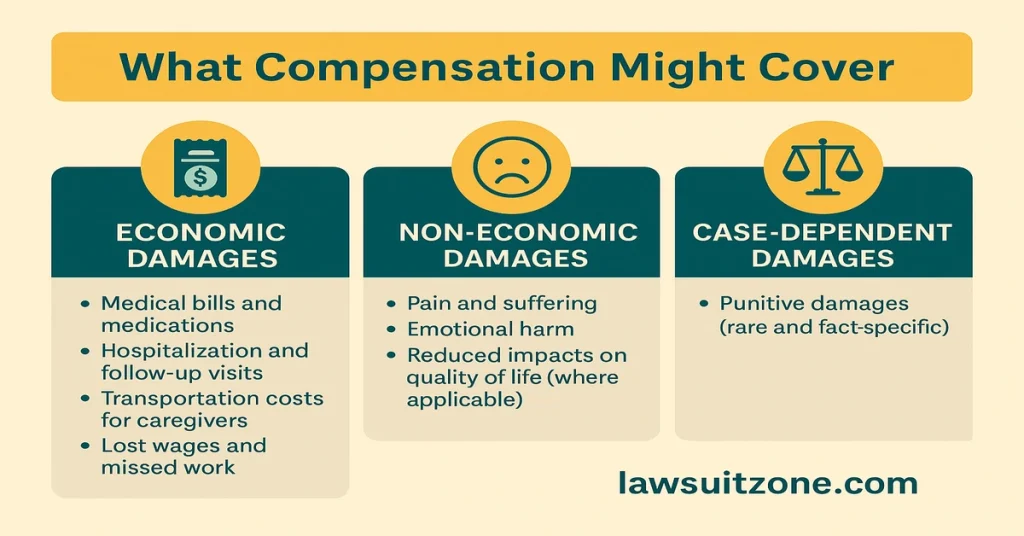
If a claim is successful, compensation may include:
Economic Damages
- Medical bills and medications
- Hospitalisation and follow up visits
- Transportation costs for caregivers
- Lost wages and missed work
Non-economic Damages
- Pain and suffering
- Emotional harm
- Reduced impacts on quality of life (where applicable)
Case-Dependent Damages
- Punitive damages (rare and fact-specific)
What to Do If Your Baby Is Sick Right Now
Health first always: Go to urgent care if your child has:
- Difficulty breathing or wheezing
- Symptoms of dehydration-dry mouth, absence of tears, and less wet diapers
- High fever, persistent vomiting/diarrhea
- Extreme sleepiness, unusual behavior, or unresponsiveness
If safe, keep the product packaging and take photos, but don’t delay medical care to do it.
Common Myths Parents Hear (And Why They’re Harmful )
“If there’s no recall, there’s no case.”
Not true. Recalls can help, but many claims are based on evidence and harm, not recall status.
“If I threw the product away, I’m stuck.
Not always. Receipts, photos, lot information, and medical records may still support a claim.
“If my child got sick, it must be the food.”
Kids get sick for many reasons. That’s why medical records and timing are so important.
FAQs About Gerber Lawsuits
Final Thoughts
A gerber lawsuit can involve very different issues—contamination concerns, illness after consumption, choking hazards, allergic reactions, or labeling disputes. The strongest cases usually include clear product identification (photos, receipts, lot number), documented medical harm, and measurable damages. If you’re worried, focus on medical care first, then preserve evidence and explore your options with a qualified attorney if you choose.
Disclaimer: This article is informational only and does not replace medical or legal advice.