Direct Fairways Lawsuit: Full 2025 Guide for Business
Introduction: Why the Direct Fairways Lawsuit Matters
When news initially broke regarding the Direct Fairways lawsuit, most small business owners were not surprised. There were some who had already murmured about high-pressure calls, seemingly impossible-to-break contracts, and never-seen ads. Others heard about it with a shock: how did a business that was selling itself as a link between local businesses and golfing communities find themselves in the court?
This isn’t just a case about one marketing company. It’s a cautionary tale for any business investing in advertising. In this complete guide, we’ll unpack the lawsuit, the allegations, the ripple effects on clients, and most importantly what lessons every business owner can take away. Have you checked our detailed guide on Smoothstack Lawsuit.
Who Exactly Is Direct Fairways?
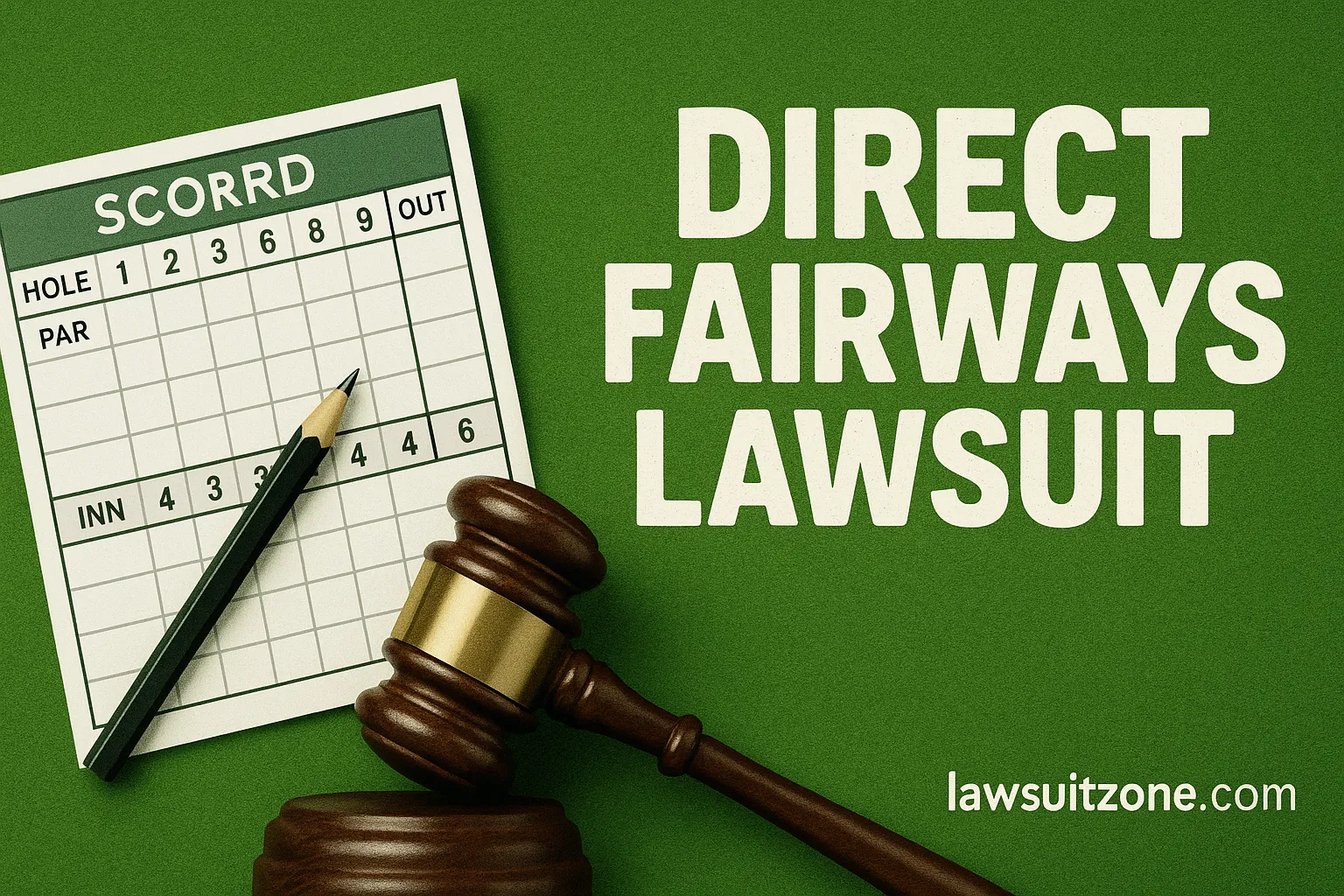
Direct Fairways is a golf-centered marketing firm that built its brand around connecting small businesses with affluent golf communities. The pitch sounded appealing:
- Promote your company on golf scorecards and yardage books.
- Get visible in local club online venues.
- Target a demographically attractive, loyal clientele.
For a restaurant, beauty salon, or insurance broker, it looked like a smart niche. But the lawsuit reveals, it seems, that what’s advertised in the slick brochure doesn’t always match the reality.
How Marketing Firms End Up in Court
The Direct Fairways lawsuit isn’t taking place in a vacuum. It tracks a familiar scenario that marketing companies encounter when clients feel defrauded:
- Overstated promises – “Thousands will view your advertisement.”
- Poor performance – Advertisements never printed or run.
- Unclear agreements – Cancellation terms buried in fine print.
- Pushy sales calls – Advising customers to sign immediately.
For clarity, you can explore legal basics on Cornell Law School’s LII, one of the most trusted legal resources in the U.S.
How the Direct Fairways Lawsuit Started
The suit picked up steam after several small business owners complained. One Arizona café owner said she was coerced into purchasing a $3,000 advertising package that “would ensure local golfers to walk through the door.” Several months passed and she didn’t spot her logo anywhere on any scorecard. Another plaintiff, a landscaper, reported that the “exclusive exposure” he was promised was actually a flyer tacked in a clubhouse where no one went.
When cases like these began piling up, lawyers began taking notice. The suit was filed on the basis of:
- Misrepresentation of ad exposure
- Failure to provide services
- Unfair, limiting contracts
- Deceptive sales practices
Breaking Down the Allegations
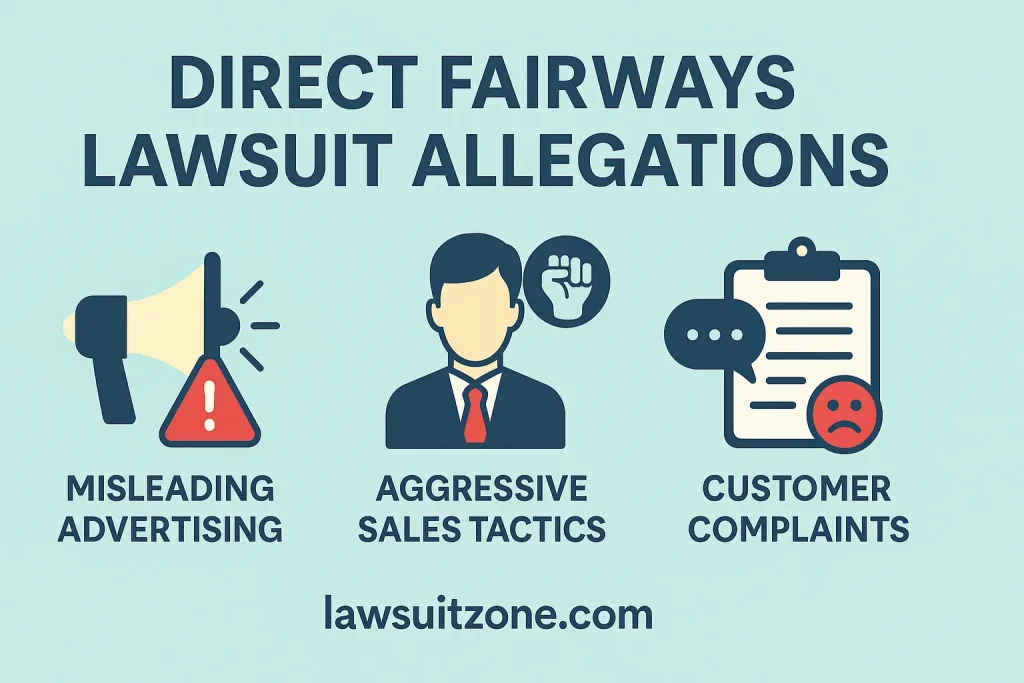
The case of the plaintiffs is based on four key allegations:
- Dollhouse Marketing Tactics – Exaggerations of grand exposure in tiny markets.
- Broken Deliverables – Ads occasionally never published at all.
- Fine-Print Contracts – Provisions that make it costly to back out.
- High-Pressure Sales Calls – Scripts that close deals quickly, not educate clients.
Collectively, these accusations create an image of a business which cares more for sales quotas than for client trust.
What the Legal Process Is Like
For those new to lawsuits, here’s the Direct Fairways lawsuit unfolding:
- Complaint Filed – Plaintiffs lay out allegations in detail.
- Defense Response – Direct Fairways denies the allegations.
- Discovery – Emails, contracts, recordings of calls shared.
- Motions and Hearings – Court determines what evidence can be introduced.
- Settlement Talks or Trial – Most cases settle to prevent long wars.
It takes a long time and costs a great deal of money, which is why most small businesses like to settle rather than endure a long trial.
The Real-World Impact on Clients
Behind every contract document are small business owners counting dollars lost.
- Financial burden: A $2,000 or $3,000 ad package can eliminate a month’s marketing budget.
- Shaken faith: Most now think twice before believing any advertising agency.
- Working tension: Money invested in wasteful commercials might have been used for staff, inventory, or internet campaigns that yield measurable ROI.
Some plaintiffs recount sleepless nights thinking about whether they’ll ever get their money back.
Ripple Effects on the Marketing Industry
The Direct Fairways lawsuit casts a long shadow over marketing companies in specialty industries. Even those agencies that are doing everything right can expect more scrutiny from prospective clients.
- Transparency is no longer a nicety. Clients want evidence, not words.
- Contracts come under scrutiny. More businesses will resist restrictive terms.
- Industry reputation gets hurt. When one company is sued, the trust deficit spills over across the sector.
Lessons for Small Business Owners
What do entrepreneurs gain from the Direct Fairways case?
- Screen vet companies thoroughly. Review BBB ratings, online complaints, and reviews.
- Read contracts twice. Note cancellation policies.
- Request case studies. Don’t accept sales hype insist on proof of ROI.
- Report complaints if cheated. Agencies such as the FTC may probe unfair practices.
How This Case Replicates Similar Lawsuits
The Direct Fairways lawsuit is similar to other marketing wars:
- Yellow Pages Deception – Exaggerated distribution figures in the 2000s.
- Local Directory Scams – Bogus directories with exaggerated exposure, nothing delivered.
- Telemarketing Lawsuits – Fines imposed on companies that disregard “Do Not Call” lists.
All three cases demonstrate how susceptible small businesses are to seemingly too-good-to-be-true marketing offers.
What Happens Next? Possible Outcomes
The case may end in a variety of ways:
- Settlement – Most likely, time saved and reputation loss.
- Plaintiff Victory – Court gives damages to businesses.
- Defense Victory – Direct Fairways clears its name (less probable due to volume of complaints).
- Regulatory Oversight – Even without trial, the FTC may impose stricter controls.
FAQs on the Direct Fairways Lawsuit
Final Thoughts
The Direct Fairways case is more than a drama of the courtroom it’s a reminder of the tenuous relationship between companies and marketing companies. For small business owners, it’s an encouragement to probe deeper, insist on accountability, and never sign agreements hastily.
For the marketing profession, it’s a wake-up call: respect transparency, or risk taking Direct Fairways to court.