
Is Cannabis Legal in Australia? What Visitors Are Often Surprised to Find Out
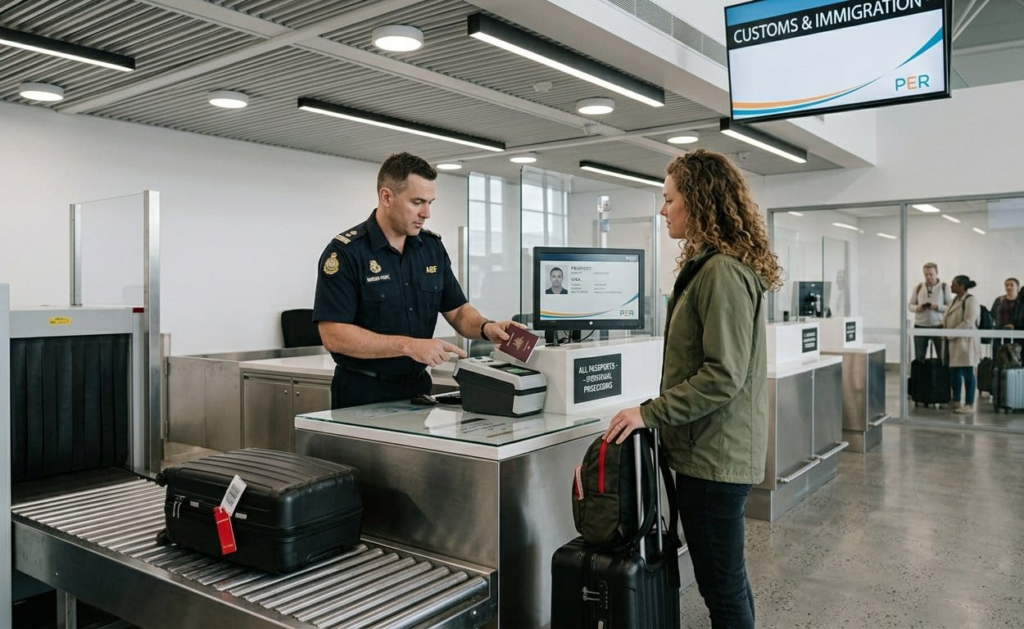
Every year, thousands of tourists land in Australia with a reasonable assumption tucked away alongside their sunscreen and travel adapters: that the world is slowly getting more relaxed about cannabis, and that a country as laid-back as Australia probably reflects that shift. Canada legalised it. Parts of Europe have loosened up considerably. Several American states treat it like wine. So when someone steps off a long-haul flight into Perth with a small amount in their bag, or simply plans to pick some up once they arrive, they are often operating on a version of Australia that does not quite exist.
The reality is more complicated, and in some cases, more serious than visitors expect. Australia’s cannabis laws vary by state, carry real penalties, and do not bend for tourists who were simply used to different rules back home. Western Australia in particular has a legal framework that can catch people off guard, especially those arriving from places where possession has been decriminalised or outright legalised.
This piece is not meant to scare anyone. It is meant to give travellers the kind of clear, honest picture that a quick Google search often fails to provide.
Australia Has No Federal Legalisation
The first thing worth understanding is that Australia has not legalised cannabis at the national level. Full stop. Medicinal cannabis exists within a tightly regulated system, accessible through prescriptions and approved channels, but recreational use is illegal under federal law. There is no Australian equivalent of Canada’s Cannabis Act.
The confusion often starts with the Australian Capital Territory. In 2020, the ACT, which is the small self-governing territory that contains Canberra, introduced a limited personal use allowance that permits adults to possess small amounts and grow a modest number of plants at home. This generated a wave of headlines internationally, and understandably so. But the ACT is not Australia. It is one small jurisdiction, and even within that jurisdiction the legal picture is messier than it appears, since selling cannabis remains illegal even if personal possession is technically allowed.
For visitors flying into Perth, Sydney, Melbourne, or Brisbane, the ACT rules are largely irrelevant. Each state and territory has its own legislation, and most of them, Western Australia included, have not moved toward decriminalisation in any meaningful way.

What Western Australia’s Laws Actually Say
Cannabis is a prohibited drug under Western Australia’s Misuse of Drugs Act 1981, and possession is a criminal offence. That is the baseline. From there, the law gets more nuanced, and the nuances matter quite a bit.
WA distinguishes between different quantity thresholds that determine how seriously a charge is treated. Possessing a small amount, which is defined as 10 grams or less, sits at the lower end of the scale and may be dealt with through a Cannabis Intervention Requirement, or CIR. A CIR is a diversion option available to first-time offenders who are caught with a small quantity. It involves attending a brief educational session rather than going through the court system, and it does not result in a criminal conviction if completed. For someone who has never been in trouble before, this can be a significant relief.
Beyond that threshold, however, things escalate. Amounts above 10 grams but below the trafficable quantity of 100 grams are treated as straightforward possession offences and can result in fines or imprisonment. Reach the trafficable quantity and the law begins to presume an intention to sell or supply, which shifts the nature of the charge entirely. Visitors who arrive with an amount that would be considered personal use back home may find that it falls into a far more serious category under WA law.
It is also worth noting that WA does not have a formal decriminalisation scheme in the way that South Australia does. The CIR diversion exists, but it is not automatic, and it applies only in specific circumstances. Outside of that narrow window, charges go through the court system.
The Border Is Where It Usually Goes Wrong
Perth Airport sees a significant volume of international arrivals, and Australian Border Force officers are not treating cannabis as a low-priority item. Australia has strict biosecurity and customs laws, and the detection infrastructure at the border reflects that. Sniffer dogs, scanning equipment, and random baggage checks are all part of the picture.
Bringing cannabis into Australia, regardless of the amount, is a federal offence. The charge is not possession under WA law. It is importation under the Criminal Code Act 1995, which carries considerably heavier penalties. Even a small amount, enough for personal use on a week-long holiday, can result in a federal importation charge if it crosses the border.
This also applies to products that are legal in a traveller’s home country but have not been approved for import into Australia. CBD oils, edibles, tinctures, and similar products fall into a grey zone that many visitors do not anticipate. Even where a product contains only trace amounts of THC, bringing it through Australian customs without prior approval is risky, and the approval process for medicinal cannabis products is not something a tourist can navigate casually before a two-week trip.
The practical advice from anyone familiar with the Australian border is straightforward: do not bring it, do not attempt to conceal it in food or toiletry products, and do not assume that declaring it honestly will result in a lenient outcome.
“I Didn’t Know” Is Not a Legal Defence
This is the part that tends to hit hardest. Most people who end up in this situation are not trying to do anything wrong. They are travellers who assumed the rules were broadly similar to what they knew at home, or who did not think to check. The intention was never to break the law. That, unfortunately, does not carry much weight in court.
Australian law, like most legal systems, operates on the principle that ignorance of the law is not a defence. A court is not required to treat not knowing as a mitigating factor, and in practice, it rarely does. A tourist charged with possession is subject to the same legal process as a resident.
We reached out to the team at Podmore Legal, a criminal defence firm based in Perth with experience handling drug offence matters, to get a sense of how these cases tend to play out in practice.
“What we see fairly regularly is visitors who are genuinely shocked that they are facing a criminal charge,” a spokesperson for the firm noted. “They assume that because something is legal or tolerated where they are from, there will be some allowance made for that. Australian courts don’t operate that way. What matters is the law here, not the law somewhere else.”
On the question of whether being a first-time offender with no criminal history helps, the answer is: sometimes, in terms of sentencing, but not in terms of the charge itself. A court may take into account that someone has no priors, that they are cooperative, and that the amount was small. But these are factors that influence outcomes at the sentencing stage, not factors that make the charge disappear.
What the Penalties Can Look Like
The range of outcomes in cannabis-related cases in WA is genuinely wide, which is part of what makes it difficult to summarise neatly. At the lower end, a first-time offender caught with a small amount may be eligible for the CIR diversion and walk away without a conviction. That is a reasonably good outcome, all things considered.
Further up the scale, simple possession above the small quantity threshold can result in fines of several thousand dollars and, for larger amounts, terms of imprisonment. Supply or trafficking charges carry significantly heavier penalties, with maximum sentences measured in years rather than months.
For visitors, the immigration consequences deserve particular attention. A criminal conviction in Australia can affect a person’s ability to obtain a visa in the future. Australia’s character test, applied during visa assessments, takes criminal history into account. Someone who receives a conviction during a holiday could find that returning to Australia years later becomes complicated, or in some cases, not possible. For people who travel frequently, work internationally, or have ties to Australia through family or business, this is not a trivial concern.
Importation charges at the federal level carry even steeper maximum penalties and are treated with greater seriousness by courts than straightforward possession matters.
What to Do If You’re Charged
If you are charged with a cannabis-related offence in Western Australia, the most important thing is to get legal advice before making any statement to police. This is not about being uncooperative. It is about understanding your rights and not inadvertently saying something that complicates your case.
You have the right to remain silent, and you have the right to speak with a lawyer before answering questions. Exercise both. If you are not an Australian citizen or permanent resident, you also have the right to contact your country’s consulate or embassy, and they can assist with connecting you to legal resources and keeping your government informed of your situation.
Podmore Legal handles drug offences cases in WA. Their experience speaks for itself, you can see everything, including relate case studies here: https://podmorelegal.com/serious-criminal-offences/drug-offence-lawyers-perth/ /If you are in Perth and find yourself facing a drug-related charge, reaching out to a local firm early gives you the best chance of understanding what you are dealing with and what options are available.
The process can feel overwhelming, particularly if you are in an unfamiliar country without your usual support network around you. But these matters are navigable with the right legal support, and the earlier you get that support involved, the better placed you are.
Before You Land
The gap between what visitors expect and what Australian law actually requires is real, and it catches people out more often than the headlines suggest. Western Australia has not followed the global trend toward cannabis liberalisation, and the border is the point where that difference becomes immediately consequential.
If you are travelling to WA from a country or state where cannabis is legal, the practical takeaway is simple: the rules you are used to do not apply here. That includes products you might not think of as cannabis in the conventional sense, from edibles to oils to vape cartridges. The line between a mistake and a federal charge can be surprisingly thin at the border.
And if things do go wrong, knowing your rights and getting legal advice quickly makes a significant difference to how things unfold. It is the kind of trip preparation most people never think to do, but for anyone arriving from a legal cannabis jurisdiction, it is worth taking seriously.