Attorney vs Lawyer: What’s the Actual Difference?
Introduction
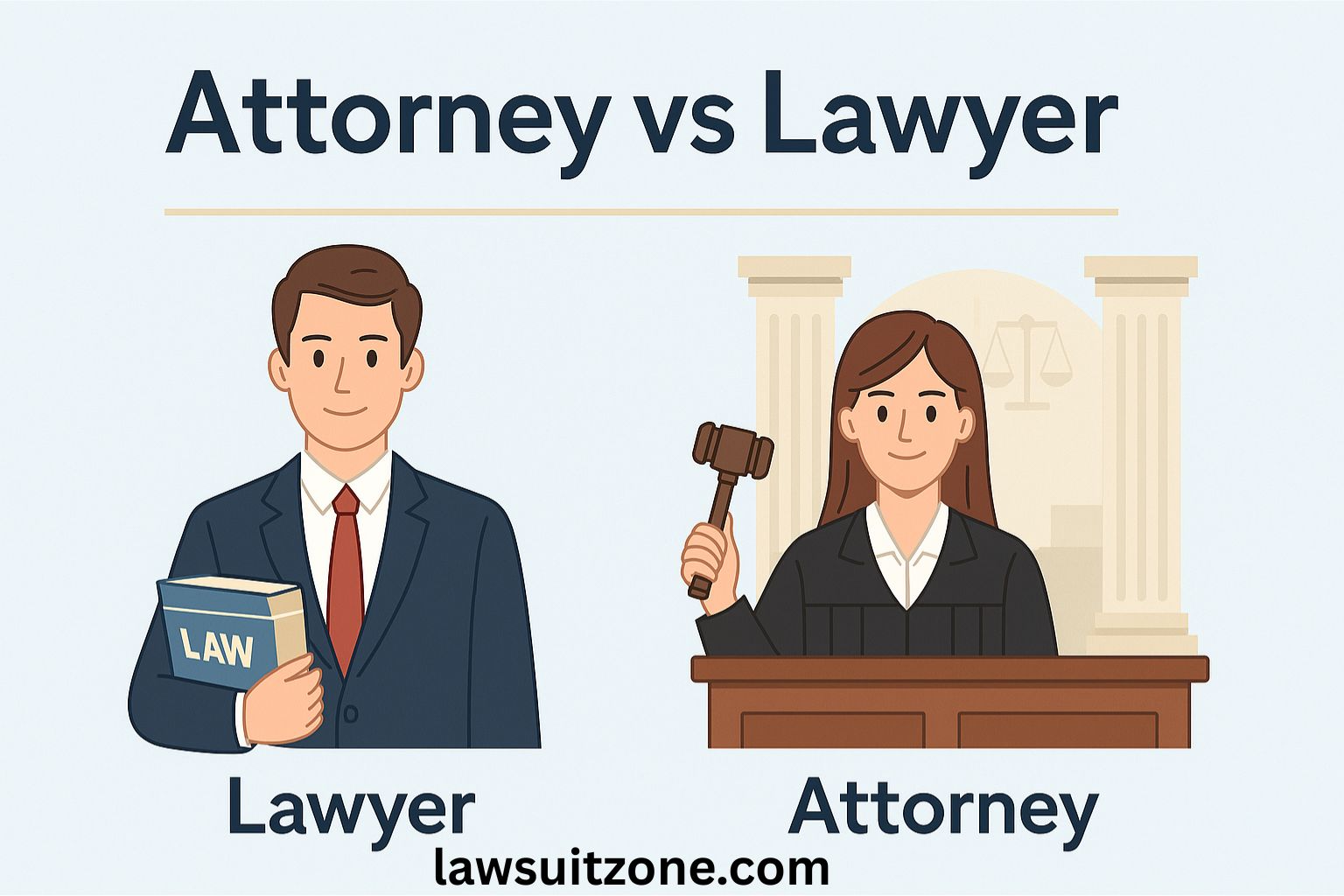
If you’ve ever seen a courtroom TV drama or read a legal news piece, you’ve probably heard the terms attorney and lawyer used interchangeably as if they’re synonymous. To most people, they are. But take a closer look particularly in the legal community and there’s a significant distinction.
The attorney vs lawyer debate isn’t merely about vocabulary; it’s about credentials, duties, and even culture. Whether you’re thinking of law school, about to engage legal assistance, or just wondering, understanding the difference makes you a wiser person.
Here’s the ultimate guide that will guide you through the history, education routes, duties, and even the global view of attorney vs lawyer in easy, approachable, and humanized language. Have you checked our detailed guide on kennedy funding lawsuit.
Attorney vs Lawyer: The Key Difference
Here’s the short version:
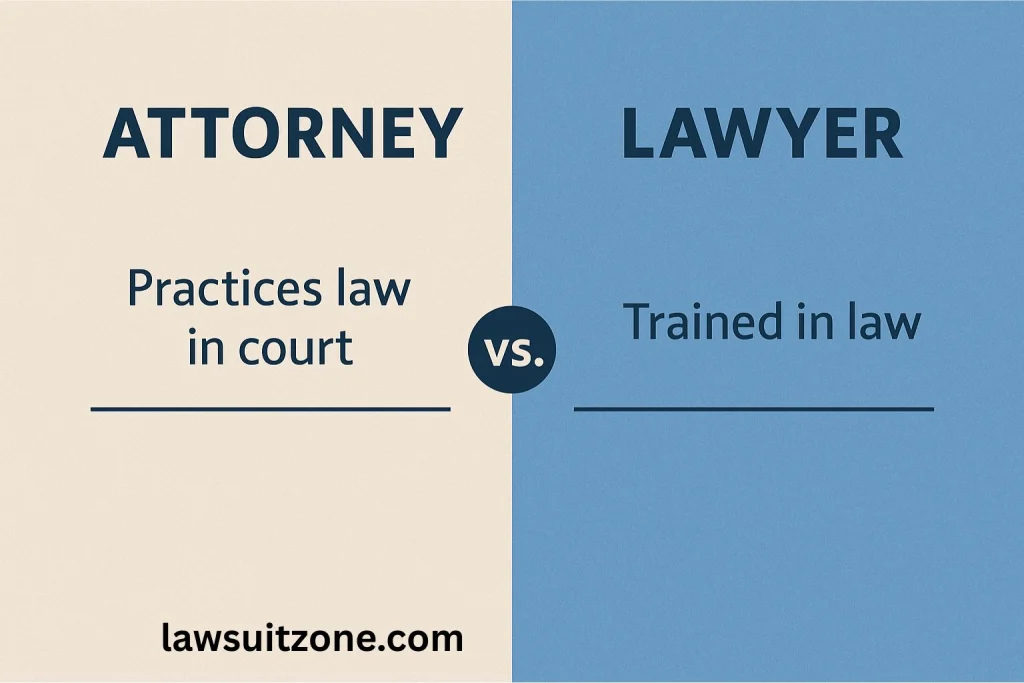
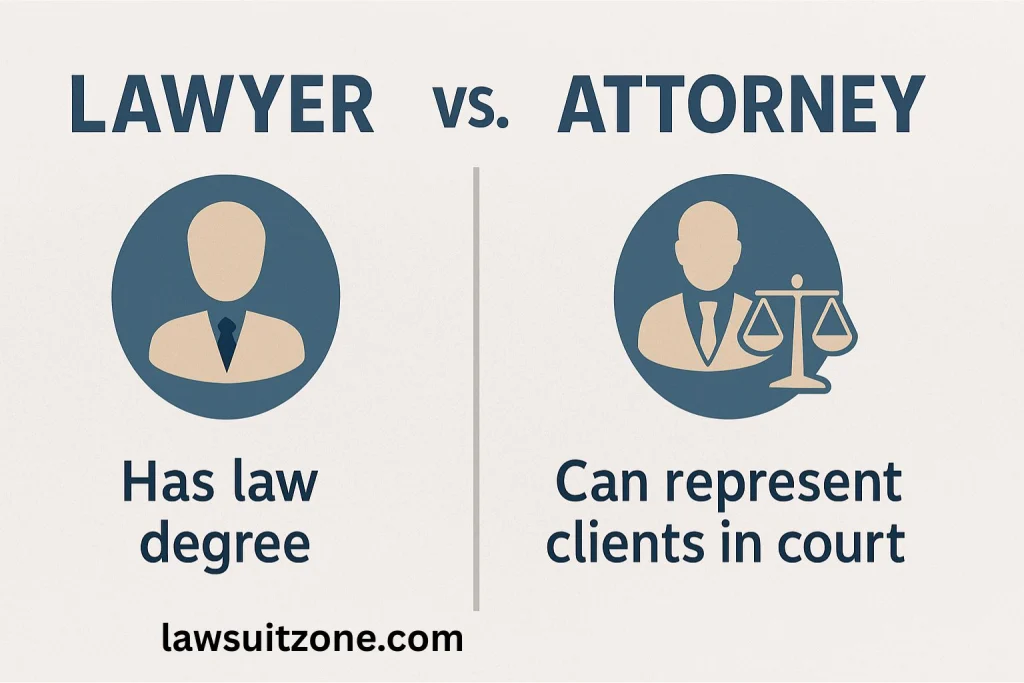
- A lawyer is a person who studied law and graduated in it.
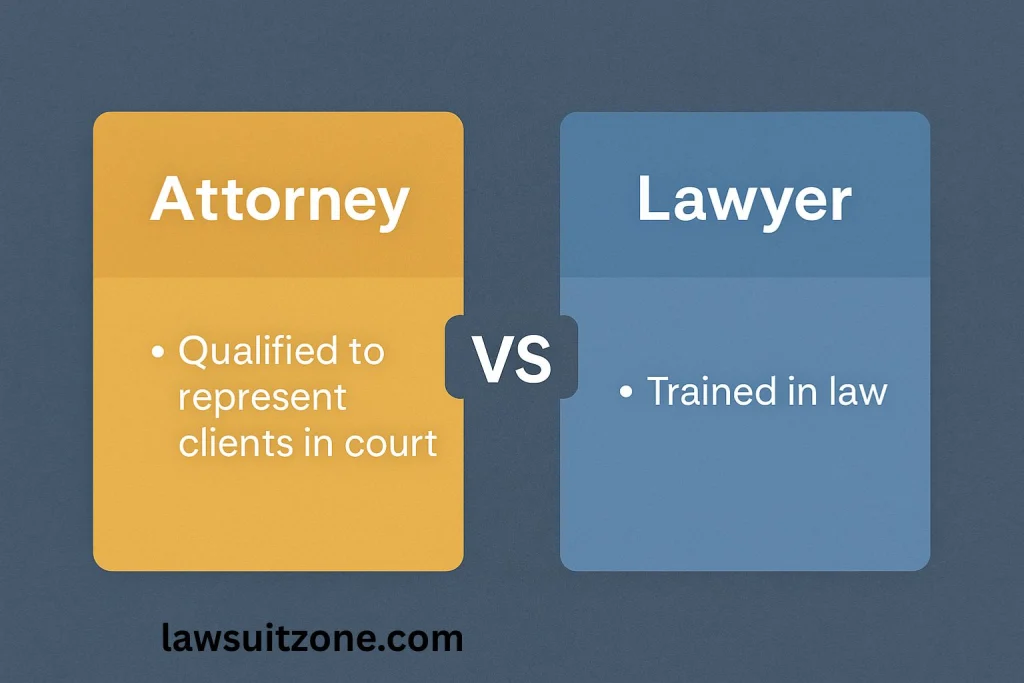
- An attorney is a lawyer who also passed the bar exam and was licensed to practice law in court.
So, all attorneys are lawyers, but not all lawyers are attorneys.
Consider this: a doctor who graduates from a medical school is not a physician until he or she completes residency and licensing examinations. The same applies to attorneys.
Where the Terms Originate
The origins of attorney vs lawyer date back to centuries ago. In England:
- Lawyer was the general term for anyone who had professional legal training.
- Attorney is derived from the term “attorn,” which means to represent another. Attorneys were hired to represent another person in court.
When the American legal system evolved, it took plenty of cues from British tradition. Over time, the lines got mixed up in common usage — but legally, the difference remains.
Education Path: How a Lawyer Becomes an Attorney
Step 1: Becoming a Lawyer
- Earn a bachelor’s degree.
- Take the LSAT (Law School Admission Test).
- Complete a Juris Doctor (JD) at an accredited law school.
At this stage, you’re a lawyer — educated in the law, but not yet licensed to represent clients in court.
Step 2: Becoming an Attorney
- Pass the state bar exam.
- Pass a character and fitness evaluation.
- Get admitted to the state bar association.
After being sworn in, the lawyer becomes an attorney-at-law who is fully licensed to represent clients, bring suit, and defend suits before courts.
Roles and Responsibilities
What Lawyers Can Do
- Study and interpret laws
- Offer general legal counsel (in certain situations)
- Work in academe, policy development, or corporate compliance
- Prepare documents such as contracts or reports
What Attorneys Can Do
- Represent clients at criminal or civil trials
- Negotiate settlements and plea bargains
- Prepare binding legal documents (wills, contracts, motions)
- Advocate on clients’ behalf in mediations and hearings
So, when comparing attorney vs lawyer, keep in mind: a lawyer can be restricted to advisory or academic functions, but an attorney is actively engaged in court.
International Variations on Attorney vs Lawyer
The difference varies internationally:
- United States: Attorney is the technical term for trained practitioners, but “lawyer” is generally used in common speech.
- United Kingdom: Solicitors (client advisors) and barristers (courtroom advocates) make up lawyers.
- Canada & Australia: The same as in the UK, though there are many dual-qualified professionals.
- Civil Law Countries (France, Germany, Spain): Phrases such as “advocate” or “jurist” are more frequently used than attorney or lawyer.
This worldwide variation indicates that the lawyer vs attorney debate tends to be determined by regional legal customs.
Day-to-Day Situations: Who Do You Require?
When a Lawyer May Be Sufficient
- Creating internal company policies
- Advising on compliance or legal theory
- Scholarly or research-driven legal analysis
When You Absolutely Need an Attorney
- Trials (criminal, civil, or family law)
- Writing and filing suits or defenses
- Settling legal disputes or negotiations
- Managing contracts with binding legal consequences
In other words: if your case involves the courtroom or legally binding representation, you need an attorney.
Common Misconceptions
- “All lawyers can represent me in court.”
False. Only lawyers admitted to the bar are able to do so. - “Attorney vs lawyer is just a U.S. distinction.”
Not really. Other nations have other names altogether, but the concept of distinguishing “advisors” from “advocates” is found everywhere. - “Attorneys only work in court.”
False. Attorneys also do negotiation, contracts, and non-courtroom work.
Attorney vs Lawyer in Pop Culture
Television shows and movies tend to blur the distinction, having all legal professionals be “lawyers.” For instance, a character might be referred to as a “lawyer” while obviously working as an attorney in a courtroom. Although entertaining, it further muddies public perception.
What Clients Should Ask
If you’re going to be hiring for legal assistance, don’t simply ask, “Are you a lawyer?” Instead ask:
- Have you passed the bar exam in this state?
- Are you authorized to appear on behalf of clients in court?
- What type of cases do you usually deal with?
This assures you’re dealing with an experienced attorney when you need one.
Why Clarity Matters
Clear legal titles make clients trust their advisors. Misconceptions regarding attorney vs lawyer cause miscommunication, bad representation, or even lost cases.
This is the reason why organizations such as the American Bar Association emphasize openness in how legal professionals define their roles.
Looking Ahead: Legal Professions of the Future
Globalization and technology are revolutionizing legal practice. With automated tools based on AI, virtual consultations, and enhanced access to legal information, the distinction between lawyer and attorney could move even further. Nevertheless, the legal system will always require licensed attorneys to plead cases, prepare binding documents, and represent clients formally.
Frequently Asked Questions (FAQs)
Conclusion
The lawyer vs attorney dispute might appear to be a minor technicality, but it is a significant one. A lawyer is educated in the law, whereas an attorney is licensed to appear in court on behalf of clients.
For students, this difference defines your professional pathway. For clients, it helps you employ the appropriate expert for you. For companies, it clarifies the need to understand precisely who is authorized to represent you.
In brief: all attorneys are lawyers, but not all lawyers are attorneys.