Tylenol Autism Lawsuit: A Complete Legal, Medical & Safety Guide (2025 Update)
The Tylenol and autism lawsuit has quickly emerged as among the most searched legal and medical topics, sowing confusion for parents looking for clear, dependable information. The thousands of internet claims, news stories, and social media posts have bewildered many over what is true, what is still being studied, and what the lawsuit actually argues.
This extended, fully human guide breaks down every important detail — legal claims, scientific research, safety tips, and future implications — in a way that’s easy to understand. Misinformation spreads quickly, especially on health topics, so one should rely on information that is accurate, neutral, and science-backed. Have you checked our detailed guide on truck accidents lawsuits.
Understanding the Tylenol Autism Lawsuit: The Core Issue
At the center of the Tylenol-autism lawsuit are claims that prenatal exposure to Tylenol, also known as acetaminophen, can raise the risk of neurodevelopmental disorders such as autism spectrum disorder, or ASD, and attention-deficit/hyperactivity disorder, or ADHD.
Parents who filed lawsuits argue that:
- The manufacturers should have warned about potential risks.
- Stores in which acetaminophen was sold should have included clearer labels.
- They trusted the product based on medical recommendations.
- They believe extended use during pregnancy contributed to diagnoses
It is, however, of extreme importance to underline that these claims are still allegations. Both courts and scientists are yet to examine the evidence.
Why Acetaminophen Is So Widely Used in Pregnancy
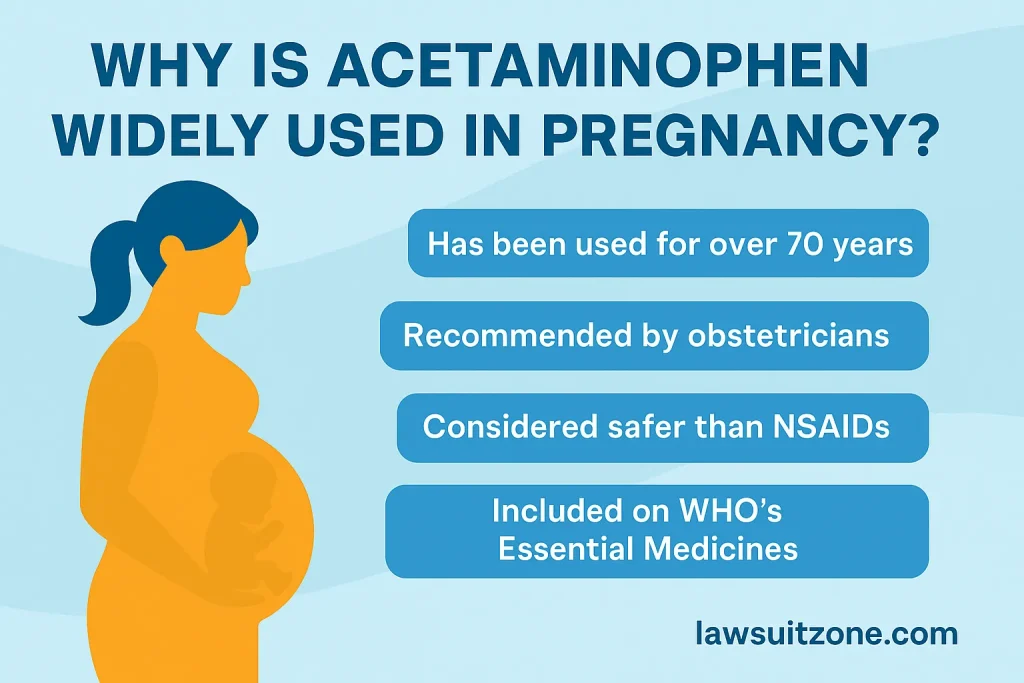
Acetaminophen (Tylenol):
- Has been used for over 70 years
- It is recommended by obstetricians for fever, headaches, and pain.
- Is considered safer than NSAIDs, which include ibuprofen-aspirin, associated with pregnancy risks
- Is included on the WHO’s list of Essential Medicines
With Tylenol having such a long history of use, many parents were surprised when news of the lawsuits began to spread online.
How the Lawsuit Began: A Timeline
2018–2020: Early Research Sparks Concern
Several observational studies indicated that prenatal acetaminophen use may be statistically associated with higher rates of ASD/ADHD. These did not suggest causation but did raise some questions.
2021: Media Begins Covering the Story
News accounts of the possible association began to be published, drawing greater public awareness.
2022: Consolidated Lawsuit (MDL No. 3043)
Multiple lawsuits were combined into Multidistrict Litigation, which let federal courts review the evidence together.
Expert Testimony Review, 2023–2024
Judges assessed whether scientific experts could express opinions in court.
2025: No Final Verdict Yet
The litigation is ongoing. No ruling confirms Tylenol causes autism, and the legal system is still examining the science.
Scientific Evidence: What Researchers Are Actually Saying
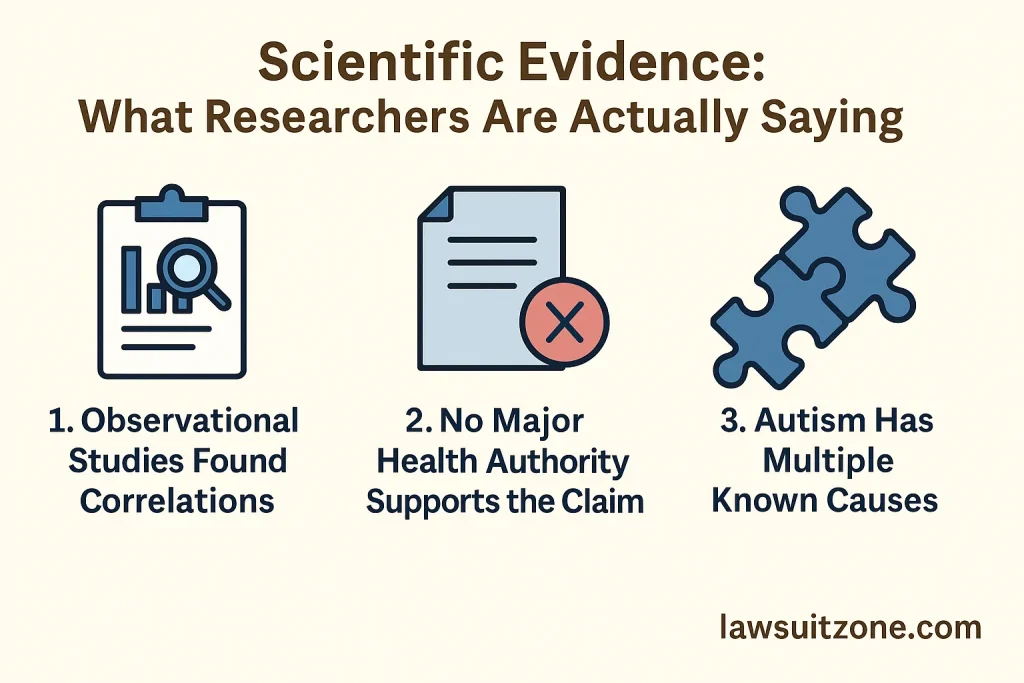
Thus, an understanding of the science involved is important because the lawsuit heavily depends on whether scientific evidence can support the claims.
1. Observational Studies Found Correlations
Some studies found a higher statistical probability of ASD or ADHD in children whose mothers took acetaminophen frequently during pregnancy.
But the limitations include:
- Observational studies cannot prove causation
- Other pregnancy factors include stress, infection, and genetics that may influence outcomes.
- Self-reported use of medication is frequently inaccurate.
- No biological mechanism has been proven
This is the reason scientists are still wary.
2. No Major Health Authority Supports the Claim
Organizations such as:
- CDC
- American College of Obstetricians and Gynecologists (ACOG)
- National Institutes of Health (NIH)
do NOT list acetaminophen as a confirmed risk factor for autism.
For more information about autism research, refer to the CDC’s official page.
3. Autism Has Multiple Known Causes
Scientists agree that autism is influenced by:
- Genetics
- Environmental factors
- Maternal health
- Immune responses during pregnancy
- Brain development variations
No single cause was pinpointed so far, including the use of medication.
Why the Tylenol Autism Lawsuit Is Complicated
The lawsuit sits at the intersection of:
Medicine
Doctors require solid scientific evidence before changing medical recommendations.
Law
Courts require legally valid expert testimony.
Science
Researchers need more controlled studies, not just observational data.
Consumer Perception
Parents want clear answers, but the answers require time and research.
This makes the lawsuit one of the most complex consumer-safety cases of the decade.
Can Tylenol Really Cause Autism? A Balanced Answer
No scientific evidence to this date conclusively proves that Tylenol causes autism.
What we can say:
- Some studies have found a possible association
- Association ≠ causation
- Scientists disagree
- The courts have not determined fault
- Health authorities have not altered guidelines
That is why the topic remains in legal and scientific review.
Why Some Parents Believe Tylenol Played a Role
Parents involved in the lawsuit often refer to:
- Using Tylenol frequently due to pain or fever during pregnancy
- Trusting doctors who recommended it
- Feeling blindsided when studies surfaced
- Wishing they had been warned about possible risks
These emotional experiences must not be ignored, yet legal cases have to depend on hard evidence.
Legal Updates: Where the Tylenol Autism Lawsuit Stands in 2025
As of this year:
- Expert testimony is under strict review
- No lawsuit has prompted compensation
- Retailers and manufacturers deny wrongdoing
- The case may take several more years
Could the Lawsuit Change Medication Labels?
If courts find the evidence strong enough, potential future outcomes include:
- Stronger warning labels for pregnant users
- Updated dosage recommendations
- More detailed medical guidelines
- More research to uncover pregnancy-safe medications
However, these outcomes are dependent on future findings.
Is Tylenol Still Safe for Pregnant Women?
Most doctors still agree:
- Tylenol is safe when used correctly
- Avoid unnecessary long-term use
- Always consult your healthcare provider
How to Safely Take Tylenol During Pregnancy — Consumer Guide
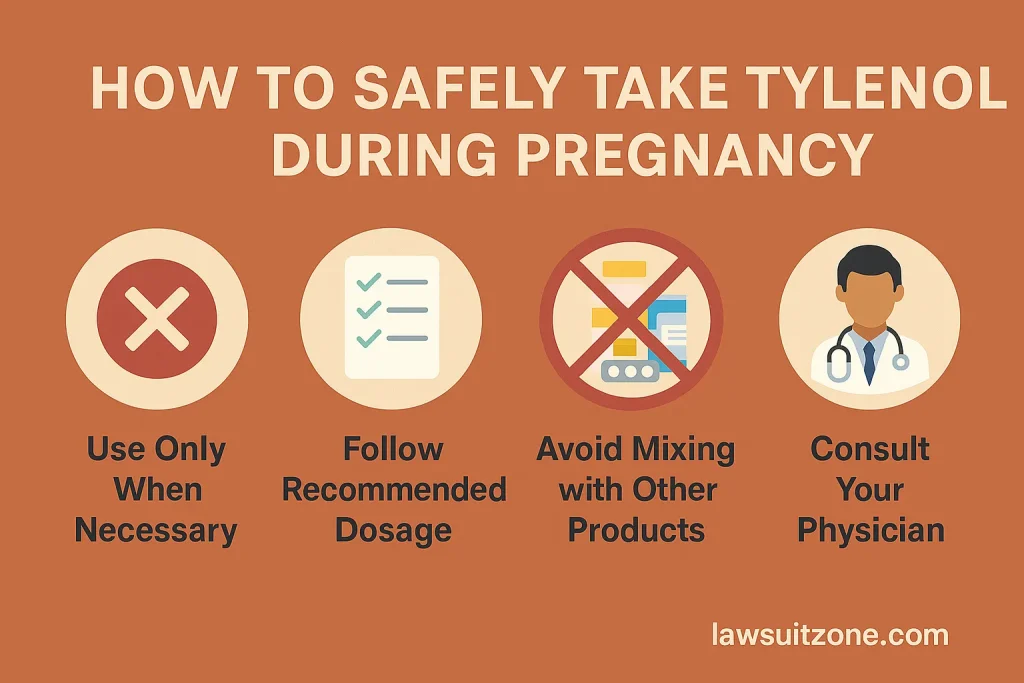
Here is a generalized, medically safe guide:
- Use only when necessary
- Follow recommended dosage
- Avoid mixing acetaminophen with other products
- Consult a physician for chronic pain or fever
Should Parents File a Tylenol Autism Lawsuit Claim?
If someone believes their situation might qualify, they should consider:
- Medical records
- Pregnancy medication history
- Timeline of diagnosis
- Legal eligibility
- Professional legal advice
What Compensation Could Look Like (If the Case Ever Advances)
Hypothetical compensation could include:
- Medical care costs
- Therapy and support services
- Special education expenses
- Emotional damages
- Long-term treatment needs
But this is speculative until courts reach conclusions.
Common Misconceptions About the Tylenol Autism Lawsuit
- Myth: Tylenol is proven to cause autism
- Myth: All pregnant women should avoid Tylenol
- Myth: The lawsuit guarantees compensation
- Myth: Retailers knowingly hid risks
Future of the Lawsuit: What Experts Predict
Experts believe:
- Scientific models will be debated for years
- More studies will likely be funded
- Guidelines may change
- Public awareness will grow
- Autism research will expand
- A final ruling could reshape consumer-labeling laws
Enhanced & Expanded Frequently Asked Questions
Final Words
The Tylenol autism lawsuit is driven by concerned parents and observational research suggesting possible associations between prenatal acetaminophen use and autism or ADHD. However:
- There is no scientific proof
- No health authority has changed guidelines
- No court has established liability
Research continues, and results may take years.
Tylenol remains trusted but should always be used responsibly with medical guidance.