Red Bull Lawsuit: The Shocking Truth Behind the Famous Energy Drink Case
Introduction
The Red Bull lawsuit is one of the most striking cases in modern marketing clashing with consumer law. It was a case whose origins stemmed from a single tagline: “Red Bull gives you wings”, a catchy saying that catapulted the Austrian beverage company into global superstardom.
But what happens when creative marketing meets literal interpretation? Consumers started questioning whether Red Bull truly delivered the energy boost it claimed. Soon, this curiosity spiraled into a multimillion-dollar class-action lawsuit that would change advertising forever.
This comprehensive guide explores the rise of the lawsuit, its legal foundation, settlement details, public reaction, and what lessons businesses and consumers can draw from one of the most talked-about cases in corporate history. Have you checked our detailed guide on mojang lawsuit.
The Rise of Red Bull: From Idea to Empire
Before the Red Bull lawsuit made headlines, the brand was an international icon of adrenaline, ambition, and innovation. The brainchild of Austrian entrepreneur Dietrich Mateschitz in 1987, Red Bull redefined the beverage world. It wasn’t sold as a soft drink or alternative to coffee; it was a lifestyle in a can.
Through sponsorships in extreme sports, Formula 1 racing, and esports, Red Bull became synonymous with pushing limits. Its marketing slogan, “Red Bull gives you wings,” turned into a cultural mantra.
Paradoxically, it would be that slogan — the very one that helped the company dominate the market — that would eventually land them in court.
What Sparked the Red Bull Lawsuit?
In 2013, a class-action lawsuit was filed by a group of U.S. consumers against Red Bull GmbH for what they claimed were deceptive advertising claims not supported by scientific evidence.
They alleged that:
- “Gives you wings” was deceptive. Consumers thought the drink improved performance well beyond what caffeine and sugar typically provide.
- Marketing exaggerated health and energy benefits. Focus, alertness, and endurance were promised in advertisements unsupported by sound science.
- False value perception. Red Bull’s branding allegedly led consumers to pay more, thinking it offered superior energy benefits.
The plaintiffs did not claim physical injury — only that they had been financially deceived by paying for an overpriced drink.
Soon, the case became symbolic of the growing tension between advertising creativity and consumer truth.
The Legal Foundation: What Laws Were Involved?
The Red Bull lawsuit was based on U.S. consumer protection laws regarding false or misleading advertising.
1. False Advertising
Under the Federal Trade Commission (FTC) guidelines, any company claiming factual assertions about its product has to be able to prove those claims. The Red Bull slogan, combined with performance-oriented messaging, allegedly crossed that line.
2. Breach of Warranty
The plaintiffs argued that Red Bull’s branding created an implied warranty that the product would deliver specific energy benefits. Because it did not, this warranty was breached.
3. Unjust Enrichment
Red Bull was accused of making false claims to justify premium prices for what was essentially a standard caffeinated drink.
Together, these legal principles formed the foundation of the case that shook the global beverage industry.
Red Bull’s Defense: It’s Just a Metaphor
Red Bull countered quickly, arguing that its slogan was never meant to be taken literally. The company explained that “Red Bull gives you wings” was a metaphorical expression of energy, motivation, and vitality — not an actual physical or performance enhancement.
Red Bull also emphasized that it had complied with all labeling regulations by clearly disclosing caffeine content and ingredients.
However, recognizing that prolonged litigation could harm its reputation, Red Bull made a strategic decision — to settle the case without admitting liability.
The Settlement: How Red Bull Paid the Price
In 2014, Red Bull settled the case for $13 million. The settlement included all consumers who purchased Red Bull between January 1, 2002, and October 3, 2014.
Under the agreement:
- Consumers could claim $10 in cash or $15 worth of Red Bull products.
- No proof of purchase was required — an honor system was used.
While Red Bull denied wrongdoing, it agreed to review and modify its marketing practices to avoid future misunderstandings.
While $13 million might seem modest for a company making billions in revenue, the reputational impact was immense. The case became a global talking point, appearing in news outlets, marketing schools, and legal forums around the world.
Why This Lawsuit Mattered
The Red Bull lawsuit cost the company more than just money; it redefined the boundaries of marketing ethics.
1. A Wake-Up Call for Advertisers
It reminded brands that slogans can’t promise results they can’t deliver — even if those slogans seem humorous or exaggerated.
2. Consumer Empowerment
It proved that ordinary consumers can take on global corporations — even over a simple tagline.
3. Openness in Advertising
Since the lawsuit, companies have been more cautious. Health and performance claims must now be scientifically supported.
Impact on the Energy Drink Industry
The Red Bull lawsuit sent shockwaves through the entire energy drink market. Competitors like Monster and Rockstar quickly re-evaluated their marketing campaigns for compliance.
Governments took notice too, tightening rules on caffeine labeling, advertising to minors, and transparency in testing.
Energy drink makers began printing detailed disclaimers such as “moderate caffeine intake recommended” and “not suitable for children or pregnant women.”
The result was a more transparent and consumer-conscious industry.
The Power of a Tagline: “Gives You Wings”
Few slogans in history have reached the cultural heights of “Red Bull gives you wings.” It was short, inspiring, and instantly recognizable — but the Red Bull lawsuit proved that even metaphorical marketing can be misinterpreted.
After the case, Red Bull continued using the slogan, but its tone and visuals changed. The ads became more animated and whimsical, emphasizing humor and fantasy over realism.
The slogan still soared — but with a newfound layer of legal awareness.
Red Bull’s Resilience After the Lawsuit
Despite the backlash, Red Bull’s brand strength remained virtually untouched. Its loyal fanbase and pivot toward extreme sports helped it rebuild trust quickly.
Instead of downplaying the issue, Red Bull reshaped its story — focusing on adventure, achievement, and courage. Through global partnerships in Formula 1, esports, and skydiving, it reinforced authenticity over advertising.
By 2025, Red Bull remains the world’s leading energy drink, selling over 12 billion cans annually.
Lessons for Businesses
Every company can learn from the Red Bull lawsuit.
- Don’t Overpromise.
A catchy slogan is fine — but it shouldn’t mislead. Consumers today are far more aware and quick to question brands. - Back Claims with Data.
If you claim energy, focus, or health benefits, back it with science. Evidence isn’t optional anymore. - Transparency Builds Trust.
Being open about your product creates loyalty that lasts. - Legal Awareness Matters.
Consult experts before running major ad campaigns — especially in regulated industries. - Adapt and Overcome.
Red Bull turned potential disaster into a global PR win by responding wisely.
For brands and marketers who want to understand advertising compliance, refer to the Federal Trade Commission’s Truth-in-Advertising Guide an official U.S. government resource that outlines how to advertise legally and ethically.
It’s a must-read for advertisers hoping to avoid mistakes like the Red Bull lawsuit.
The Psychology of Consumer Belief
The class-action lawsuit also opened fascinating discussions in consumer psychology: why did people believe Red Bull literally gave them wings?
Emotional branding can make consumers interpret metaphors as truth over time. Red Bull’s high-performance imagery may have subconsciously led buyers to believe in superhuman results.
The takeaway? Repetition builds belief — and belief, when unverified, can lead to backlash.
Broader Cultural Impact
The Red Bull lawsuit wasn’t just about an energy drink — it symbolized the cultural shift toward truth and accountability in marketing.
In today’s digital world, companies must balance creativity with credibility, knowing every claim can go viral — and backfire.
The case sparked global debates about corporate ethics, honesty in advertising, and consumer skepticism, shaping modern marketing laws worldwide.
Public Reaction
Public response ranged from amusement to applause. Some mocked the idea of suing over a metaphor, while others praised consumers for holding a global brand accountable.
Memes flooded the internet — “I didn’t get wings, but I got $10” became a viral line.
Yet beneath the humor, the Red Bull lawsuit served as a serious reminder: even small exaggerations can erode consumer trust when magnified globally.
Future Implications for Advertising
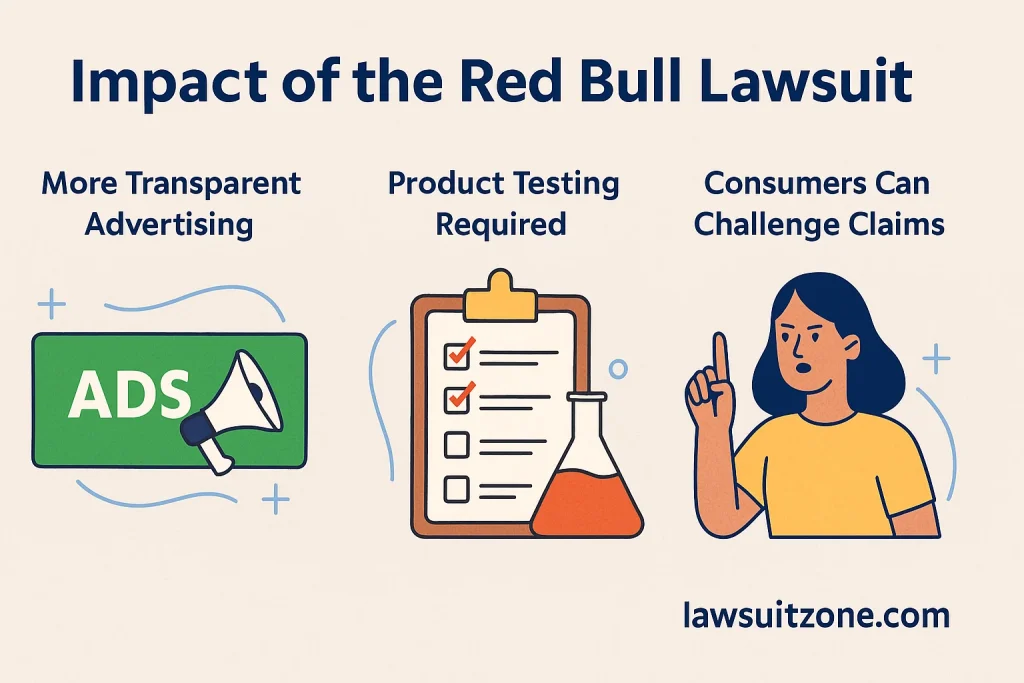
The lawsuit created a new benchmark for how marketing is handled today. Companies now understand that even implied claims can be dangerous if misleading.
We are entering an era where:
- Advertising slogans must be clear and honest.
- Product claims need scientific validation.
- Consumers have more legal power to challenge deception.
The Red Bull case effectively ended the “anything goes” era of advertising.
FAQs
Conclusion
The Red Bull lawsuit is a defining chapter in advertising history a reminder that creativity must always walk hand in hand with integrity.
For consumers, it was a victory for truth. For marketers, it was a signal to be transparent, precise, and ethical.
Today, Red Bull still dominates the market — not because of its slogan, but because it evolved. It proved that facing controversy doesn’t destroy a brand — refusing to learn from it does.
The real lesson? Brands don’t need wings to fly — they just need truth to stay aloft.
Disclaimer:
This article is for informational purposes only and should not be considered legal advice. For questions about advertising law, please seek the advice of a qualified attorney.