Parking Lot Accidents: Who’s Legally at Fault When a Pedestrian Gets Hit?
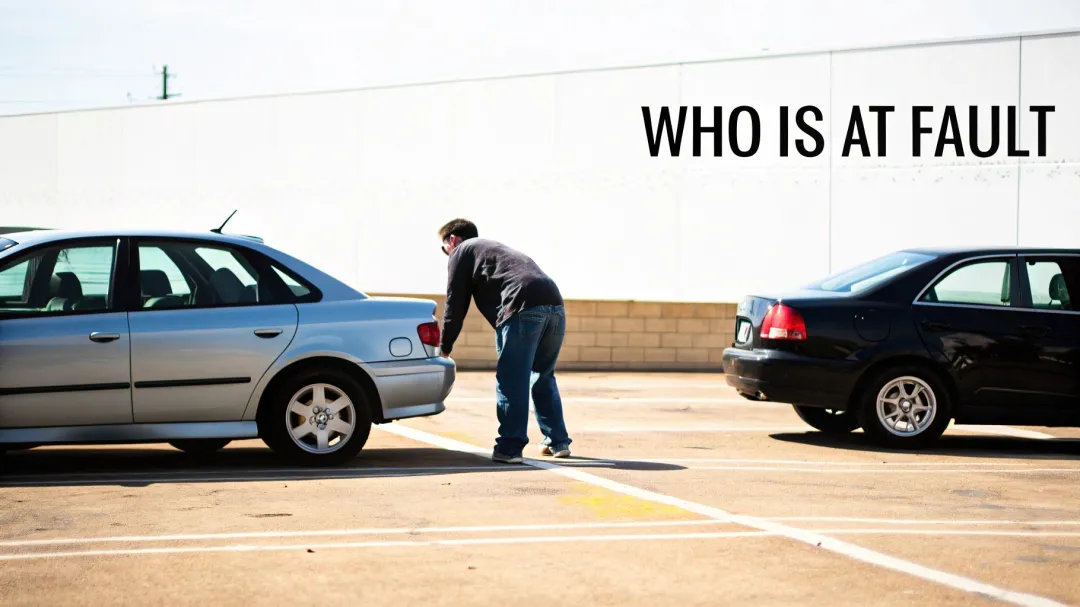
Parking lots sit in a legal gray zone that catches both drivers and injured pedestrians off guard. They are private property, which means public road traffic laws do not always apply cleanly. At the same time, they are spaces where vehicles and pedestrians share the same surface with no meaningful separation, which makes them genuinely dangerous and legally consequential when something goes wrong.
Pedestrian accidents in parking lots are more common than most people expect, and fault is rarely straightforward. Understanding how liability is determined, and what role right of way actually plays is essential for anyone navigating a claim after a parking lot collision.
Does Arizona Law Apply in Parking Lots?
This is where the confusion starts. Parking lots are typically private property, and Arizona’s traffic statutes are written around public roadways. That creates a gap: some traffic laws apply in parking lots, and some do not, and courts have not always drawn the line in the same place.
What is clear is that Arizona’s general duty of care applies everywhere. Drivers are required to exercise reasonable care to avoid injuring others, regardless of whether they are on a public street or a private lot. Under A.R.S. § 28-794, drivers must use due care to avoid hitting pedestrians and must take extra precautions around children or anyone who appears vulnerable. That duty does not switch off when a driver turns into a parking lot.
A.R.S. § 28-856 adds a specific requirement: drivers leaving driveways, alleys, or parking areas must yield to pedestrians on sidewalks. When a pedestrian is struck while crossing a parking lot entrance or a pedestrian lane, this statute becomes directly relevant. Attorneys handling pedestrian injury cases understand that Phoenix right-of-way in parking lot laws require careful analysis precisely because the private property distinction creates arguments that both sides use aggressively.
Right-of-Way Inside a Parking Lot
Within a parking lot, right-of-way follows a hierarchy based on where each vehicle or person is positioned relative to the traffic flow.
Main through lanes carry the right-of-way. Vehicles traveling in the primary lanes that run through a parking lot, typically the lanes that connect to the entrance and exit, have priority over vehicles entering from parking rows. A driver pulling out of a parking space or turning out of a feeder row must yield to traffic already moving in the main lane.
Vehicles backing out of spaces are at the bottom of the right-of-way hierarchy. A driver reversing out of a spot must yield to all other vehicles and to all pedestrians, regardless of which direction the pedestrian is walking. This is where a significant portion of parking lot pedestrian accidents occur, and it is one of the cleaner fault determinations: a backing driver who strikes a pedestrian walking behind the vehicle has failed to yield and is almost always found primarily at fault.
Where two vehicles are backing out simultaneously, fault is shared, and comparative analysis applies.
Do Pedestrians Have the Right of Way?
Not automatically, and this is a point that surprises many injured pedestrians. In Arizona, pedestrians do not have an unconditional right-of-way in parking lots. They have the right of way in marked crosswalks and at intersections governed by traffic signals. Outside of those designated areas, the picture is more complicated.
What Arizona law does require is that drivers yield to pedestrians even in situations where the pedestrian does not technically hold the right of way. A.R.S. § 28-792 establishes that drivers must yield to pedestrians in crosswalks, but the underlying duty of care requires drivers to take reasonable steps to avoid striking anyone on foot, even in uncontrolled areas. The practical effect is that a driver who hits a pedestrian walking through a parking lot cannot simply point to the absence of a crosswalk and avoid liability. The question becomes whether the driver exercised reasonable care under the circumstances.
Pedestrians, however, are not free of responsibility. Arizona courts have found pedestrians partially at fault in parking lot accidents when they stepped out from between parked vehicles without looking, walked behind a vehicle whose reverse lights were already illuminated, or were distracted by a phone at the moment of impact. These findings reduce, but do not eliminate, the pedestrian’s right to recover damages.
How Fault Is Actually Determined
Because parking lot accidents rarely involve traffic signals or clearly marked crosswalks, fault determination relies heavily on physical and circumstantial evidence. Insurance adjusters and attorneys look at:
- Impact point on the vehicle: Where on the car the pedestrian was struck helps establish the driver’s trajectory and speed, and whether the driver had a reasonable line of sight to the pedestrian before impact.
- Security and surveillance footage: Most commercial parking lots have camera coverage. This footage can show vehicle speed, pedestrian movement, and whether the driver had any opportunity to stop. Obtaining it quickly matters, as retention periods vary.
- Witness accounts: Bystanders, other drivers, and store employees who witnessed the accident provide context that physical evidence alone cannot.
- Reverse light and brake light evidence: In backing accidents, whether the vehicle’s lights were on before impact is relevant to whether a pedestrian had any warning to stop.
- Pedestrian visibility: Time of day, lighting conditions, whether the pedestrian was wearing visible clothing, and whether they were walking between rows of parked vehicles all factor into whether the driver could reasonably have seen them in time.
Arizona’s Comparative Fault System and What It Means for Claims
Arizona follows a pure comparative fault rule. In parking lot pedestrian accidents, this means that fault can be divided between the driver and the pedestrian in any proportion, and each party’s compensation is reduced by their assigned percentage of fault.
In practical terms, a pedestrian who was struck by a backing vehicle but was also walking behind the car while looking at their phone might be found 20% at fault. Their total damages would be reduced by 20%, but they retain the right to recover the remaining 80%. The pure comparative system means that even a pedestrian found 60% at fault can still recover 40% of their damages. No percentage of fault cuts off the claim entirely.
This is significant because insurance companies representing drivers frequently argue pedestrian fault as a way to reduce their exposure. The argument is not frivolous when there is evidence of inattention or unsafe behavior on the pedestrian’s part. But it also should not go unchallenged without examining whether the driver met their independent duty of care.
When the Property Owner May Also Be Liable
Driver fault is not the only theory of liability available in parking lot pedestrian accidents. Property owners, including retailers, commercial landlords, and property management companies, have a duty to maintain their parking lots in a reasonably safe condition. That duty can become the basis for a claim when the lot’s design or condition contributed to the accident.
Premises liability arguments in parking lot accident cases include:
- Inadequate lighting that prevented either the driver or the pedestrian from seeing the other in time
- Absence of marked pedestrian lanes or crosswalks in high-traffic areas near store entrances
- Sight line obstructions created by oversized vehicles, landscaping, or signage positioned near parking spaces
- Poorly maintained pavement that contributed to a fall or affected vehicle control
Property owner liability runs parallel to, rather than instead of, driver liability. Both claims can be pursued simultaneously, and in cases where the driver’s insurance is insufficient to cover the full damages, the property owner’s liability coverage becomes important.
Steps That Protect a Claim After a Parking Lot Accident
The immediate actions taken after a parking lot pedestrian accident shape what evidence is available and how strong the eventual claim is. Several steps matter.
Call 911 even for parking lot accidents. Many people assume that because it is private property, police reports are not generated. Officers do respond to injury accidents on private property, and a police report creates an official record of the scene, the parties involved, and any initial fault observations.
Document the scene before leaving. Photograph the vehicle, the area where the impact occurred, any visible injuries, parking lot markings, lighting conditions, and the surrounding environment. Identify any security cameras and note which businesses or property owners control them.
Get medical attention promptly. Delayed treatment not only risks worsening an injury, it also gives insurance adjusters grounds to argue that the injuries were not caused by the accident or were not serious enough to warrant immediate care.
Do not give a recorded statement to the at-fault driver’s insurance company without legal advice. Adjusters contact injured parties quickly, often before the full extent of injuries is known, and recorded statements are used to lock in accounts that can later be used to minimize payouts.
Parking lot accidents generate genuinely contested liability questions. The law does not resolve them automatically in either party’s favor. Evidence, timing, and a clear understanding of how Arizona’s fault rules apply to private property accidents are what determine the outcome.