Optimum Energy Partners Lawsuit: All You Should Know
Introduction
When the majority of individuals think of energy corporations, they envision drilling platforms, pipelines, or wind farms. What usually fails to register is the legal and financial machinery that drives them. The Optimum Energy Partners suit pulled back the curtain and showed how promptly optimism can verge on scandal when openness, accountability, and investor confidence are called into doubt.
For energy investors, this case is not simply about a single company it’s about what goes wrong when promises meet performance. In this guide, the lawsuit is described in simple terms, from what set it off, how Optimum Energy Partners acted in its own defense, the results, and what the rest of the industry can learn from it. Have you checked our Detailed guide on conservator vs power of attorney.
Who is Optimum Energy Partners?
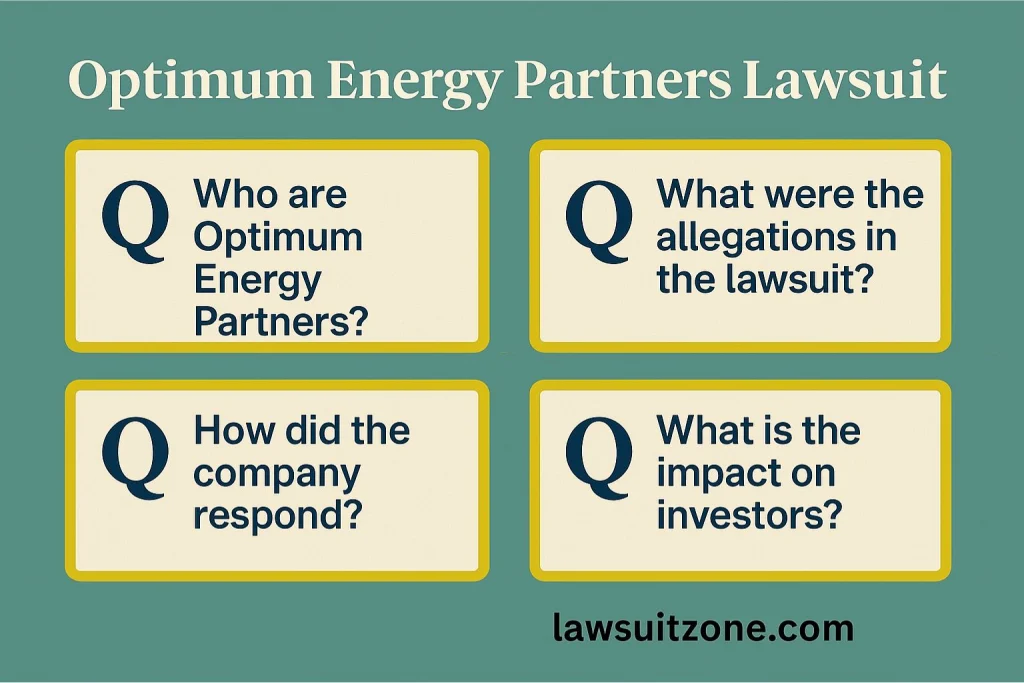
Optimum Energy Partners (OEP) is an energy company in Texas that forged a niche by positioning itself as a link between oil & gas of the past and the future in renewable energy.
The Company’s Emphasis
- Oil & Gas Ventures: Direct participation in drilling and production joint ventures.
- Renewable Energy Projects: Research in solar and wind ventures.
- Investor Opportunities: Providing individual investors with an opportunity to invest in high-capacity energy projects.
The company’s pitch was simple: give ordinary investors a share in big-energy profits while projecting itself as progressive. But with that goal came stress — and ultimately, lawsuits.
History of the Optimum Energy Partners Lawsuit
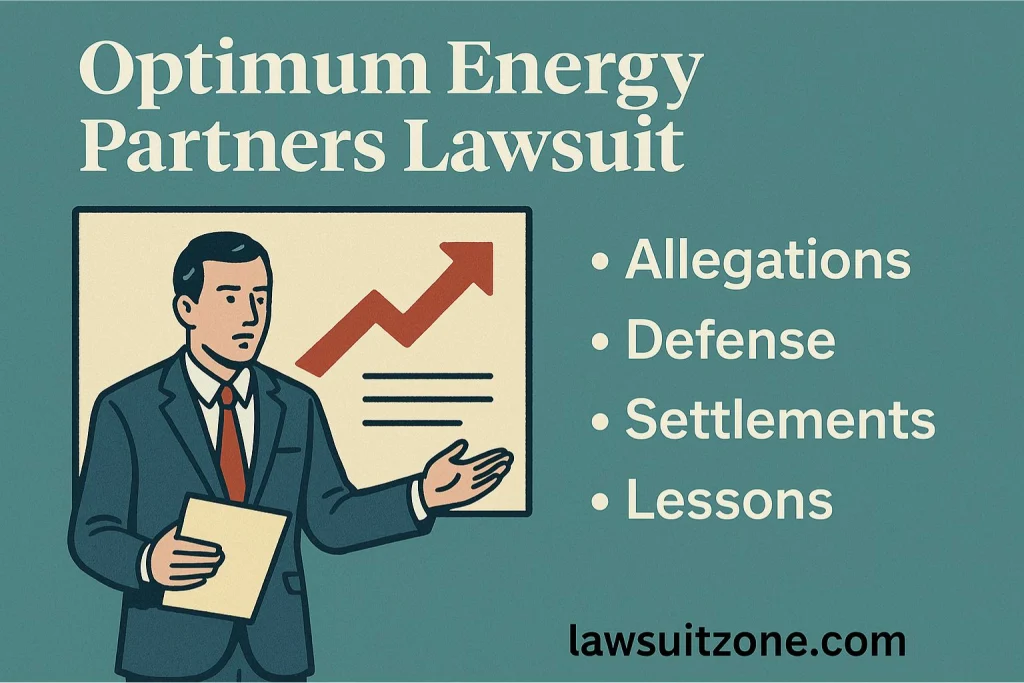
The Optimum Energy Partners lawsuit did not suddenly materialize. It was the culmination of increasing warnings from investors, partners, and monitors who felt the company’s intentions often failed to match its rhetoric.
Central Claims
- Exaggerated Returns: Investors claimed they were guaranteed returns that defied market volatility.
- Fiduciary Breach: Charges that management failed to act in the best interest of their partners.
- Transparency: Concerns about whether disclosures about finances fully and fairly represented information.
- Regulatory Conduct: Charges that some projects failed to comply fully with energy investment regulations.
These allegations litigated into lawsuits to hold Optimum Energy Partners responsible for its business.
Optimum Energy Partners’ Response
Optimum Energy Partners repeatedly defended themselves against the accusations. Their argument hinged on three points:
- Risk is Built-In: Energy is a volatile business; there is no risk-free investment.
- Full Disclosure: They asserted that risk factors were described in investor contracts.
- Regulatory Alignment: The firm insisted on state and federal regulatory compliance.
In their view, the suits were not so much about misconduct but rather investors misjudging the inherent risks of the energy industry.
Within the Courtroom
What Transpired in Court
- Some of the cases were dismissed when courts lacked adequate evidence.
- Others resulted in settlements, with Optimum Energy Partners paying some of the investors.
- Several cases went deeper into litigation, highlighting the company’s internal procedures.
Settlements Without Admission
As in many corporate lawsuits, some of these settlements settled claims without the company’s acknowledgment of wrongdoing. Those results point to a common tactic: limit reputational damage while sidestepping lengthy trials.
Impact on Investors
To investors, the lawsuit meant more than just a money issue — it was personal. Some had invested retirement funds or family wealth anticipating stability.
Lessons Learned
- Do Your Homework: Due diligence is essential before investing in private energy companies.
- Closely Examine Projections: Watch out for overly optimistic projections without third-party support.
- Consult Professionals: Economists can offer an objective view.
- Diversify: Risk diversification across sectors can mitigate significant losses.
The lawsuit was also a rude awakening that investing in the energy space is not all about oil and gas — it is about trust.
Industry-Wide Effect
The Optimum Energy Partners lawsuit reverberated throughout the wider energy sector.
- Regulatory Waves: Regulators increased scrutiny of mid-cap energy firms.
- Investor Skepticism: People became increasingly doubtful of private partnership schemes.
- Ethical Wake-Up Call: Companies were reminded that ethical management is as important as profitability.
This case illustrated that reputation is a company’s most precious asset in today’s world.
The Human Angle

Behind every lawsuit are real people. Some workers were concerned about job security. Some investors reported that they felt blindsided and deceived. Families discussed whether to seek legal recourse or take a loss.
The Optimum Energy Partners lawsuit proves that lawsuits are never simply about money — they’re about livelihoods, trust, and peace of mind.
Preventing the Next Lawsuit
For Companies
- Be Transparent: Avoid sugarcoating risks for the sake of investors.
- Prioritize Compliance: Regulatory loopholes usually result in lawsuits.
- Foster Trust: Build relationships that outlast quarterly reports.
For Investors
- Ask Questions: If something sounds too good to be true, it probably is.
- Request Documentation: Third-party audits can reveal the truth.
- Stay Updated: Follow industry news to spot red flags early.
Expert Resources
For more guidance on protecting yourself as an investor, the U.S. Securities and Exchange Commission (SEC) provides detailed resources on investor rights and compliance standards.
This do-follow link is a reputable high-authority source that guides readers deeper into safe investing habits.
Frequently Asked Questions (FAQs)
Conclusion
The Optimum Energy Partners lawsuit is not only a corporate legal thriller it’s a morality tale for companies and investors alike.
For companies, it is an indication that ambition needs to be tempered with transparency and ethical accountability. For investors, it is a reminder to be tough, read the fine print, and diversify.
Ultimately, this lawsuit highlights a basic reality: in the world of energy, trust is as essential as oil or clean tech. Without it, even the most robust-sounding ventures can fail.