Midland Credit Management Lawsuit: A Comprehensive 2025 Consumer Guide
Introduction
Imagine this: You open your mailbox and receive a letter bearing the “Midland Credit Management” stamp. The phrases “legal action” leap out at you, and your gut drops. If this is something you’re familiar with, don’t worry — you’re not the only one. Thousands of Americans get such letters annually. The Midland Credit Management lawsuit has been one of the most prevalent consumer court fights in debt collection, affecting individuals from all walks of life.
This book takes you past the legalese. We’ll delve into who Midland actually is, why they sue so many people, what your rights are under federal and state law, and what real people like you have done with their cases. At the end of it all, you’ll have a clear map on how to defend yourself, whether you decide to battle, negotiate, or settle. Have you checked our detailed guide on Attorney for Lawsuit.
Who Exactly Is Midland Credit Management?
Midland Credit Management (MCM) is not your standard debt collector who calls a few times and then disappears. They are a behemoth of a debt-buying operation working under the umbrella of parent company Encore Capital Group.
How Their Business Model Works
- Banks, credit card issuers, or lenders write off delinquent accounts.
- Midland purchases those accounts at pennies on the dollar — sometimes a few cents on the dollar.
- Then, they attempt to collect the full balance from consumers, plus fees and interest when possible.
For consumers, this creates a situation where someone you’ve never heard of is suddenly demanding payment on an old debt. And when phone calls and letters don’t work, lawsuits often follow.
Why Does Midland File So Many Lawsuits?
Midland Credit Management sues because—honestly—it does. When individuals fail to respond to collections, a lawsuit is the next leverage point.
Three Large Reasons Lawsuits Benefit Them
- Default Judgments: Most consumers ignore or panic at the summons. If you don’t respond, Midland wins by default.
- Leverage: A lawsuit brings urgency and causes people to pay or settle.
- Enforcement: With a judgment, Midland can request the court to garnish wages or freeze bank accounts.
For Midland, every suit is an investment with potential for large returns.
The Core Charges About Midland Credit Management
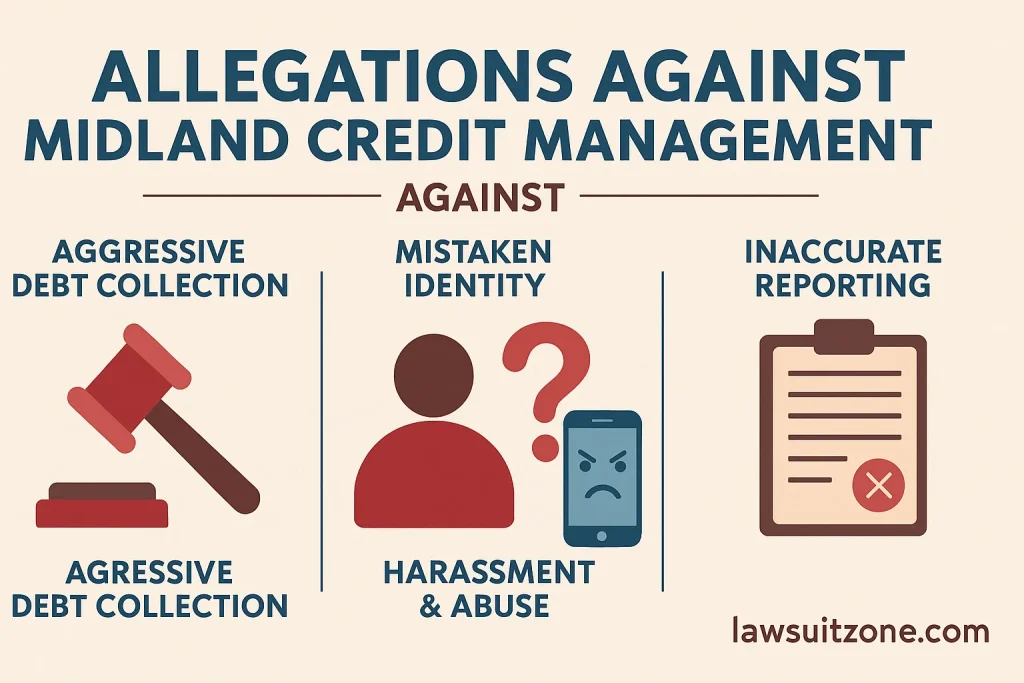
Consumers over the years have raised serious issues about Midland’s activities. The Midland Credit Management case typically involves matters such as:
- Collecting stale debts: Suing on accounts that are beyond the statute of limitations.
- Inaccurate balances: Billing amounts that vary from the original lender’s records.
- Risky documents: Bringing cases with incomplete or nonexistent documentation.
- Aggressive actions: Threatening phone calls, deceptive letters, or threats that they can’t legally make.
These charges have resulted in regulatory actions and consumer lawsuits against Midland itself.
What Laws Protect You as a Consumer?
The good news: you have rights. Federal and state laws offer a safety net if you’re being sued by a company like Midland.
- Fair Debt Collection Practices Act (FDCPA): Halts harassment and bans false or deceptive practices.
- Fair Credit Reporting Act (FCRA): Ensures debt collectors report accurate information to credit bureaus.
- State Laws: Each state sets its own statute of limitations, often between 3–6 years for credit card debt.
For detailed consumer protections, check the official Consumer Financial Protection Bureau a trusted, high-authority resource.
What To Do If Midland Sues You
Here’s the step-by-step roadmap if you’ve been served with a Midland Credit Management lawsuit:
- Don’t dismiss it. Failure to respond results in a win for them.
- File an Answer. Answer within the time limit (usually 20–30 days) by denying that which is untrue.
- Ask for proof. Get them to produce proper documentation that the debt is yours and the amount is right.
- Verify the statute of limitations. In case the debt is too old, the lawsuit will be void.
- Consult an attorney. Consumer protection lawyers often offer free consultations and can help negotiate or dismiss weak cases.
Settlement Options: When Fighting Isn’t the Best Choice
Not every lawsuit ends in a dramatic courtroom battle. Many resolve through settlement.
- Lump-Sum Settlements: Pay less than the total owed in exchange for closing the case.
- Payment Plans: Negotiate smaller monthly amounts that fit your budget.
- Partial Forgiveness: Collectors sometimes forgive part of the debt.
The golden rule: Always have the agreement in writing before handing over a single dollar.
Defenses Against Midland That Work
Consumers have been successful in defending against MCM lawsuits with tactics such as:
- Expired debt: Lawsuit brought after the statute of limitations.
- Wrong person: Debt isn’t yours.
- No proof: Midland can’t come up with the original contract or detailed records.
- Inflated balance: The total contains unauthorized charges or interest.
Real Stories: People Who Fought Back
- Angela of Florida was sued on a $7,500 credit card account. When she requested documentation, Midland dropped the case because they were unable to furnish original statements.
- James of Texas hired an attorney who demonstrated the debt was six years old—beyond the statute of limitations. The judge dismissed the case.
- Maria of Ohio settled a $5,000 claim for $2,000 with a signed contract.
These examples illustrate that consumers have more clout than they might think.
How Does It Affect Your Credit?
- A filing of a lawsuit doesn’t always end up on your credit report.
- A judgment can be ruinous to your score, though.
- Paying or settling keeps long-term harm from occurring, but it’s always preferable to a judgment.
Bigger Picture: Debt Collection in America
The Midland Credit Management lawsuit is only one instance of a broader problem: debt buyers clogging courts with mass-produced lawsuits.
- Shoppers usually don’t know their rights.
- Courts are clogged with cookie-cutter cases.
- Collectors use fear and non-response to their advantage.
This emphasizes the need for increased enforcement and more consumer education.
Lessons for Everyday Consumers
- Always read legal documents thoroughly.
- Don’t assume collectors have all the proof.
- Keep financial records for as long as possible.
- Get advice early, particularly if you can obtain free or low-cost legal assistance.
FAQs On Midland Credit Management Lawsuit
Final Thoughts
The Midland Credit Management lawsuit is something that too many Americans are unwittingly forced into. But it doesn’t have to be disastrous. By being aware of your rights, moving quickly, and having an understanding of your choices, you can avoid a judgment ruining your finances.
Midland is banking on silence. Your defense begins with action.