How Travel Changes the Way We Connect With People
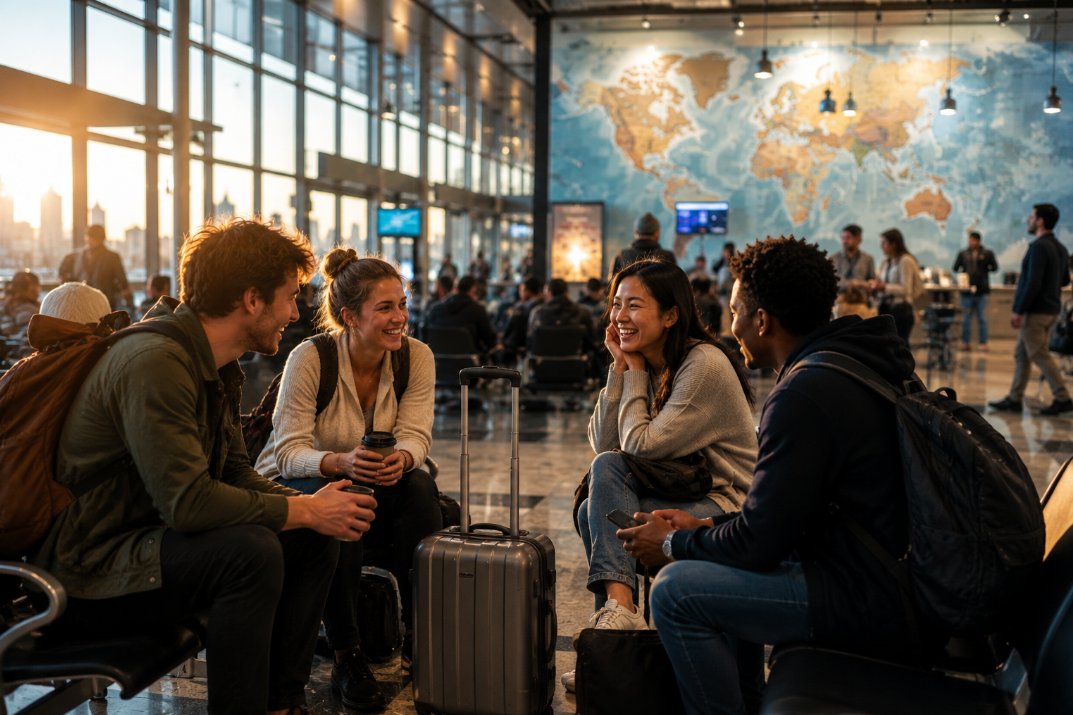
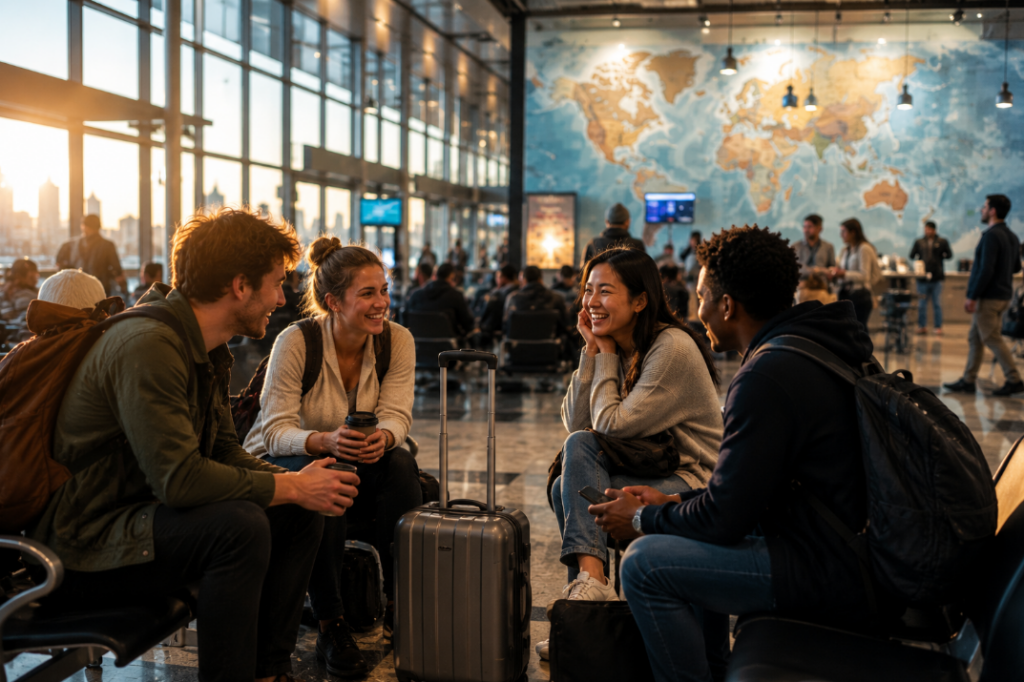
Travel does more than move people across borders. It changes the conditions under which relationships form, grow, and sometimes fail. In unfamiliar places, people often pay closer attention, rely more on communication, and become more aware of cultural habits they usually take for granted. That shift can affect friendships, professional ties, family relationships, and romance.
At its core, this topic is about how mobility reshapes human connection. Travel places people in new social environments where they must interpret tone, gestures, routines, and expectations with greater care. The result is often a more intentional way of relating to others.
What the concept means in practice
Travel changes connection by altering three things at once: context, vulnerability, and perspective.
A person at home usually operates on autopilot. They know the norms, the language, and the shortcuts. A traveler does not. Asking for directions, joining a walking tour, sharing a hostel kitchen, attending a local festival, or navigating a work trip abroad all require small acts of openness. Those acts create opportunities for connection that do not always appear in daily routine.
Universities that prepare students for study abroad often describe cross-cultural engagement as the ability to understand people from different cultures and interact with them effectively. That definition captures the heart of the issue: travel can strengthen connection when it leads to curiosity, observation, humility, and reflection rather than quick judgment
Benefits and potential challenges
Travel can improve connection in several practical ways:
- It encourages active listening.
- It builds empathy by exposing people to unfamiliar routines.
- It increases adaptability in friendships and teamwork.
- It helps people notice their own communication habits.
- It creates memorable shared experiences that strengthen bonds.
The challenges are just as real. Language gaps can make people seem colder or less interested than they are. Cultural stereotypes can distort first impressions. Short trips can create artificial intensity. Online-to-offline relationships can also carry safety risks. Someone interested in dating Polish women, for example, may learn quickly that broad cultural stereotypes are less useful than paying attention to individual values, family expectations, humor, and communication style in real conversation.
Why this subject matters more now
The topic has become more relevant in recent years for a few clear reasons. International travel has largely rebounded after the pandemic, remote work has made longer stays more common, and social connection itself has become a public health issue rather than a private concern.
UN Tourism reported that international tourist arrivals reached about 1.4 billion in 2024, roughly 99% of pre-pandemic levels. At the same time, the WHO Commission on Social Connection found that 1 in 6 people worldwide experiences loneliness. Add the rise of mobile work and online relationship-building, and travel is no longer just leisure; it is part of how many people build community, identity, and companionship across borders
Digital habits also matter here. Pew Research found that 30% of U.S. adults have used a dating app or site, and 1 in 10 partnered adults say they met their current significant other that way. That makes travel and digital communication increasingly intertwined: people often meet online, deepen the relationship offline, and continue it across distance
The main ways travel changes human connection
Shared novelty lowers social barriers
People connect faster when they share a new experience. Two strangers who miss the same train or join the same food tour already have a conversation starter. Novel settings remove some of the labels people carry at home, such as job title, neighborhood, or social status.
That is why travelers often describe forming “fast friendships.” The bond may begin quickly because both people are paying attention, improvising, and exchanging practical help.
Cultural difference improves listening
Travel exposes people to different ideas of politeness, time, privacy, eye contact, and emotional expression. A traveler who stays curious learns to ask better questions instead of assuming familiar meanings.
Research on cross-cultural communication also shows that digital platforms now play a role in how people negotiate identity between home culture and host culture. For expatriates and mobile professionals, social media can support connection, but it also requires careful interpretation across cultures
Slower travel creates deeper relationships
Longer stays tend to produce better connections than fast itineraries. The 2024 MBO Partners report described a shift toward “slomading,” where people visit fewer places and stay longer at each one. That pattern gives people time to recognize faces, return to the same café, join regular activities, and move from transaction to familiarity
Relationships become more intentional
Travel often forces direct conversation. People must discuss schedules, budgets, boundaries, language gaps, and expectations. That makes relationships clearer. Sometimes the result is closeness; sometimes it is the realization that the connection was built more on fantasy than compatibility.
A practical framework
| Travel situation | How connection usually changes | Benefit | Risk to watch |
| Short city break | Quick, high-energy interactions | Easy to meet people fast | Bonds may stay shallow |
| Study or work abroad | Repeated contact over time | Stronger trust and cultural learning | Isolation if staying in an expat bubble |
| Solo travel | More openness to strangers | Confidence and social flexibility | Safety and emotional fatigue |
| Long stay or digital nomad life | Routine-based relationships | Deeper local ties | Blurred work-life boundaries |
| Cross-border romance | Communication becomes deliberate | Greater emotional clarity | Idealization and misunderstanding |
Common misconceptions and mistakes
A few errors appear again and again:
- Assuming travel automatically makes people open-minded. Travel can widen perspective, but only if the traveler reflects and adapts.
- Confusing excitement with compatibility. A beautiful setting can make a new relationship feel stronger than it is.
- Staying only with people from home. This reduces the cultural learning that deepens connection.
- Overgeneralizing from one interaction. One rude waiter or one warm host does not define a country.
- Relying too heavily on translation apps. Tools help, but tone, timing, and body language still matter.
- Ignoring digital safety. Cross-border friendships and romance need the same caution as local ones, sometimes more.
Real-world examples
A business traveler who returns to the same city every month may move from hotel small talk to genuine professional friendship with local colleagues. A student abroad may begin by feeling awkward, then develop stronger communication skills after learning how humor, silence, and disagreement work differently in the host culture. A solo traveler who joins a weekly language exchange may gain more lasting connection than someone who visits ten cities in two weeks.
These examples point to the same lesson: depth usually comes from repetition, not just movement.
Where this is heading
Travel-related connection is likely to become more hybrid in the next few years. People will continue meeting through apps, communities, remote work networks, and shared-interest groups before seeing each other in person. Translation tools will improve. Longer stays may become more common than rapid hopping, especially for workers who can blend travel and employment. Public discussion about loneliness may also push more travelers to seek community-based experiences rather than checklist tourism
The larger trend is not just more travel. It is more deliberate connection across distance.
FAQ
Does travel really make people better at relationships?
It can, but not automatically. Travel helps most when people stay curious, reflect on mistakes, and learn how others communicate.
Are short trips enough to build meaningful connections?
Sometimes, yes. Short trips can start strong bonds, though longer or repeated contact usually makes them more durable.
Why do people feel closer to others while traveling?
Novelty, shared problem-solving, and focused attention make conversations feel more immediate and memorable.
Can digital tools strengthen travel relationships?
Yes. Messaging, translation, and social platforms help people stay connected, though they also create room for scams and misread signals.
Is solo travel better for meeting people?
Often it is. Solo travelers are usually more approachable and more willing to initiate conversation.
What is the biggest mistake travelers make socially?
Many judge unfamiliar behavior too quickly instead of asking what local norms might explain it.
Can travel change existing relationships at home?
Absolutely. Distance, new experiences, and personal growth can improve communication or reveal mismatched expectations.