Flood and Fire: Two of Texas’s Toughest Property Insurance Claims
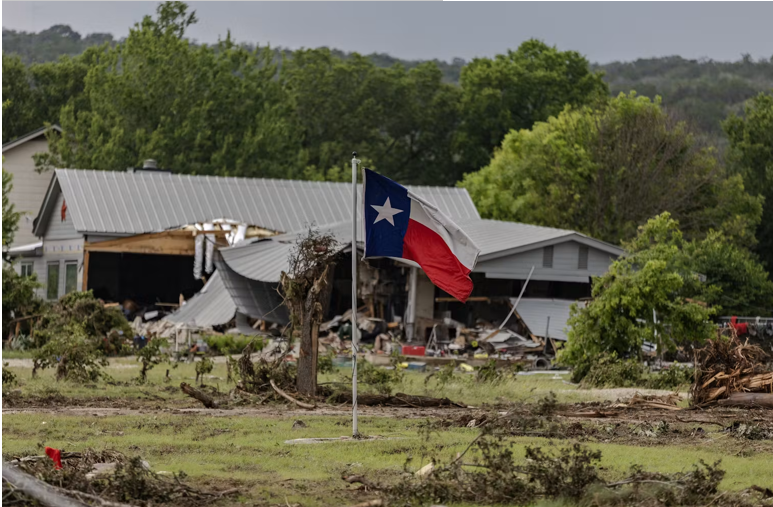
Of all the disasters that can strike a Texas property, flood and fire sit at opposite extremes, one slow and saturating, the other fast and total yet they share a frustrating trait. Both produce some of the most complicated and most frequently disputed insurance claims a property owner will ever file. The damage is severe, the coverage questions are thorny, and the financial stakes are enormous. Knowing how these claims work, and where they tend to break down, is essential for any Texan hoping to recover what their policy actually owes.
This is general information rather than legal advice, but it should help property owners understand what they’re up against after a flood or fire.
Why flood and fire claims are so contested
Most property insurance disputes come down to two questions: what caused the damage, and how much is the loss worth. Flood and fire make both questions unusually hard to answer.
With flooding, the central issue is almost always coverage. Standard homeowner policies in Texas typically exclude flood, which is generally insured through a separate policy. After a major storm, that creates an agonizing puzzle: was the damage caused by rising water (often excluded under the homeowner policy) or by wind-driven rain entering through a damaged roof (potentially covered)? The answer determines which policy pays, and insurers have every incentive to push damage toward whichever category costs them least.
Fire raises different but equally difficult problems. The destruction is often catastrophic and total, which forces a complete accounting of the structure and every belonging inside it. Insurers may question the cause of the fire, scrutinize the value of destroyed property, or apply heavy depreciation. Smoke and water damage from firefighting efforts add further layers. In both scenarios, the property owner is left proving the unprovable value of things that no longer exist.
Navigating a flood claim
A flood claim begins with a race against time and water. Once it’s safe, document everything before you remove anything: photograph the high-water marks, the saturated materials, the damaged contents, and the exterior. Flood policies have their own proof-of-loss requirements and deadlines that are often stricter than standard property policies, and missing them can jeopardize the entire claim.
The hardest part is usually the cause-of-loss fight. Because the line between covered and excluded water damage can be technical, owners frequently find their losses split in ways that leave large gaps. A flood insurance claim lawyer can help establish what truly caused the damage and ensure the covered portion isn’t quietly reclassified as something the policy excludes. When two policies are potentially in play, a homeowner policy and a separate flood policy coordinating them correctly is critical to avoid falling through the cracks between them.
Navigating a fire claim
Fire claims demand an almost forensic level of documentation, which is brutal when a family has just lost everything. Still, the inventory is what drives the recovery. List every destroyed item you can recall, with descriptions, ages, and estimated values, and gather any photos, receipts, or records that survived or exist elsewhere; bank statements, old social media photos, and warranty cards can all help reconstruct what was lost.
Owners are often surprised by how the payout is calculated. Replacement-cost coverage pays to rebuild and replace, but many policies first pay actual cash value (with depreciation deducted) and release the remainder only after repairs are actually completed. That structure can leave a family without enough up-front money to begin rebuilding. Understanding your legal rights is important during this process, especially when disagreements arise over policy terms or claim valuations. Disputes over the cause of the fire, the scope of structural damage, and the value of contents are common, and a fire damage claim lawyer can press the insurer to account for the full extent of the loss rather than an artificially shrunken version of it.
The tactics that reduce both kinds of claims
Despite their differences, flood and fire claims get underpaid through the same familiar methods. Insurers may attribute damage to an excluded cause. They may apply aggressive depreciation that guts an actual-cash-value payment. They may produce repair estimates that ignore the real cost of labor and materials, especially in the supply-constrained period after a widespread disaster. And they may simply delay, betting that a desperate owner will accept less to move forward.
Recognizing these tactics is the first step to countering them. None of them is necessarily improper on its own, but together they describe a system designed to pay conservatively. The owner who treats the claim as a negotiation, backed by solid evidence, fares far better than the one who assumes the insurer will volunteer a fair number.
Your rights and your deadlines under Texas law
Texas does not leave policyholders defenseless. State law requires insurers to handle and pay claims promptly and fairly, prohibits unfair and deceptive claim practices, and can impose additional consequences on companies that violate those rules. When an owner is treated unfairly, those protections can matter as much as the policy itself. Consulting a property insurance claim attorney texas early can help an owner understand which of these rights apply to their situation and how to invoke them.
Those rights come with deadlines, however. Both flood and fire policies impose strict notice and proof-of-loss requirements, and Texas law limits how long an owner has to bring suit over a disputed claim. The aftermath of a disaster is chaotic, and it’s easy to let these windows slip while rebuilding while the claim is still open. One of the hardest practical realities of flood and fire claims is that life cannot simply pause while the insurer deliberates. Families need somewhere to live, and businesses need to reopen, yet permanent repairs made too early can erase the evidence a fair claim depends on. The balance is delicate: take reasonable steps to prevent further damage and meet your policy’s mitigation duties, but document everything thoroughly before permanent work begins, and keep careful records of every temporary repair and expense.
Additional living expense coverage, common in homeowner policies, can help bridge this gap by paying for temporary housing while a home is uninhabitable, though it too is subject to limits and disputes. Understanding what your policy provides for the period between the disaster and the rebuild is just as important as understanding what it pays for the structure itself. The owners who navigate this stretch well are those who plan for it deliberately rather than improvising under pressure, because decisions made in the chaotic early days can quietly affect the recovery for months afterward.
Recovering from a flood or fire is as much about endurance as evidence. These claims unfold over months, and the temptation to accept a quick, inadequate payment grows with every week of disruption. Throughout the process, following sound documentation practices that align with the rules of evidence can strengthen your position if a dispute with the insurer escalates into formal proceedings. Owners who hold the long view, documenting carefully, meeting deadlines, and measuring offers against the true cost of rebuilding, are the ones who ultimately make their policy do what it was bought to do.
The bottom line
Flood and fire represent the extremes of property damage, and the claims they generate are among the most difficult Texans will ever face. Coverage disputes, cause-of-loss battles, depreciation, and delay all stand between an owner and a fair recovery. The path through is the same in both cases: document relentlessly, understand exactly what your policies cover, meet every deadline, and refuse to accept an insurer’s first, conservative valuation as the final word. When everything has been lost or ruined, the recovery you fight for is what makes rebuilding possible.