3M Earplug Lawsuit Attorney Fees: The 2025 Guide Every Veteran Must Read

Introduction: The True Cost of Seeking Justice
When veterans hear the words “3M earplug lawsuit attorney fees,” many of them instantly get a knot in their gut. After serving for years, thousands of soldiers learned the earplugs created to keep them safe from explosions and gunshots could have proved ineffective. To file a claim appears to be the natural next step, but the question weighing on everyone’s mind is: “How much will a lawyer take from my settlement?”
This book doesn’t simply spit out numbers it takes you through the reality of charges, how they are incurred, and what you can do to ensure that you are not caught blindsided when that much-anticipated check does come. Have you checked our detailed guide on Midland Credit Management Lawsuit.
The History Behind the 3M Earplug Lawsuit
- The Equipment: The 3M Combat Arms Earplugs Version 2 were designed to protect soldiers from harmful noise while still permitting communication.
- The Failure: Veterans allege the design was too short, leading to loosened fits and failed protection.
- The Fallout: By 2023, 3M had agreed to a $6 billion global settlement, making it one of the largest mass tort cases in U.S. history.
But when you’re one of hundreds of thousands filing a claim, the elephant in the room becomes attorney fees.
Why Fees Aren’t Just “Fine Print”
For most veterans, settlements aren’t a fortune—they’re intended to pay for years of hearing exams, tinnitus therapies, and counseling. Even a 5% variance in legal costs can be thousands of dollars more (or less) in your wallet.
The Standard Playbook: Contingency Fees
As opposed to retaining a lawyer for a divorce or small claim, the majority of 3M earplug lawyers employ contingency fee contracts. Which means:
- No out-of-pocket costs – You don’t pay on signing.
- Lawyer only gets paid if you win – A percentage of your payout.
- Typical range: 30%–40% – Industry standard for mass torts.
This model helps veterans with no savings receive representation.
Breaking Down a Real Example
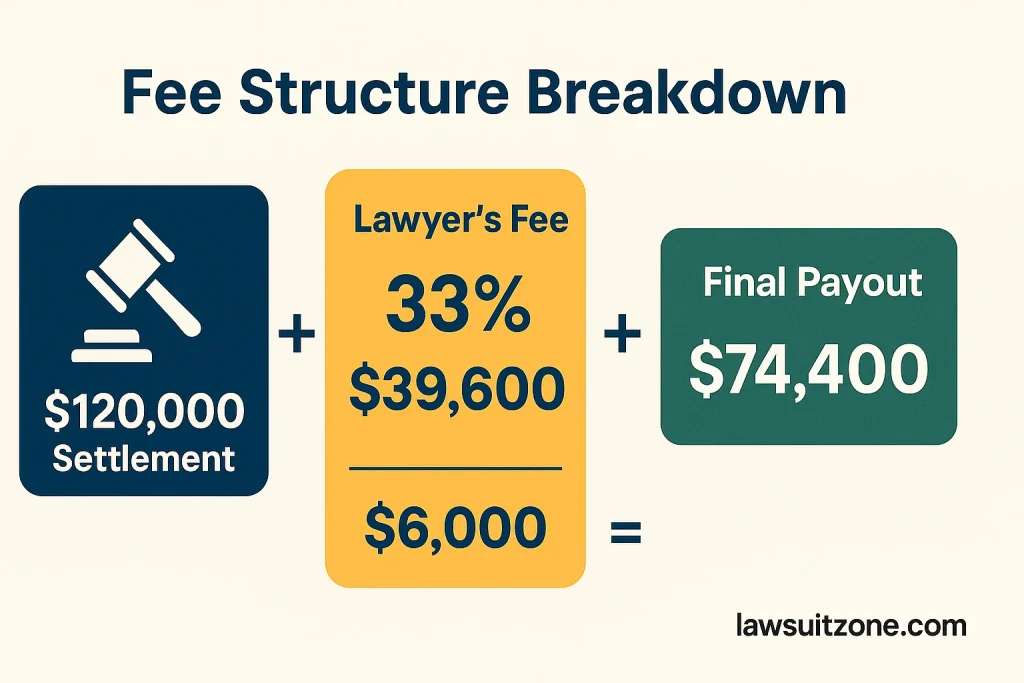
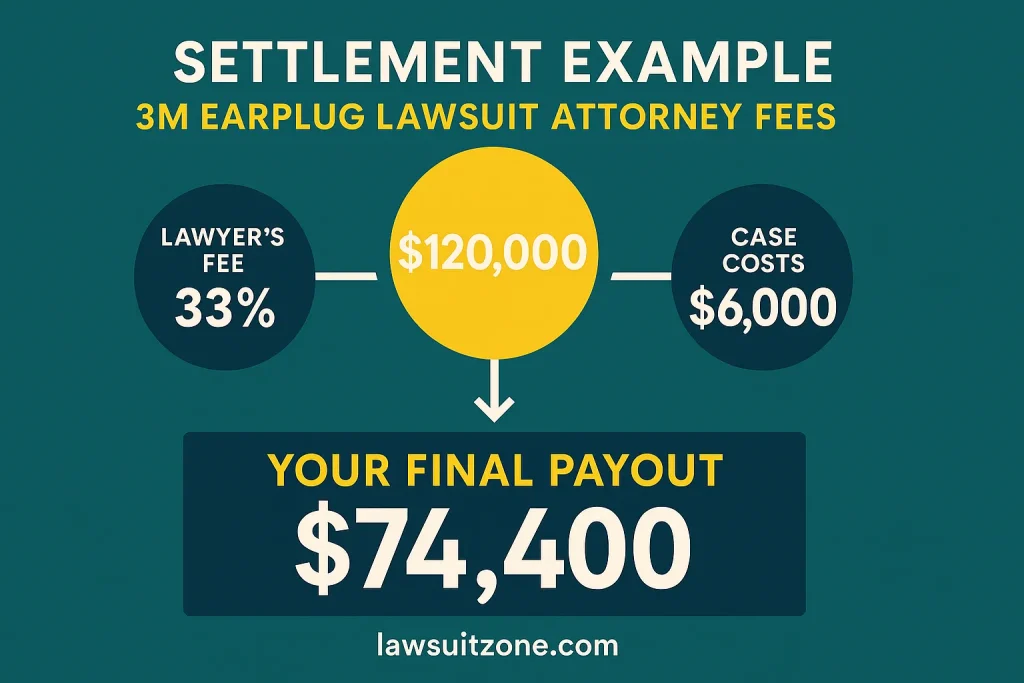
Let’s say you’re awarded $120,000:
- Lawyer’s fee (33%): $39,600
- Case costs (records, experts): $6,000
- Your final payout: $74,400
That’s still a big help—but see how fees and costs add up to eat into the check. Knowing this beforehand prepares you for reality, not disappointment.
What Determines the Price Tag?
A variety of variables affects attorney costs:
- Case Complexity – The more documentation, the more research experts, the greater the expense.
- Settlement vs. Trial – Settlements early on are less expensive than lengthy trials.
- Law Firm’s Reputation – Established firms tend to charge more but award more.
- Geography – Though national firms reign supreme in this MDL, local nuances apply.
Myth vs. Reality: Dispelling Misconceptions
- Myth: You must pay something up front.
Reality: Reliable companies here don’t bill unless you prevail. - Myth: All firms bill the same.
Reality: Fees can vary extensively—some top out at 25%, some at 40%. - Myth: “Free consultations” have secret fees.
Reality: Many consultations are indeed free, but inquire specifically about fees.
Class Action vs. MDL: Does It Impact Fees?
This isn’t a class action—it’s an MDL. Individual veterans each sue separately, but there is common evidence in cases. This format varies attorney fees slightly, based on how much grunt work your particular case entails.
The Settlement Timeline and Attorney Role
- Bellwether trials experimented with results and provided settlement milestones.
- Global settlement was reached, providing billions for impacted veterans.
- Distribution phase continues, with payments made in accordance with injury severity.
At each step, lawyers spend time, personnel, and specialists—thus the fees.
What Veterans Actually Pay
Typically, most accounts estimate fees ranging around 30%–35% plus costs. To put things into perspective:
- Settlement of $50,000 → ~$32,500 net payoff
- Settlement of $200,000 → ~$130,000 net payoff
A Trusted Resource
For a better grasp of your rights regarding contingency contracts, the American Bar Association provides a great summary of attorney fees.
Smart Steps to Protect Your Payout
- Request Written Agreements – Don’t trust verbal assurances.
- Ask if there’s a cap – Some companies settle for smaller percentages.
- Compare several companies – Even if it takes longer.
- Check the fine print – Make sure you understand what “expenses” encompass.
- Prioritize experience – A professional company may win a greater award that is worth paying more fees for.
Veterans’ Stories: More Than Just Numbers
Most veterans report conflicting feelings: relief that justice has finally been served, but disappointment when they learn a third of what they receive is paid in legal fees. For others, the battle wasn’t about money—it was about accountability, acknowledgment, and making sure future soldiers never encounter the same failures.
What the Future Holds
Potential scenarios are:
- Court-imposed caps – Judges occasionally establish maximum attorney’s fees.
- Negotiated reductions – Firms sometimes reduce rates on big settlements.
- Status quo – The majority of veterans will notice ~33% taken out.
Lessons from Similar Cases
- Johnson & Johnson talc lawsuits: Same contingency fee model.
- Roundup litigation: Fee caps ensured plaintiffs received more take-home money.
These cases indicate that attorney fees may sound higher but without them, most plaintiffs would have received nothing.
FAQs
Final Thoughts
The 3M earplug attorney fee isn’t arbitrary figures—it determines how much justice is actually delivered to veterans. Sure, 30% to 40% seems high, but it means even those soldiers who have no savings and no understanding of the law can take on a multibillion-dollar corporation.
The bottom line: by asking the right questions, shopping around for firms, and reading each and every clause, veterans can get the most from their compensation while making 3M pay for equipment that should have guarded, not injured.