Law of Detachment Meaning Practice and Boundaries 2026
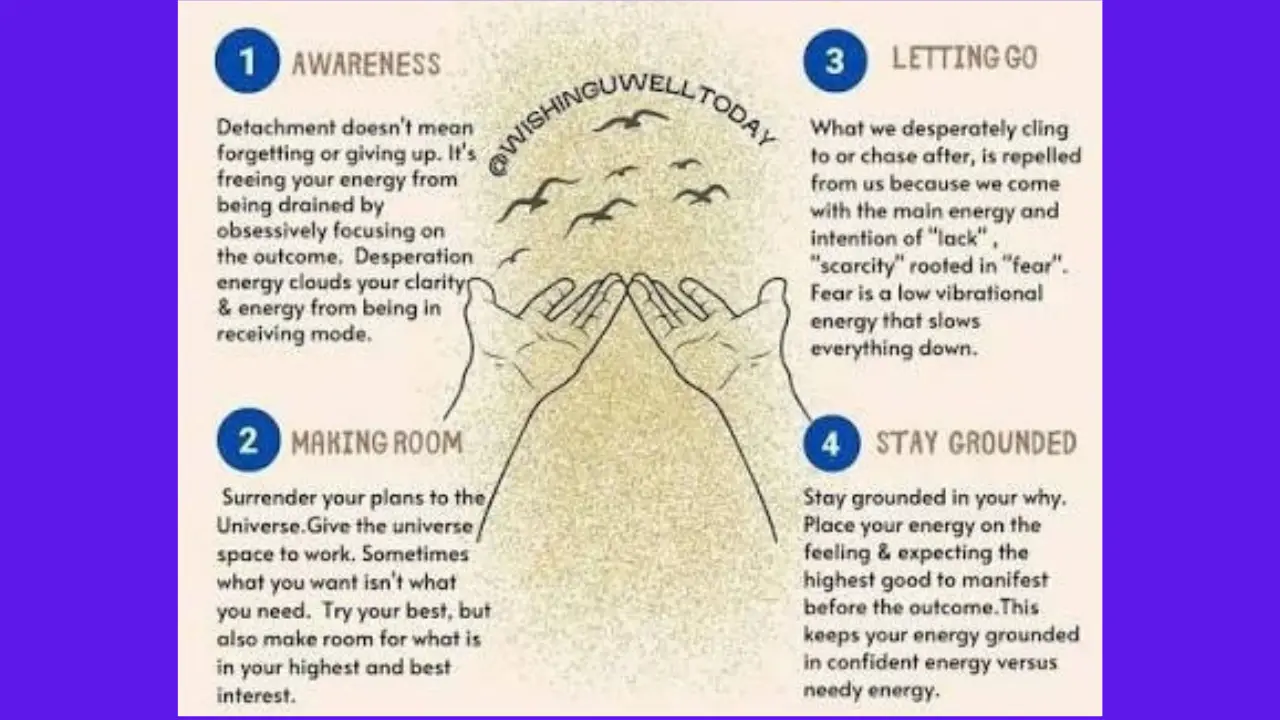
The law of detachment is the idea that you can care deeply, take responsible action, and still release your need to control a specific outcome. It is often discussed in self-help and spiritual settings, but its practical value is simple: focus on your choices, effort, and values rather than trying to force other people, events, or results to go your way.
What the law of detachment means
The law of detachment is a personal philosophy, not a scientific law. It encourages people to loosen their emotional grip on outcomes they cannot fully control. You still set goals, communicate needs, prepare well, and make decisions. The difference is that your peace of mind is not made conditional on getting exactly what you want.
For example, you may apply for a job with a strong résumé and careful preparation. Detachment means doing that work, then accepting that the final decision depends on factors outside your control. It does not mean refusing to care whether you are hired.
Control, influence, and acceptance
A useful way to practice Law of Detachment is to separate what you control from what you can only influence or must accept.
| Category | Examples | Helpful response |
|---|---|---|
| Within your control | Your effort, preparation, words, boundaries, and daily habits | Act deliberately and take responsibility. |
| Within your influence | A conversation, collaboration, an interview, or a request for change | Communicate clearly, listen, and make a reasonable effort. |
| Outside your control | Another person’s feelings, timing, past events, and final decisions | Accept uncertainty and choose your next step. |
This distinction is not an excuse to avoid difficult action. It is a way to stop spending energy on control that is not actually available to you.
What detachment is—and is not
Law of Detachment is commonly misunderstood because it can sound like withdrawal. Healthy detachment is better understood as emotional steadiness with clear involvement.
- Detachment is not indifference. You can love someone and still recognize that you cannot manage their choices.
- Detachment is not giving up. You may continue pursuing a goal while accepting that a setback can require a new plan.
- Detachment is not suppressing feelings. Feelings deserve acknowledgment. The aim is to avoid letting them dictate every action.
- Detachment is not avoiding commitment. Commitment involves showing up consistently; attachment to control involves demanding certainty.
- Detachment is not a guarantee. It cannot ensure reconciliation, success, wealth, or any other desired result.
Why attachment to outcomes can be difficult
People naturally want security, belonging, achievement, and relief from uncertainty. Problems can arise when a desired result becomes tied to self-worth or emotional survival. Thoughts such as “I must get this job,” “They have to understand me,” or “This plan cannot fail” can make normal uncertainty feel unbearable.
Rigid attachment may lead to rumination, repeated checking, overexplaining, people-pleasing, or attempts to pressure another person into responding a certain way. These reactions may offer brief relief, but they often increase anxiety and reduce clear thinking.
How to practice the law of detachment
Practicing Law of Detachment is not a single decision. It is a repeatable skill of returning attention to what you can do now.
- Name the outcome you are gripping. Be specific: an approval, apology, relationship, sale, grade, or timeline.
- Identify what the outcome represents. It may stand for safety, validation, belonging, or a fear of loss. Knowing this can reveal the deeper need.
- Choose the actions that are yours. Prepare for the meeting, submit the application, state your boundary, ask directly, or make a backup plan.
- Set a limit on unproductive behavior. For example, decide not to repeatedly reread messages, refresh for updates, or reopen a settled argument.
- Allow the feeling without treating it as an instruction. Disappointment, longing, and worry can be present without requiring an impulsive text, purchase, or confrontation.
- Return to the present. Put attention into a task, relationship, routine, or value that remains available regardless of the result.
- Review and adapt. Acceptance is not resignation. If new information shows that a plan is not working, adjust it.
Use intention instead of demand
An intention names the direction you want to move in; a demand insists that life or another person must follow a fixed script. “I intend to build a respectful relationship” leaves room for mutual choice. “This person must stay with me” does not.
This shift can make goals more realistic and relationships more respectful. It also helps you notice alternatives that rigid expectations may hide.
Build a response plan for uncertainty
Detachment becomes easier when you know you can cope with more than one outcome. Before an important event, write down two or three possible results and one practical response to each. A backup plan will not erase disappointment, but it can reduce the feeling that everything depends on one answer.
Examples in everyday life
In relationships: You can tell someone how their behavior affects you, ask for what you need, and decide what boundaries you will keep. You cannot make them change, feel remorse, or choose closeness. Detachment means responding to the pattern you see rather than trying endlessly to win a different response.
At work or school: You can study, practice, ask for feedback, and apply for opportunities. You cannot control grading decisions, hiring needs, or competition. Detachment supports persistence without making one result a verdict on your worth.
With family: You may offer support, speak honestly, and decline harmful dynamics. You are not responsible for solving another adult’s problems, especially if they reject help or repeatedly cross your limits.
With personal goals: You can train consistently or develop a new skill, but progress may be uneven. Focusing on routines and measurable actions is usually more useful than judging every day by a distant finish line.
Detachment and healthy boundaries
Boundaries and Law of Detachment work together, but they are not the same. A boundary states what you will do to protect your time, safety, values, or well-being. Detachment releases the attempt to control how someone reacts to that boundary.
For instance, “I will leave the conversation if I am being insulted” is a boundary. Detachment means you do not need the other person to agree that your limit is reasonable before you follow through. It is not a tool for punishing or manipulating them.
Common mistakes when trying to detach
One mistake is using Law of Detachment to avoid grief. Letting go of control may still involve sadness, anger, or loss. Giving those emotions time and safe expression is different from feeding them through endless mental replay.
Another mistake is detaching before communicating. Silence can be appropriate in some circumstances, but detachment does not always mean disappearing. Where it is safe and useful, clear communication may be the responsible action before stepping back.
When extra support may help
Law of Detachment, Difficulty letting go can be especially intense after betrayal, bereavement, trauma, addiction in the family, or a major life change. Persistent anxiety, compulsive checking, inability to function, or feeling unsafe are signs that more support may be useful. A licensed mental health professional can help a person work through the underlying emotions and develop coping tools suited to their situation.
Frequently asked questions
Is the law of detachment a real law?
No. It is not a scientific or legal law. It is a philosophy or practice used in spiritual and self-help contexts to describe releasing excessive attachment to outcomes.
Can you detach while still loving someone?
Yes. Healthy detachment can mean caring for someone while accepting that you cannot control their feelings, choices, or willingness to participate in the relationship.
Does Law of Detachment mean you should stop trying?
No. It means putting effort into actions you can control, then accepting that results may depend on other people, circumstances, and timing.
How is Law of Detachment different from avoidance?
Detachment faces reality and allows feelings while reducing the urge to control. Avoidance ignores a problem, denies feelings, or withdraws from necessary action.
Can Law of Detachment improve anxiety?
Focusing on controllable actions may reduce some stress caused by uncertainty. It is not a substitute for mental health care when anxiety is severe, persistent, or disrupts daily life.
A steadier way to move forward
The law of detachment asks for a balanced approach: care about what matters, act with integrity, and let go of control that was never yours to hold. It does not make disappointment disappear, but it can keep a single outcome from defining your next step. By pairing effort with acceptance and boundaries, you can stay engaged in life without being ruled by uncertainty.