How to Verify Whether a Product Lawsuit or Settlement Is Real
News about product lawsuits spreads quickly online. A social media post, advertisement, or website may claim that a popular company is facing a major lawsuit or that consumers can receive money from a settlement.
However, seeing the word “lawsuit” does not automatically mean that a company has been found liable. It also does not mean that every customer qualifies for compensation.
Consumers should therefore learn how to separate legitimate legal proceedings from rumors, misleading advertisements, and incomplete information.
Understand the Difference Between a Lawsuit and a Settlement
A lawsuit begins when one party files a legal complaint against another party. The complaint normally contains allegations explaining what the plaintiff believes the defendant did wrong.
These allegations are not automatically proven facts.
The defendant may dispute the allegations, ask the court to dismiss the case, negotiate a settlement, or continue defending the case through later stages of litigation.
A settlement is different.
A settlement occurs when the parties agree to resolve some or all of a dispute. Depending on the case, a settlement may include financial payments, changes to business practices, refunds, or other conditions.
Importantly, settlements do not always involve an admission of wrongdoing.
Search for a Specific Case
One of the easiest ways to evaluate an online lawsuit claim is to look for specific information about the case.
A legitimate lawsuit should usually provide identifiable details such as the names of the parties, the court handling the matter, a filing date, and sometimes a case or docket number.
Be cautious when an article repeatedly refers to a “major lawsuit” without identifying which legal proceeding it is discussing.
This becomes especially important with large companies.
One company can face several unrelated disputes involving different products, customers, employees, competitors, or regulators. Combining those matters can create the misleading impression that they are all part of one large case.
Check What Stage the Case Has Reached
The existence of a lawsuit tells you very little about its eventual outcome.
Legal proceedings can move through several stages. A complaint may be filed, followed by motions to dismiss, discovery, class-certification proceedings, settlement negotiations, trial, or appeals.
Some cases are dismissed early. Others continue for years.
For this reason, consumers should pay attention to dates when researching legal disputes.
An article published several years ago may describe a lawsuit as pending even though the case has since been dismissed or settled.
Distinguish Allegations From Court Findings
This is one of the most important principles when reading about lawsuits.
A complaint describes allegations made by the plaintiff. Those allegations may later be supported, disputed, narrowed, dismissed, settled, or decided by a court.
Writers discussing lawsuits should make that distinction clear.
Phrases such as “the complaint alleges,” “according to the plaintiff,” or “the company denies the allegations” help readers understand the procedural status of the information.
This distinction is particularly important when researching consumer products and supplements. For example, readers examining the legal issues surrounding Isotonix should distinguish product-related allegations, broader business disputes, and confirmed court developments rather than treating every online claim as the same legal case.
Look for Evidence of an Actual Settlement
Settlement-related searches require additional caution.
Advertisements sometimes use phrases such as “claim your settlement money” or “you may qualify for compensation.” Such language can make people believe that a settlement fund already exists.
A genuine class-action settlement normally contains much more specific information.
Consumers should look for the case name, court, class definition, important deadlines, eligibility requirements, settlement administrator, and instructions explaining how claims are submitted.
There may also be court documents concerning preliminary or final approval.
If none of these details can be identified, consumers should avoid assuming that money is available simply because a website uses the word “settlement.”
Check Whether You Are Actually Part of the Class
Even when a class-action settlement is genuine, not every customer automatically qualifies.
The settlement normally defines a specific group of people who are included.
Eligibility could depend on factors such as where a person lived, when a product was purchased, which version of the product was bought, how much was paid, or whether proof of purchase is available.
Consumers should read the official class definition rather than relying only on advertisements or social media posts.
Be Careful With Claims About Compensation
The filing of a lawsuit does not guarantee compensation.
Likewise, the existence of allegations against a company does not establish that every customer suffered a legally recognized loss.
Compensation depends on the specific circumstances of the case.
If litigation develops into a settlement, the settlement terms determine who may qualify and what eligible class members may receive. If a case is dismissed, consumers may receive nothing through that particular proceeding.
This is why headlines promising large payments should be treated cautiously.
Research the Company and the Specific Legal Issue Separately
Another useful technique is separating research into two questions.
First, determine what legal proceeding actually exists.
Second, determine how that proceeding relates to the company’s product, advertising, business model, or other conduct.
This prevents unrelated controversies from being combined.
For example, a company might simultaneously face a consumer advertising lawsuit and a separate dispute involving a distributor or competitor. Although both involve the same company, the legal questions could be completely different.
Reliable legal research keeps those disputes separate.
Watch for Outdated Information
Legal information can become outdated surprisingly quickly.
A lawsuit described as active when an article was published may later be dismissed. A motion may be granted or denied. Parties may reach a settlement. An appeal may change an earlier ruling.
Readers should therefore look at both the publication date and the date of the most recent legal development mentioned in an article.
Legal-information resources such as LawSenior can also provide background on lawsuits and other legal topics, but readers should still verify important developments against current court records and official sources when making legal or financial decisions.
Red Flags to Watch For
Certain signs should make consumers more cautious about online lawsuit claims.
Be skeptical when a page promises guaranteed compensation, does not identify the court or case, presents allegations as proven facts, provides no dates, combines several unrelated disputes, or pressures visitors to provide sensitive personal information immediately.
Another warning sign is an article that provides a dramatic headline but little information about what actually happened in court.
Good legal information should make the difference between allegations, procedural developments, settlements, and final judgments clear.
Should You Join a Lawsuit?
Reading about a lawsuit online does not determine whether someone has a valid legal claim.
Individual circumstances matter.
The product purchased, transaction date, location, financial loss, contract terms, applicable law, and other facts may affect a person’s legal options.
Anyone considering legal action should therefore avoid relying solely on blogs, advertisements, or social media discussions. A qualified attorney can evaluate the person’s individual circumstances and explain possible options.
Final Thoughts
Product lawsuits can be complicated, particularly when information spreads faster online than cases move through the courts.
The safest approach is to verify the case itself before drawing conclusions.
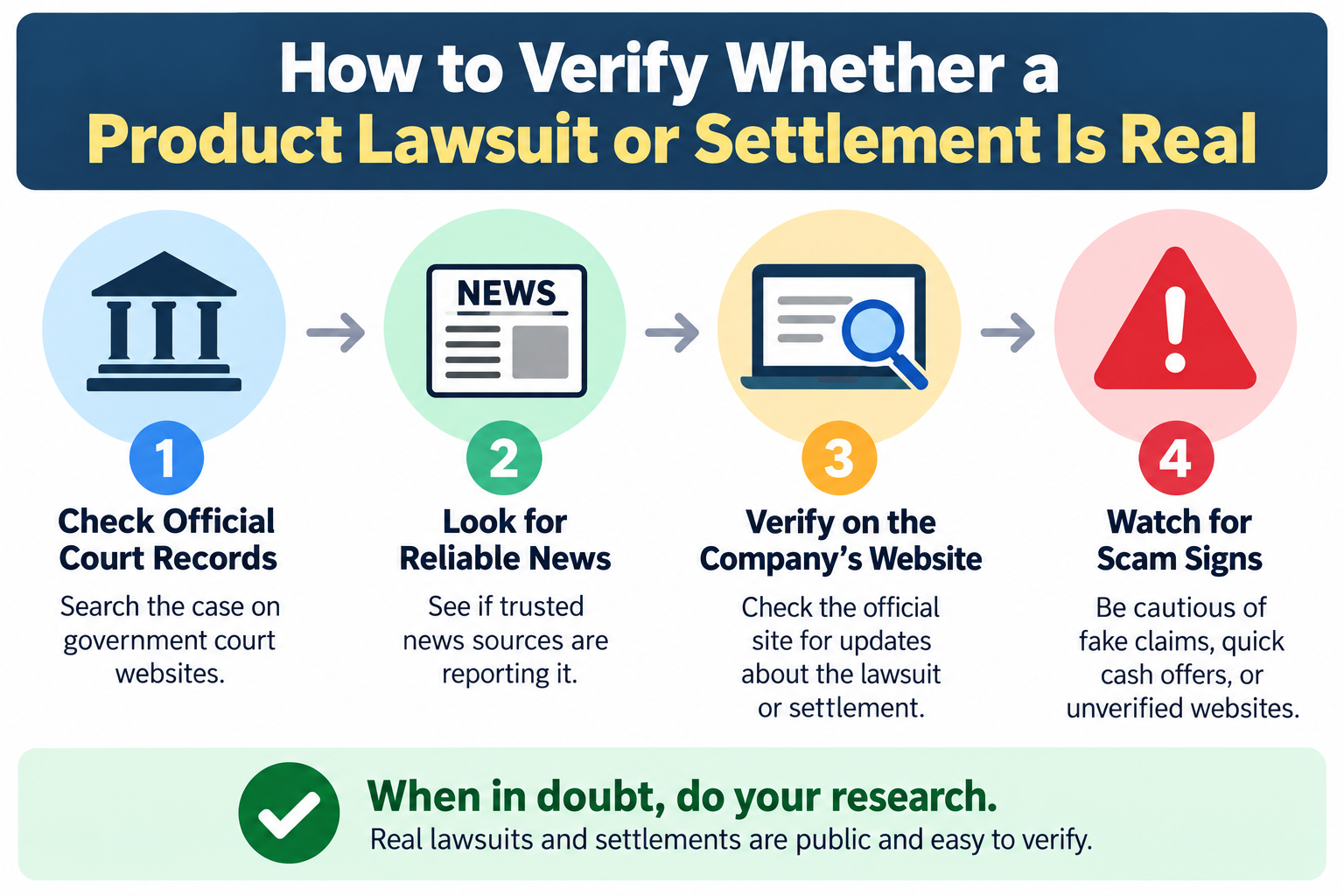
Identify the parties and court. Check when the lawsuit was filed. Determine whether the information describes allegations or established findings. If a settlement supposedly exists, verify its class definition, administrator, deadlines, and court approval status.
Most importantly, remember that a lawsuit filing is the beginning of a legal process, not proof of its final outcome.
Taking a few extra minutes to verify these details can help consumers distinguish genuine legal developments from rumors, outdated reports, and misleading settlement claims.