What Arizona Residents Should Know About FBI Background Check Apostilles
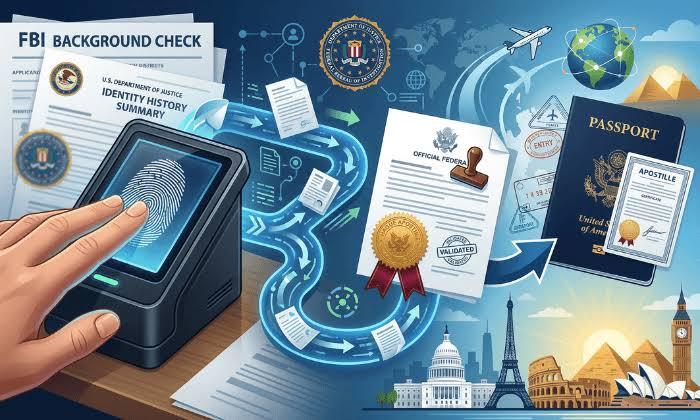
Arizona residents preparing for an international relocation, employment, or business opportunity abroad or an overseas adoptiozn often need an FBI background check apostille. One mistake with this document can delay the entire application process.
The steps included in the application process might be new for first-time applicants. That’s why most residents choose to use professional services for an FBI apostille in Arizona instead of handling it on their own.
What Is an FBI Background Check Apostille?
An FBI Background Check, often referred to as an Identity History Summary Check, is an official document. It relies on fingerprints and legal records reported by law enforcement agencies nationwide.
An apostille is a form of authentication certifying an officially issued document as legitimate for international use. So, if you need it for use in another country, you need a federal apostille from the U.S. Department of State, not an apostille from the Arizona Secretary of State.
A couple of main points to understand here are:
- Documents issued directly by the FBI, not Arizona
- Authenticated at the federal level only
- Different from a state-issued background check
- Required for most document submissions for international use
Understanding how FBI background checks and apostilles work together from the start helps you avoid submitting the wrong document entirely.
When Might Arizona Residents Need One?
Different situations may require an FBI background check apostille. So, most residents in Arizona might need this document for:
- International employment and professional licensing
- Immigration and residency applications
- Overseas education
- International adoption
- Marriage or family-related documentation
- International business or legal requirements
Requirements differ slightly based on where a resident is applying from, even within the same region of the country. For instance, if someone is relocating from Nevada, they would follow almost the same process, since the underlying official requirement doesn’t change state by state. So, residents here often search for documents eligible for an apostille in Nevada, and the list is almost the same as what applies to Arizona residents working on the same paperwork.
FBI Background Check vs. Arizona Background Check: What’s the Difference?
An FBI background check and an Arizona state check are different. The FBI check uses official records from agencies nationwide, while an Arizona check generally holds records within the state.
Background checks are important because submitting the wrong one can lead to legal rejection. In a few countries, the federal versions are accepted, and in others, state-level records are accepted based on the request.
A couple of factors that clarify the type of records applied for are:
- Whether the request specifies federal or state records
- The purpose of the application abroad
- Requirements listed by the receiving country or agency
- Guidance provided by an immigration attorney
Always confirm the destination country’s exact requirements before ordering any documents. This helps avoid delays caused by submitting the wrong type of background check.
Steps to Prepare Your FBI Background Check for Apostille Use
This process has three main stages. Each carries its own requirements and general timeline.
Request Your FBI Identity History Summary
The process starts with submitting fingerprints. You can do this through a standard fingerprint card or electronically through an FBI-approved channeler or professional services. Arizona residents can choose either method, although electronic submission is considered faster.
What the Application Involves
- Completing the official FBI request form
- Submitting fingerprints through an approved method
- Paying the required processing fee
- Choosing between mail or electronic submission
Electronic submission through professional services is generally faster compared to the traditional mailed fingerprint card process.
Review the Completed Background Check
Once the document arrives, reviewing it carefully before moving forward is an important step many applicants skip. Small errors can cause significant delays once the document reaches the apostille stage.
What to Check For
- Correct spelling of names and dates
- Accuracy of personal identifying details
- Whether the document meets the requesting organization’s format
- Any missing or incomplete information
Catching an error at this stage is much easier than discovering it after the apostille has been issued.
Obtain the Federal Apostille
Federal apostilles for documents like an FBI background check are issued through the U.S. Department of State, not through a state-level office. The submission process generally involves mailing the original document, a request form, and the applicable fee.
What the Submission Process Involves
- Submitting the original FBI document
- Completing the Department of State’s request form
- Paying the applicable authentication fee
- Choosing a standard or expedited processing option
Processing times can vary significantly depending on the method chosen, so plan for the slower end of any estimated timeline.
How Long Does the Process Take?
The overall timeline breaks down into three separate stages, and delays at any one stage can push back the entire process. FBI background check processing, federal apostille processing, and shipping or delivery each carry their own timeline.
An estimated timeframe is:
- FBI Background Check: 3 to 5 business days
- Standard Apostille Processing: 4 to 8 weeks
- Expedited (Professional) Services: 10 business days
Overall, the process takes about 2 to 10 weeks, depending on the options chosen, so early planning is especially important for anyone working toward a fixed international deadline.
Can Someone Help With the FBI Apostille Process?
Many applicants choose to work with an experienced apostille service, such as Fast FBI Apostille, rather than managing every step independently, especially when a deadline is tight or the destination country’s requirements are unclear. These professionals coordinate with the FBI, the Department of State, and any shipping logistics involved.
Working with an experienced provider typically includes:
- Guidance on which type of background check is required
- Assistance submitting fingerprints correctly the first time
- Coordination with the Department of State for authentication
- Faster turnaround through established processing relationships
For applicants unfamiliar with the process or working under time pressure, professional support often removes much of the guesswork involved in getting documents ready for international use.
Final Thoughts
Preparing documents for international use involves several interconnected steps, and understanding how they fit together makes the process considerably less overwhelming. Every applicant’s situation looks slightly different, but the underlying federal requirements remain consistent regardless of where in the country a request originates.