How to Fix Creative Blocks With AI Tools for Stories, Images, and Characters
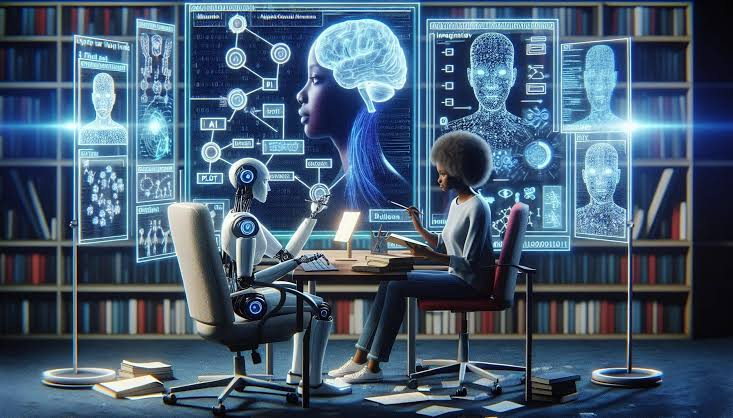
Creative block can happen at any stage of a project. A writer may have an interesting premise but no clear ending. A game designer may understand a character’s role but struggle to define their personality. An artist may know the atmosphere they want but find it difficult to translate that idea into a visual concept.
These challenges are becoming more common as creators work across multiple formats. A single project may now include written content, character profiles, concept art, interactive dialogue, and detailed fictional worlds. Moving between these tasks can slow the creative process and make it harder to maintain momentum.
AI tools can help creators explore possibilities more quickly, especially when they are used for brainstorming and experimentation rather than as a replacement for creative judgment. An AI platform for stories, images, characters, and ideas can provide one environment for developing written and visual concepts while allowing creators to move from an initial idea toward a more detailed project.
1. Fix the Blank-Page Problem With Structured Brainstorming
The blank page is often difficult because an idea feels too broad. A creator may know they want to write a science-fiction story, for example, but have not yet decided who the main character is, what conflict drives the plot, or what makes the setting distinctive.
Instead of asking AI to create an entire story, break the problem into smaller questions. Start with the genre, then explore possible settings, conflicts, characters, and stakes. Asking for five possible story directions can be more useful than requesting one finished narrative.
XPT is designed as a creative environment where users can explore text-based ideas, stories, characters, and interactive concepts. This makes it useful for brainstorming when a project needs several connected elements rather than a single response.
The important step is selection. AI can generate alternatives quickly, but the creator should decide which ideas are worth developing. Combining several suggestions and adding personal direction often produces a stronger result than accepting the first output.
2. Develop Characters Beyond Basic Descriptions
A character becomes more believable when their personality affects their decisions. Simply defining appearance, age, and occupation rarely provides enough material for a compelling story or roleplay experience.
AI-assisted character development can help creators explore motivations, fears, relationships, habits, and conflicting goals. For example, instead of asking for “a detective character,” a creator could define a central conflict: a detective who is highly skilled at finding the truth but avoids confronting a personal mistake from the past.
From there, the creator can test how that character might react to different situations. How would they respond to betrayal? What would they hide from a close friend? What decision would force them to choose between professional success and personal loyalty?
XPT includes character creation and roleplay-oriented experiences that can support this kind of exploration. Testing a character through dialogue can reveal inconsistencies that are less obvious when the character exists only as a written profile.
3. Turn Story Ideas Into Visual Concepts
Many creative projects become easier to develop when an abstract idea has a visual form. Concept art can help establish a character’s appearance, a fictional location’s atmosphere, or the overall style of a project.
Image generation can be useful during the early concept stage because creators can experiment without committing significant time to a finished illustration. A writer developing a fantasy city, for instance, can test different architectural styles, weather conditions, historical influences, and color-free visual moods through descriptive prompts.
The process works best when prompts become more specific over time. Begin with the central concept, review the output, and then adjust individual elements. A vague description may produce an unpredictable result, while a prompt that specifies environment, perspective, objects, clothing, and atmosphere gives the creator more control.
Because XPT combines AI writing and image-generation capabilities within a broader creative environment, users can move between story development and visual experimentation without treating each idea as a completely separate project.
4. Use Roleplay to Test Stories and Dialogue
Dialogue often sounds different when it is experienced as a conversation. A scene that appears convincing in an outline may feel unnatural once characters begin responding to each other.
Roleplay can help creators test these interactions. A writer can establish a scenario, define each character’s motivations, and explore several possible directions. This can reveal whether a conflict develops naturally or whether the characters need stronger reasons to act.
For example, a creator working on a mystery story could roleplay an interrogation scene. Different versions of the exchange might expose new clues, alternative motives, or more believable emotional reactions.
This does not mean every generated conversation should appear directly in a finished work. The value often comes from experimentation. Creators can identify useful lines, discover new questions, or recognize weaknesses in the original concept.
Platforms such as XPT focus on open-ended creative exploration, giving users tools for storytelling, roleplay, character development, and idea generation. That flexibility can be particularly useful when a project requires repeated experimentation.
5. Avoid Over-Relying on the First AI Output
One of the most common mistakes in AI-assisted creativity is treating the first response as the final answer. AI is generally more useful as an iterative tool.
A stronger workflow often follows a simple pattern: generate, evaluate, revise, and test again. A creator might generate three possible plot twists, select one, ask for potential consequences, and then rewrite the result to match the project’s established tone.
The same principle applies to images and characters. Instead of generating dozens of unrelated concepts, make deliberate adjustments to a promising idea. Change the setting, motivation, visual style, or narrative conflict one element at a time.
This approach keeps the creator in control. AI contributes speed and alternative perspectives, while human judgment provides direction, originality, and consistency.
Creators should also review generated material for factual errors, repetitive language, and ideas that do not fit the intended audience. AI can accelerate exploration, but editing remains essential when producing polished work.
Conclusion
Creative block does not always mean a lack of ideas. Often, it means there are too many possible directions and no clear method for exploring them. AI tools can make that process more manageable by helping creators brainstorm stories, develop characters, test dialogue, and experiment with visual concepts.
The greatest value comes from using AI as a creative partner rather than an automatic replacement for the creative process. Writers, artists, game designers, and storytellers can use generated ideas as starting points, then refine them according to their own goals and style.
Platforms like XPT bring several creative functions into one environment, including AI writing, image generation, storytelling, roleplay, and character development. For creators who want greater freedom to explore open-ended concepts, this type of integrated approach can reduce friction between an idea and its first workable version.
As AI creative tools continue to develop, the most effective creators will likely be those who combine technological speed with deliberate human direction. The future of creativity is not simply about generating more content—it is about exploring better possibilities and turning them into ideas that are genuinely worth developing.