Johnson and Johnson Lawsuit Update: A Full Breakdown of the Latest Developments in 2025
Introduction
The Johnson and Johnson lawsuit update continues to dominate consumer safety and legal news, including public health discussions. A number of pending claims reaching tens of thousands, large jury verdicts, and settlement negotiations make the litigation against Johnson & Johnson, particularly over its talc-based baby powder, one of the largest mass-tort legal battles of the last century.
What makes this case significant is not only the size of the lawsuit but also the human story behind it: many claimants say they trusted a household brand for decades, only to face life-changing illnesses such as ovarian cancer and mesothelioma later in their lives. On the other hand, Johnson & Johnson continues to maintain that its products are safe and the allegations are baseless.
This comprehensive guide breaks down every major update for 2025 from recent trial outcomes and settlement efforts to who can still file a claim, how the case may shape corporate accountability, and what consumers should know today. Have you checked our detailed guide on camp lejeune settlements.
The Core of the Johnson and Johnson Lawsuit Update
Central to the Johnson & Johnson lawsuit are allegations that for many years, the company’s talc-based products—most notably its Baby Powder contained asbestos particles, which taken in or applied regularly may lead to some forms of cancer.
The lawsuits argue that:
- Johnson & Johnson failed to provide warnings about possible risks.
- Internal documents revealed concerns that were never shared with the consumers.
- Marketing materials positioned the products as gentle, safe, and pure for decades.
Johnson & Johnson strongly denies wrongdoing, saying its products were always rigorously tested and safe to use. Nevertheless, numerous courts have found the evidence compelling enough to award big verdicts to plaintiffs.
Why the Johnson and Johnson Lawsuit Update Matters in 2025
This year is pivotal because:
- Several new decisions have surfaced that have bolstered the plaintiffs’ position.
- Settlement discussions have picked up steam after courts rejected previous restructuring plans.
- The number of claimants keeps increasing as more and more people become aware of the possible link between talc and sickness.
- J&J was pressured by significant shareholders, regulators, and consumer advocates.
- The courts are scrutinizing the bankruptcy and settlement strategies of the company.
In many ways, this case sets the tone for future consumer-protection litigation.
A Detailed Timeline of the Litigation
Early 1900s–2000s: Use & Popularity of Talc Products
Because of their absorbency and fragrance, talc-based products become staples at home and in hospitals. Baby Powder becomes an iconic J&J product.
2000–2015: Scientific Discussions on Sustainable Development Start
Researchers begin to investigate the possibility of talc particles passing into the female reproductive system or lungs, where they may cause cancer.
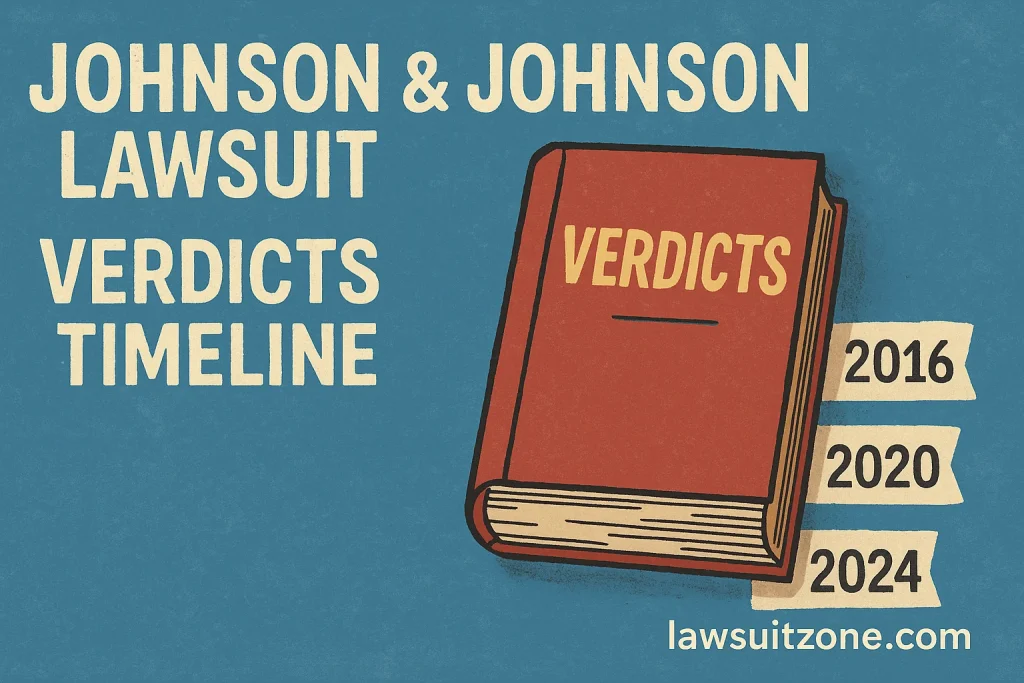
2016–2020: First Major Verdicts
Juries around the U.S. have awarded billions of dollars to plaintiffs who claim talc caused ovarian cancer or mesothelioma. J&J has appealed many of those verdicts.
2020: J&J Pulls Talc Powder from U.S. Shelves
The company stops selling talc-based Baby Powder in North America, citing flagging sales, not health concerns.
2021–2023: Bankruptcy Strategy Attempted
J&J tries a Texas two-step bankruptcy to shift talc liability into a subsidiary that would then declare bankruptcy. Courts later reject this approach as insufficient.
2024–2025: Increasing Verdicts & New Settlement Talks
Recent verdicts, including the nearly $1 billion judgment in 2024, ramp up the pressure on the company. Mediation renews as courts push for a global resolution.
This is the evolving history with which Johnson & Johnson’s lawsuit update has come to align.
Key Rulings That Moulded the Case
1. Almost $1 Billion Verdict in California
A jury in California awarded more than $966 million to the family of a woman who died from mesothelioma. Jurors decided long-term talc exposure contributed to her disease.
2. $42.6 Million Mesothelioma Verdict in Massachusetts
Another powerful signal to J&J that juries are siding with plaintiffs.
3. Thousands of Active Claims
More than 67,000 are still pending nationwide, making the litigation one of the largest product-liability cases in U.S. history.
Each ruling brings J&J closer to a settlement—but making certain that will be accepted by all parties remains elusive.
Current Settlement Efforts: Where Things Stand
The latest update in the Johnson & Johnson lawsuit shows the reopening of settlement talks, including a possible $6.48 billion fund that covers most of the talc-related claims.
However:
- Some plaintiffs say the settlement proposal undervalues their cases, particularly the most severe, and fatal, cancers.
- Lawyers representing several states say J&J will need to provide much better terms.
- The courts are reviewing efforts to settle claims through bankruptcy proceedings, which have been rejected by judges twice.
While it’s possible that a global settlement may happen, negotiations are expected to continue into 2025.
Who May Qualify to File a Claim Now?
If you’re reviewing the Johnson & Johnson lawsuit update because you suspect you are eligible, here are the basic criteria:
You may be eligible if:
- You applied Johnson & Johnson talc-based powder regularly over an extended period.
- You were diagnosed with mesothelioma, ovarian cancer, or another related condition.
- You may submit medical documentation that links your diagnosis and exposure.
- Your claim falls within statute-of-limitation rules in your state.
If you are unsure, most attorneys will review your talc exposure case at no charge.
Legal Basis of the Lawsuit
The case is built on well-settled legal principles:
Failure to Warn
The plaintiffs argue that J&J should have told consumers about possible risks.
Negligence
Claims have been made that the company acted irresponsibly in testing or labeling its products.
Product Liability
Talc-based powder could be considered defective if there were hidden perils associated with its ordinary use.
Corporate Misrepresentation
Internal concerns were not disclosed as marketing materials portrayed the powder as gentle and safe.
Wrongful Death
Families may seek damages if a loved one died of an illness that is alleged to be linked to talc exposure.
These form the legal bases for virtually all active Johnson & Johnson talc cases.
Damages Claimants May Recover
Compensation can range widely but may include:
- Medical expenses: treatment, surgery, medication
- Lost wages: for time away from work
- Future earning losses
- Pain and suffering
- Psychological distress
- Loss of consortium
- Expenses related to funeral/burial in case of fatality
- Punitive damages in cases involving extreme corporate misconduct
Many judgments in the past carried punitive damages because the company’s conduct was deemed to be particularly bad.
What Consumers Should Know Right Now
The update on the Johnson and Johnson lawsuit carries important lessons for consumers:
1. Pre-employment medical screening may be necessary
People with long-term exposure to talc should see a doctor.
2. Documentation is key
Keep receipts, photos, old containers, or any evidence of long-term use.
3. Legal deadlines differ
Some states allow claims years after diagnosis; others have shorter windows.
4. Settlement decisions may impact rights
A signed agreement might limit any future lawsuits; one should be able to remain informed.
5. Not all talc products are included
Most of the lawsuits revolve around talc powders manufactured by J&J.
A Larger Conversation: Corporate Accountability
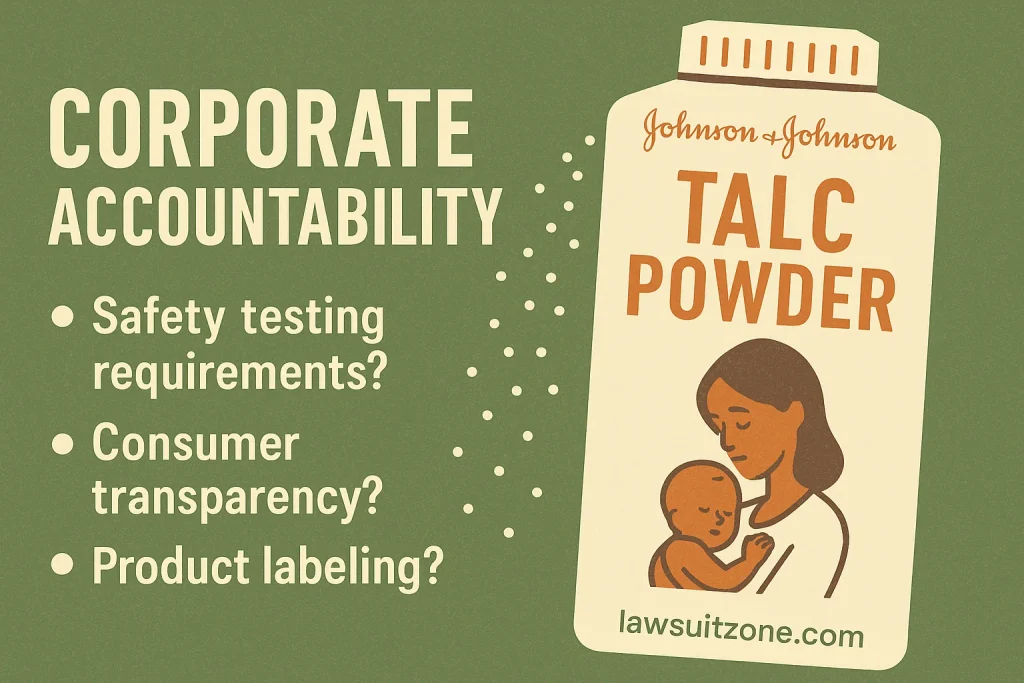
Beyond the immediate legal stakes, the lawsuit is raising broader questions:
- Should companies face stricter safety testing requirements?
- How much transparency is owed to consumers?
- What is the responsibility of a manufacturer for possible perils of a century-old product?
- Should regulators require clearer labeling of products used on infants and mothers?
Answers may shape regulations and corporate policies for decades to come.
Frequently Asked Questions
Conclusion
This update in the Johnson & Johnson lawsuit serves as a powerful reminder of how deeply product safety can affect everyday consumers’ lives. Regardless of if a global settlement is finalized anytime soon, it has already shaped public awareness, regulatory scrutiny, and wider debates over corporate transparency.
The litigation process offers a conduit toward accountability, support, and recognition for those affected. The best strategy remains one of being informed, prepared, and proactive as developments arise throughout 2025.
Disclaimer: This is not a legal or medical advice article. It is your responsibility to seek a qualified professional for your specific situation.