400G QSFP-DD FR4 vs. FR8: What are the Differences?
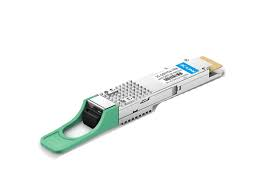
As data centers evolve to meet the insatiable demand for bandwidth, the migration to 400G Ethernet has become a strategic imperative. Central to this transition is the QSFP-DD (Quad Small Form Factor Pluggable-Double Density) form factor, a versatile and high-density solution that supports a wide array of optical interfaces. For reach requirements of up to 2 kilometers over single-mode fiber, two prominent WDM (Wavelength Division Multiplexing) solutions have emerged: the 400G QSFP-DD FR4 and the 400G QSFP-DD FR8. While both modules serve the same distance, their underlying architectures lead to distinct performance characteristics, cost structures, and application suitability. This article provides a comprehensive technical comparison to help network architects make an informed choice.
At their core, both modules use PAM4 (Pulse Amplitude Modulation 4-level) modulation to pack more bits into each signal, but they achieve the 400G aggregate rate in fundamentally different ways.
400G QSFP-DD FR4
The 400GBASE-FR4 QSFP-DD module is designed for efficiency. It operates by combining four independent optical lanes, each transmitting data at a rate of 100Gbps. This is achieved using 100G PAM4 signaling on the optical side, which corresponds to a high baud rate of approximately 53.125GBd. These four lanes are multiplexed onto a single duplex LC connector using four distinct CWDM (Coarse Wavelength Division Multiplexing) wavelengths centered at 1271nm, 1291nm, 1311nm, and 1331nm. Inside the module, an 8:4 Gearbox converts the eight 50G electrical lanes from the host system into the four 100G optical lanes.

400G QSFP-DD FR8
In contrast, the FR8 module takes a more gradual approach. It uses eight optical lanes, each running at a rate of 53.125Gbps using 50G PAM4 modulation. This lower lane rate results in a baud rate of just 26.5625GBd. To fit eight signals over a single fiber pair, it also utilizes CWDM technology but with a denser channel plan. The FR8 transmits its data using eight wavelengths, typically within the O-band. Consequently, it requires a different optical connector—the CS connector—which is smaller than a standard LC duplex connector and designed to accommodate the more complex optics.
400G QSFP-DD FR4 vs FR8: What are the Key Differences?
The architectural choice between four 100G lanes and eight 50G lanes cascades into several critical performance and operational trade-offs.
Latency and Signal Processing
A significant differentiator lies in latency. The FR4 module’s internal 8:4 Gearbox, which multiplexes the eight electrical signals down to four optical signals, introduces a processing delay. This typically results in a latency of around 102 nanoseconds. The FR8 module, which maintains an 8:8 lane count (mapping each 50G electrical lane directly to a 50G optical lane), avoids this multiplexing step. Its latency is consequently lower, typically around 84 nanoseconds. For most general data center traffic, this 18ns difference is negligible. However, in ultra-low-latency environments such as high-performance computing (HPC) and certain financial trading applications, the FR8’s lower latency can be a distinct advantage.
Power Consumption and Thermal Management
The simpler, direct lane mapping of the FR8 comes with a cost: it requires eight optical components (lasers and detectors) compared to the FR4’s four. More components generally mean higher power draw to drive them. As a result, the FR4 module is typically more power-efficient. Its lower power consumption translates to simpler thermal management within the switch or server, a crucial factor in high-density 400G deployments where heat dissipation is a major engineering challenge. The FR8, while still within the QSFP-DD power envelope, generates more heat and requires more robust cooling solutions.
Reliability and Link Margin
While the FR4 is more power-efficient, the FR8 often boasts superior link reliability under certain conditions. This is related to the baud rate. The FR4’s higher 53.125GBd signal is more susceptible to dispersion penalties, such as CD (Chromatic Dispersion) and MPI (Multi-Path Interference). These impairments can erode the signal quality over the 2km link. Although both modules rely on robust KP4 FEC (Forward Error Correction), the FR8’s lower 26.5625GBd signal is inherently more resilient. Consequently, it typically has a higher channel margin (often quoted as >90%) compared to the FR4 (often >80%). This higher margin means the FR8 can tolerate more signal degradation before encountering bit errors, making it potentially more reliable in less-than-ideal link conditions.
400G QSFP-DD FR4 vs FR8: How to Choice?
Selecting between the FR4 and FR8 is a classic engineering trade-off between cost-efficiency and performance headroom. The decision should be guided by the specific application and data center environment.
| Feature | 400G QSFP-DD FR4 | 400G QSFP-DD FR8 |
| Optical Lanes | 4 lanes @ 100G PAM4 | 8 lanes @ 50G PAM4 |
| Wavelengths | 4 CWDM (e.g., 1271, 1291, 1311, 1331 nm) | 8 CWDM |
| Connector Type | Duplex LC | CS (Smaller form factor) |
| Key Component | 8:4 Internal Gearbox | Direct 8:8 lane mapping |
| Latency | ~102 ns (Higher) | ~84 ns (Lower) |
| Power Consumption | Lower (More efficient) | Higher |
| Reliability Margin | Good (>80% margin) | Excellent (>90% margin) |
| Ideal Application | Cost-sensitive data centers, general cloud infrastructure | High-performance computing, environments demanding max link budget |
Choose the 400G QSFP-DD FR4 if: Your primary goals are optimizing power efficiency and minimizing upfront module costs. It is an excellent choice for large-scale cloud data centers and general enterprise networking where the slight latency difference is irrelevant, and the link conditions are well-controlled.
Choose the 400G QSFP-DD FR8 if: You are deploying in an HPC environment where the lowest possible latency is valued, or if you anticipate challenging link conditions where the extra link margin could prevent transmission errors. Its higher reliability headroom provides an extra layer of assurance.
Both 400G QSFP-DD modules represent mature, high-performance solutions that have undergone rigorous testing to ensure interoperability and reliability. By carefully weighing the architectural differences and their operational impacts, network planners can confidently select the 2km WDM solution that best aligns with their specific performance, efficiency, and budgetary requirements.